
What is Shiva Tattwa? A Beginner’s Guide to Understanding Divine Consciousness
Symbolism of Lord Shiva: Decoding the Divine


In Hindu philosophy, the concept of Shiva Tattwa holds a profound place. It represents the essence of divine consciousness, transcendence, and ultimate reality. To understand Shiva Tattwa is to delve into the very fabric of existence beyond the physical world and into the realm of pure awareness, creation, and dissolution.
This guide will explore what Shiva Tattwa means, its significance in Hindu philosophy, and how ancient stories from Hindu mythology beautifully illustrate this cosmic principle. By the end, you’ll not only grasp the essence of Shiva Tattwa but also see how it applies to your own life for spiritual growth and self-realization.
What is Shiva Tattwa?
The term "Tattwa" comes from Sanskrit, meaning "truth," "reality," or "principle." When combined with "Shiva," it refers to the ultimate truth or principle embodied by Lord Shiva-one of the principal deities in Hinduism.
Shiva Tattwa encompasses three core aspects:
Creation (Srishti): The act of bringing something into existence.
Preservation (Sthiti): Maintaining balance and harmony in creation.
Dissolution (Samhara): The process of ending or destroying what exists to make way for renewal.
These cycles are not just physical but also symbolic of our inner journey toward enlightenment. Shiva Tattwa teaches us that life is an eternal cycle of birth, sustenance, and death—and through understanding these principles, we can connect with the divine consciousness within ourselves.
The Symbolism of Lord Shiva
To better comprehend Shiva Tattwa, let’s break down some key symbols associated with Lord Shiva:
1. The Third Eye: Inner Wisdom and Destruction of Ego
Shiva's third eye symbolizes higher perception and intuition. It has the power to destroy ignorance and ego when opened.
This reminds us to look beyond surface-level realities and seek deeper truths.
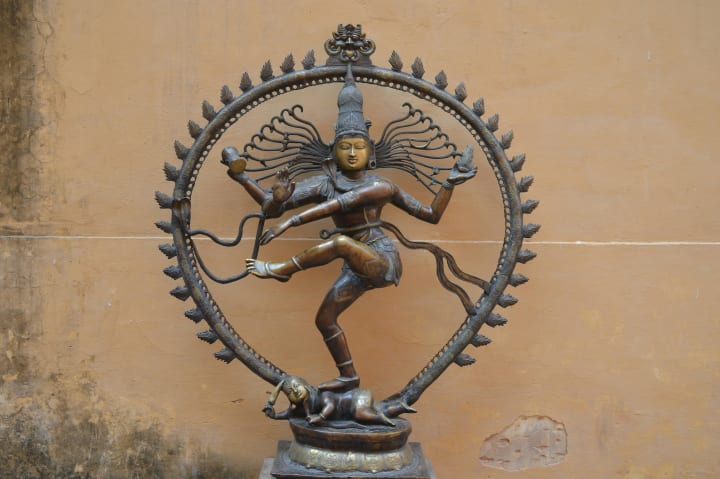
2. Nataraja – The Cosmic Dancer
As Nataraja, Shiva performs the Tandava dance, representing the rhythm of the universe—the continuous flow of creation, preservation, and destruction.
His dance signifies mastery over time and space, reminding us to embrace change gracefully.
3. Trishul (Trident): Balance of Mind, Body, and Spirit
The trident represents the three fundamental forces of nature: Iccha Shakti (willpower), Jnana Shakti (knowledge), and Kriya Shakti (action).
It encourages us to align our thoughts, knowledge, and actions for holistic living.
4. Crescent Moon on His Head: Calm Amidst Chaos
The crescent moon reflects serenity and control over emotions. Even amidst chaos, Shiva remains calm and composed.
This teaches us the importance of maintaining equanimity in turbulent times.
5. Snake Around His Neck: Mastery Over Fear
The snake symbolizes fear and desires. By wearing it around his neck, Shiva demonstrates that he has conquered both.
Similarly, we must learn to overcome our fears and attachments to achieve liberation.

Stories That Illustrate Shiva Tattwa
Hindu mythology is rich with stories that bring the teachings of Shiva Tattwa to life. Let’s explore two powerful tales that highlight different facets of this divine consciousness.
Story 1: Samudra Manthan – Shiva Drinks the Poison
One of the most iconic stories in Hindu mythology is the churning of the ocean (Samudra Manthan). During this event, gods (Devas) and demons (Asuras) worked together to churn the ocean to obtain Amrita, the nectar of immortality. However, before the nectar emerged, a deadly poison called Halahala surfaced, threatening to destroy all creation.
Terrified, everyone turned to Lord Shiva for help. Without hesitation, Shiva drank the poison to save the universe. To prevent the poison from harming him, Parvati held his throat, turning it blue-a reason why Shiva is often called Neelkanth (the blue-throated one).
Philosophical Insight:
This story illustrates Shiva Tattwa as the force of destruction for preservation . Just as Shiva consumed the poison to protect the cosmos, challenges and hardships in our lives serve a purpose they destroy old patterns so new growth can emerge. Shiva’s act teaches us about sacrifice, resilience, and transforming negativity into strength.
Story 2: Shiva as Adiyogi - The First Guru
According to legend, Lord Shiva is considered the first yogi (Adiyogi ) who introduced yoga to humanity. He sat in deep meditation atop Mount Kailash, radiating immense energy. When seven sages approached him seeking wisdom, Shiva shared the science of yoga, which became the foundation for spiritual practices worldwide.
Philosophical Insight:
Shiva as Adiyogi represents the creative aspect of Shiva Tattwa —the ability to manifest knowledge and inspire others. This story emphasizes the importance of discipline, self-discovery, and sharing wisdom with those who seek it. It reminds us that true fulfillment lies in helping others grow spiritually.

How Can We Apply Shiva Tattwa in Our Lives?
Understanding Shiva Tattwa isn’t just theoretical; it’s practical guidance for personal transformation. Here’s how you can incorporate its teachings into your daily life:
Embrace Change Gracefully: Life is full of ups and downs. Like Shiva’s Tandava dance, accept change as part of the natural order and find beauty in impermanence.
Cultivate Inner Awareness: Meditate regularly to awaken your "third eye"—your inner wisdom. Reflect on your actions, thoughts, and emotions to gain clarity.
Let Go of Attachments: The snake around Shiva’s neck symbolizes detachment. Practice non-attachment to material possessions, relationships, and outcomes to experience freedom.
Serve Others Selflessly: Follow Shiva’s example as Adiyogi by sharing your knowledge and uplifting others. Acts of kindness and mentorship create lasting impact.
Balance Opposites: Shiva embodies paradoxes—he is both ascetic and householder, peaceful yet fierce. Strive to harmonize opposing forces in your life, such as work and rest, ambition and contentment, or logic and emotion.
Awakening to Shiva Tattwa
Shiva Tattwa is more than just a philosophical concept, it’s a roadmap to discovering your highest self. Through stories like Samudra Manthan and Shiva as Adiyogi, we see how divine consciousness operates in the universe and within us. By embracing the principles of creation, preservation, and dissolution, we can navigate life’s complexities with grace and wisdom.
Whether you’re drawn to spirituality, mythology, or self-improvement, Shiva Tattwa offers timeless lessons applicable to every stage of life. So take a moment today to reflect on these teachings. Are you ready to awaken your inner Shiva?
If this article resonated with you, share it with friends and family who might benefit from exploring the depths of Shiva Tattwa. And don’t forget to subscribe to our blog for more insights into Hindu philosophy, mythology, and spirituality!
Om Namah Shivaya! 🙏
About the Creator
Sujeet M Sonar
An artist, teacher, and lifelong learner influenced by philosophers like J Krishnamurti & Socrates, and writers like Premchand and Kahlil Gibran. Inspired by Swami Vivekananda’s, I believe inner growth leads to outward expansion and Wisdom.
Keep reading
More stories from Sujeet M Sonar and writers in Humans and other communities.
The Enchanting Tale of Chaitra Navratri: A Celebration of Divine Feminine Energy
Once upon a time, in the mystical land of Bharatvarsha (ancient India), where gods and goddesses walked among mortals, there was an eternal battle between good and evil. This timeless struggle found its most glorious celebration during Chaitra Navratri , a nine-day festival that marks new beginnings, divine devotion, and the triumph of righteousness over darkness.
By Sujeet M Sonar10 months ago in Humans
Hind Rajab: A Child the World Heard Too Late
Cinema has always been a powerful medium for telling stories that history books often reduce to numbers. When a film chooses to focus on a single child caught in the machinery of war, it forces audiences to confront reality not as statistics, but as human loss. The movie inspired by the tragic story of Hind Rajab, a young Palestinian girl, does exactly that. It is not merely a film; it is a testimony, a memorial, and a question posed to the conscience of the world. Hind Rajab’s name became known globally after reports emerged of her final hours during the Gaza conflict. She was a child trapped in circumstances no child should ever experience. The film based on her story does not sensationalize her death, nor does it turn her suffering into spectacle. Instead, it approaches her story with restraint, dignity, and an unwavering focus on innocence lost amid violence. The Story at the Heart of the Film The movie centers on a young Palestinian girl who becomes separated from safety during intense military escalation. Through her eyes, viewers witness fear, confusion, and the fragile hope that someone, somewhere, will come to help. The film follows her final journey—both physical and emotional—using minimal dialogue and powerful visual storytelling. Rather than relying on graphic imagery, the filmmakers choose silence, pauses, and close-up shots to convey terror and vulnerability. This artistic choice makes the film even more haunting. The audience is left to sit with the child’s fear, her calls for help, and the unbearable waiting that defines her final moments. By focusing on Hind as an individual rather than a symbol, the film restores her humanity. She is not portrayed as a political tool, but as a daughter, a child with dreams, and a life that mattered. A Child as the Center of a Global Tragedy What makes this movie particularly impactful is its refusal to shift focus away from the civilian cost of war. The story does not revolve around soldiers, strategies, or power struggles. It revolves around a child who should have been worried about school, friends, and play—not survival. This narrative choice challenges the audience to rethink how conflicts are discussed in media and politics. Wars are often framed in terms of borders, ideologies, and victory. This film asks a different question: What is the price paid by those who have no role in choosing the war? By centering the story on Hind, the film exposes the imbalance of power and the devastating consequences faced by the most vulnerable. Artistic Direction and Emotional Weight The film’s direction is deliberately restrained. There is no dramatic background score overpowering the scenes. Instead, ambient sounds—distant explosions, static-filled phone calls, the quiet breathing of a frightened child—carry the emotional weight. This realism makes the film deeply unsettling. The young actress portraying Hind delivers a performance that is heartbreakingly authentic. Her expressions alone communicate fear, confusion, and bravery far beyond her years. The filmmakers avoid overacting or melodrama, allowing the story’s truth to speak for itself. Cinematography plays a crucial role as well. Tight frames and limited perspectives reinforce the feeling of entrapment, while long, unbroken shots force viewers to experience time as Hind did—slow, uncertain, and terrifying. A Political Film Without Political Speeches One of the film’s greatest strengths is that it does not rely on speeches or overt political messaging. Its power lies in its simplicity. By telling one child’s story honestly, it exposes the broader reality of civilian suffering in conflict zones. The film does not tell audiences what to think. Instead, it asks them to feel—and that is far more powerful. Viewers are left to grapple with difficult questions about responsibility, accountability, and the value of human life. This approach has made the movie resonate across cultures and ideologies. Even those unfamiliar with the details of the Palestinian struggle can connect with the universal themes of childhood, fear, and loss. Reception and Global Impact Since its release, the film has sparked intense discussion on social media, in film circles, and among human rights advocates. Many viewers describe it as one of the most emotionally challenging films they have ever watched. Critics have praised its ethical storytelling and refusal to exploit tragedy. For many, the movie serves as an entry point into understanding the human cost of the Gaza conflict. It has been screened at independent film festivals and community events, often followed by discussions about civilian protection and children in war zones. Most importantly, the film ensures that Hind Rajab’s name is not forgotten. In a world where news cycles move quickly, cinema has given her story permanence. Why This Film Matters This movie matters because it stands against normalization of suffering. It reminds us that behind every headline about war are real people, real families, and real children whose lives are forever altered—or ended. By immortalizing Hind Rajab’s story, the film becomes an act of resistance against silence. It insists that her life had meaning and that her death deserves acknowledgment, reflection, and accountability. In the end, this is not just a film about one Palestinian girl. It is a film about every child trapped in conflict, every unanswered call for help, and every moment when humanity fails its youngest members. Cinema cannot undo tragedy, but it can refuse to let it be ignored. And in doing so, this film ensures that Hind Rajab’s story continues to speak—long after the screen fades to black.
By Hasbanullah7 days ago in Humans


Comments
There are no comments for this story
Be the first to respond and start the conversation.