
WHAT IS R.E.S.T., REALLY?
Power down to power up in 2022.

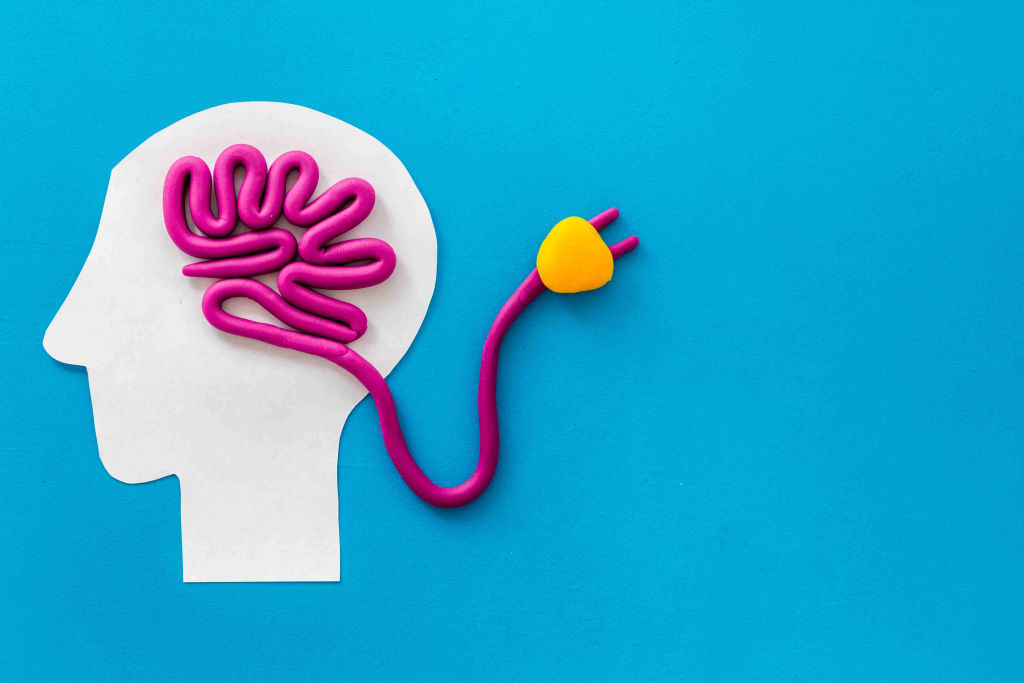
RESTORE
ENERGY
SANS
TECHNOLOGY.
It was a dark, almost pitch-black room we were required to access from a narrow hall of digital artwork. I had been there many times before, but the exhibits change often, so it was different this time. On the right side was a clay-like sculpture of seemingly distressed men. On the other side were these tall digital panels, from which flickering white lights and white noise was intensely emitted. There were several words in plain, white, pixelated text rolling quickly up and down the screens. Occasionally, words would emerge in red—creating a stark sense of contrast.
"Those are all tweets" one of the staff members said, seemingly out of nowhere, "this represents the mind trying to keep up, engaging interactively as we scroll through them."
As humans, we are creatures of habit. This is evident everywhere we look. We do things instinctively based on our past experiences. We get used to certain things and our brains learn to expect them. When things don't work out the way we expect and uncertainty arises, we feel lost and confused and anxious, sometimes unable to function properly. By nature and ideally, rest should be a habit. Yet, because of the ways the world has changed in the past few years, most of us are never really resting, let alone understand what the word really means.
There are at least two different types of rest: physical and most importantly, mental.
We could be laying down right now and from the outside looking in, it appears as though we're resting. Yet, do you think our minds are at rest? Take a wild guess. Nine times out of ten, when we are "resting" nowadays, just relaxing on the sofa or wherever—we are scrolling through our phones at the same time, while also watching TV, or listening to music. Thanks to technology, our brains are constantly being stimulated. Additionally, due to FOMO, a concept undeniably created by technology that has become a very real thing, it's difficult for us to find the motivation to truly shut all of our devices down as often as we should.
So we end up with sensory overload—essentially, the polar opposite of resting.
I started using a computer and the internet at just 7 years old. My dad was a software engineer and emphasized the importance and benefit of technology very early on and needless to say, I've been hooked ever since. It provided and still provides me with the comforting solace that I don't have to know or memorize too much. I don't need to be that smart—as long as I know how to be resourceful and make use of the internet. It also became a form of escape from reality for me. As an empathic introvert, I definitely find myself being more prone to burnout and overstimulation from events or circumstances others may not find as draining. A conversation gone on too long when I have thousands of other things to do, a violent scene in a show or movie... you get the point. Sometimes, I get sent into a frenzy without really understanding why aside from the obvious anxiety I feel rather steadily. Therefore, I've decided to make a more conscious effort this year to practice mindfulness—to be very much aware of my thoughts, enough to understand them and how they contribute to my feelings, yet not overly so. Then, I can let them pass and be present in the moment. In turn, this will eventually allow me to put my mind at ease and thus, rest.
Don't get me wrong—as a Web Design and Development major, I absolutely understand the importance of technology. Yet, just like everything else in life, moderation is key.
For starters, I've been spending less time on social media. I think back to that experience at ARTECHOUSE mentioned above and how we, as modern day humans, put our minds through so much stress by scrolling through feeds of information on a regular basis. Hence the reason regular physical activity is so important—it provides us with an opportunity to get out of our heads and into our bodies, something one of my favorite Peloton instructors, Jess Sims, emphasizes so often and that I truly believe is one of the keys to happiness. It's easy to remember to give our bodies rest, but it's even easier to forget about the fact that our minds need rest too.
When we are struggling mentally—eventually, so will our bodies and vice versa. This is probably why I have suffered from insomnia most of my life. I haven't fully grasped the art of resting the mind. Our minds and bodies work very closely together, whether we want to believe it or not. Let's be honest: there is something very peaceful about not having to attend to anyone, to talk to anyone, to listen to anyone or anything... even for a few moments. Most of us just don't take enough of these moments.
Keyword: TAKE.
WE MUST LITERALLY TAKE THESE MOMENTS OR WE WILL NEVER GET THEM. This is one of the most important lessons I've had to come to terms with having been a people pleaser most of my life.
When I think back to the most peaceful, relaxing moments in my life where it felt like I was truly at rest, my phone was nowhere in sight. I was at one with nature—alone, waking up from a deep, fulfilling sleep cycle or even lost in a particular moment with friends and/or family. Some of us are afraid of these moments and actively avoid them because we feel like we don't deserve them for whatever reason, while others are just too caught up in the flow of life and stuck on autopilot and obsessed with productivity that taking the time to themselves simply slips their mind.
Now, when I find myself scrolling mindlessly through Instagram, I start asking myself self-reflective questions like:
"How am I feeling right now?"
"What is my motive in this moment?"
"What else could I be doing right now that would bring me more satisfaction or joy?"
The answers to these questions almost always prompt me to log off from my virtual escapade and reenter the real world from a place of mindfulness. If you think about it, as individuals, we're not really meant to be connected 24/7.
There is no way we can truly be authentic, form our own opinions, and find our true calling if we are constantly immersed in and influenced by external stimuli.
It becomes increasingly difficult to sleep at night knowing you're not fulfilling your truest/higher self. Some of the most interesting people I have met have little to no online presence. They are, in essence, disconnected from the world, and this is what makes them special. They understand the importance of true REST.
Needless to say, I have become a big fan of the DND (Do Not Disturb) feature on my iPhone and I plan to use it even more often this year in a bid to prioritize my mental health.
TLDR: the simple solution to rest is to rely a little less on technology, so that our minds can recover and in turn—our bodies as well.
I'm sure you all have heard the saying, "your mind is your body's strongest muscle" and it couldn't be more accurate. Our minds are so powerful, but they can't reach their full potential if we never let them shut down and rest. They need a break to recharge just like our smartphones do. We cannot let the trials and tribulations of the outside world hinder our inner compass.
Our most authentic, creative self ultimately lies in our ability to unplug and allow time for real reflection and R.E.S.T.
About the Creator
Keep reading
More stories from Jessica Wheeler and writers in Humans and other communities.
The Highs & MerLOWS
She slammed her laptop shut after a long, virtual workday and grabbed a glass of ice-cold water. She couldn’t even recall which day it was; she just knew it was day one-hundred-and-something of being cooped up in her small, D.C. studio apartment for a government mandate that required everyone to “quarantine”—a term she had only previously heard in horror movies. She had been working from home, the new norm, for what seemed like forever at this point and each day seemed to bleed into the next. Although, the introverted, lone wolf side of her was enjoying being in quarantine, even if it wasn’t by choice. Still, like most others, she experienced bouts of cabin fever and anxiety, sometimes depression, knowing there was this mysterious, deadly virus going around that the world was struggling to contain. Some people had lost their jobs, others were dying, and she had recently moved into her own place, living alone for the first time in her life. Not having anyone physically there for consolation hit hard, but this stagnant, solitary state forced her to sit with her emotions and begin processing them, including the negative ones that persisted from her previous romantic relationship that ended over a year ago. She knew she had to remain positive and keep herself entertained in healthy ways. Fortunately, she had all of the resources on-hand to do so. She had equipment to exercise when she wanted to, several TV streaming subscriptions, books, art supplies, as well as plenty of food, alcohol, and toilet paper after stocking up. She was also granted the gift of time, allowing her to focus on her dog, Gatsby, and other things that had been previously neglected. One of those things was something she had subconsciously been avoiding for some time: dating.
By Jessica Wheeler5 years ago in Humans
The CEO of Everything
They say "jack of all trades, master of none," but they forgot to mention the part where the jack of all trades is also the camera woman, the makeup artist, and the person currently yelling at a tangled Wii microphone cable in a her own bathroom while recording herself singing and trying to make it look realistic and professional. (As professional as you can make it with nothing but a cell phone camera and a mic that doesn't work)
By Sara Wilson5 days ago in Humans
Affection and Healing for Yourself
During the night of the last quarter moon, I gathered my ritual supplies. I carefully handled the chunk of black tourmaline that would protect me from your overall negative and narcissistic energy. I carefully walked the house with my stick of selenite in hand, asking the universe to cleanse our working space.
By Alisha Wilkins ✒️🦋🖋️3 days ago in Fiction



Comments
There are no comments for this story
Be the first to respond and start the conversation.