
What If All Clocks in the World Stopped?
What If All Clocks in the World Stopped?
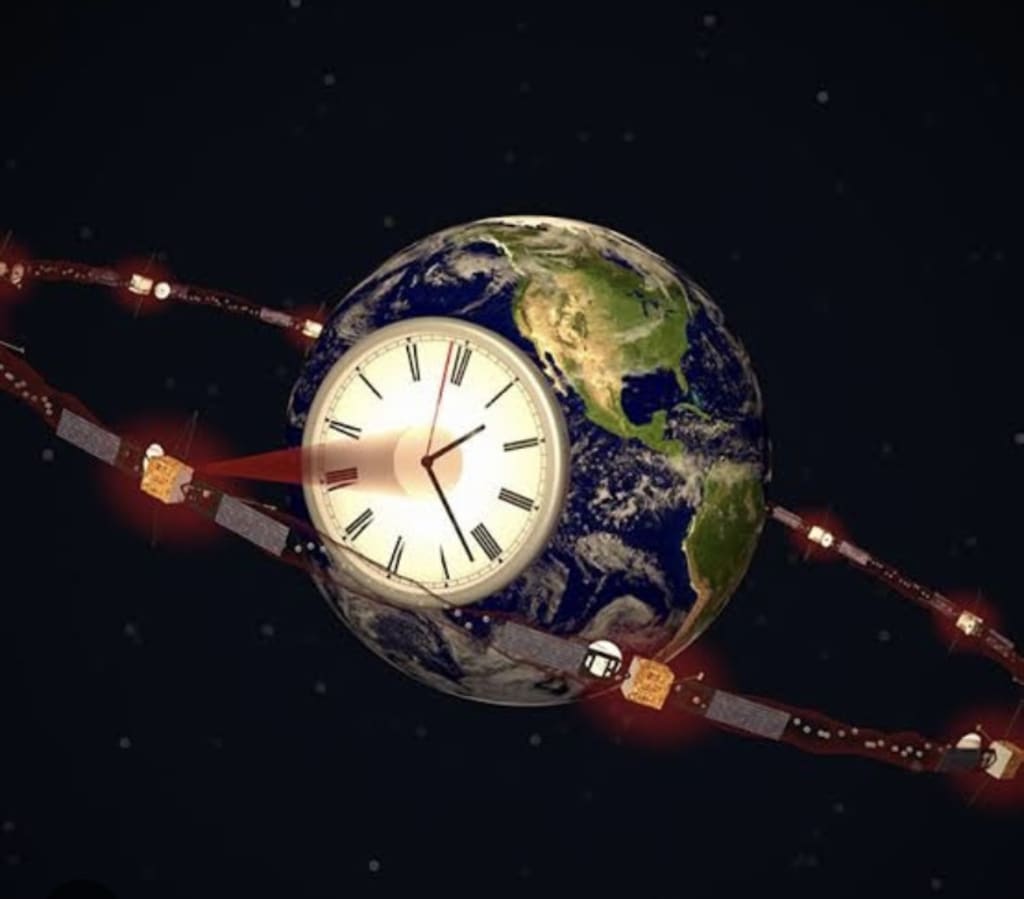
Have you ever wondered how devices like phones, laptops, and wristwatches know the exact time? The time on these devices is automatically set by a program, but how does the program know the precise time?
To understand this, let's take a closer look at atomic clocks. Atomic clocks, such as hydrogen masers, are highly accurate and precise timekeeping devices. There are about 400 of these clocks located around the world, and they play a crucial role in helping us navigate through time.
In an atomic clock, instead of a pendulum, atoms are used to keep time. When these atoms are exposed to microwave radiation, they start to oscillate. Approximately 9 billion oscillations of these atoms are equivalent to one second. The vibrations of atoms are incredibly precise and consistent, making atomic clocks extremely accurate.
These atomic clocks serve as the primary reference for timekeeping in modern technologies. They are used in satellites, operating systems, GPS, flight and train schedules, and even the TV programs we watch. All these systems rely on the precise time provided by atomic clocks to function properly.
Now, let's imagine a scenario where all the clocks in the world suddenly stop working. If atomic clocks were to stop, it would have severe consequences. Satellites would lose their guidance systems, and modern technologies would fail. Flight and train schedules would become impossible to coordinate, leading to chaos and potential disasters. The banking system would collapse, and the economy would suffer. The entire world would plunge into chaos and panic.
To prevent such a scenario, atomic clocks need to be maintained and continuously synchronized. They provide the fundamental time reference that allows all other clocks and timekeeping devices to function accurately. Without this synchronization, our modern, interconnected world would struggle to operate smoothly.
However, it's important to note that the concept of precise timekeeping is a relatively recent development. Before the Industrial Revolution, people relied on natural cues such as the position of the sun, rooster crowing, and their internal biological clocks to guide their daily routines. In a world without clocks, people would gradually adapt and return to these natural timekeeping methods.
For hundreds of thousands of years, humans used natural cues to go to bed at night and wake up in the morning. However, with the invention of the light bulb and the industrial era, our sleep patterns and daily routines changed. We started focusing on the opening time of factories and plants, and later, the schedules of TV programs, the internet, and video games.
But in a world without precise timekeeping, people would once again rely on natural cues. The sun would become a crucial time indicator, and sundials would make a comeback in every household. Hourglasses of various shapes and sizes would be popular again, reminding us of the passing of time.
However, it's worth mentioning that even atomic clocks have their limitations. Earth's rotation is not constant, and it can vary due to gravitational influences from the Moon, the Sun, and other planets, as well as geological fluctuations within the Earth's core. To account for these variations, timekeepers occasionally add or subtract a second to or from atomic clocks. This adjustment ensures that the time displayed on these clocks aligns with the natural day and night cycles.
In conclusion, atomic clocks are essential for ensuring the accurate functioning of modern technologies and maintaining synchronization across various systems. They provide the precise time reference that guides our daily lives. Without them, our world would face significant disruptions and chaos. In a world without clocks, we would gradually return to natural timekeeping methods, relying on the sun, natural cues, and our internal biological clocks. While technology has revolutionized the way we keep time, the natural rhythm of day and night will always remain a fundamental aspect of our existence.
About the Creator
Keep reading
More stories from writers in Humans and other communities.
Whiskey At Dusk
Guess the whiskey was more important to you in the end, wasn’t it? It was more than the well-being of your friends; more vital than showing up to the places you promised you would and could come to; more critical of a matter than fulfilling your damn responsibilities and getting the press off your back.
By Snarky Lisa6 days ago in Humans
Ways Healthy Relationships Reduce Anxiety And Improve Mental Health Naturally
Emotional security forms through healthy relationships and this is very important in alleviating anxiety. When people become emotionally secure, the nervous system can rest instead of being on alert. The fact that a person is trustworthy, helpful, and empathetic will decrease the fear of being rejected or antagonistic. This feeling of security enables the mind to relax reducing the stress levels in the daily lives. It is also emotional security which promotes openness and thus can easily reveal worries before they turn into excessive stress or even obsessive worrying thoughts.
By Mark Hipsterabout 13 hours ago in Humans



Comments
There are no comments for this story
Be the first to respond and start the conversation.