
What Does Career Growth Mean? Your Complete Guide to Professional Success in 2025
Discover what career growth really means and unlock strategies for career growth that will accelerate your professional development. Learn how to measure career growth effectively.


You're sitting in your cubicle on a Monday morning, sipping your third cup of coffee, and suddenly it hits you – am I actually growing in my career, or am I just... existing?
If you've ever had this moment of professional existential crisis (and let's be honest, who hasn't?), you're not alone. The question "what does career growth mean?" is probably one of the most Googled career queries right after "how to survive Monday meetings without losing your sanity."
But here's the thing – career growth isn't just about climbing the corporate ladder anymore. It's evolved into something much more nuanced, personal, and frankly, way more interesting than our parents' generation might have imagined.
What Does Career Growth Actually Mean in Today's World?
Let me break it down for you in plain English. Career growth is essentially the ongoing process of developing your professional skills, expanding your responsibilities, and advancing toward your career goals. But – and this is a big but – it doesn't always mean getting promoted to the corner office.
Think of career growth like working out. Some days you're lifting heavier weights (taking on bigger projects), other days you're improving your form (refining existing skills), and sometimes you're just showing up consistently (building professional relationships). All of it counts toward your overall fitness – or in this case, your professional development.
The Modern Definition Has Evolved
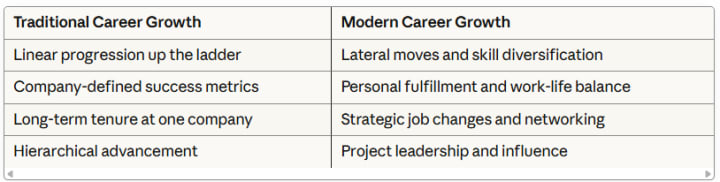
Gone are the days when career growth simply meant:
Getting promoted every two years
Earning a higher salary
Moving up the organizational chart
How Do I Measure Career Growth? (The Real Talk)
Ah, the million-dollar question! How do you actually know if you're growing or just getting older at your desk?
Here's where I get real with you – measuring career growth isn't as straightforward as checking your bank account (though that's definitely part of it). You need multiple metrics because, let's face it, professional growth is multidimensional.
The Career Growth Scorecard
1. Skills Expansion
Are you learning new technologies, methodologies, or soft skills?
Can you handle projects today that would have intimidated you six months ago?
Do colleagues come to you for advice in areas where you were once the newbie?
2. Responsibility and Impact
Has your decision-making authority increased?
Are you influencing outcomes beyond your immediate role?
Do people outside your department know who you are?
3. Professional Network Growth
Are you meeting new industry contacts regularly?
Do you have mentors and mentees?
Are you invited to speak, consult, or contribute to industry discussions?
4. Financial Progress
Is your compensation increasing at or above market rate?
Are you receiving bonuses, equity, or other financial incentives?
Do you have multiple income streams or freelance opportunities?
5. Personal Satisfaction
Do you feel challenged and engaged at work?
Are you excited about your career trajectory?
Do you feel like you're making meaningful contributions?
Strategies for Career Growth That Actually Work
Okay, let's get tactical. You want strategies for career growth that don't sound like they came from a 1990s self-help book? I've got you covered.
The "Strategic Networking" Approach (Not the Schmoozing Kind)
Networking doesn't mean collecting business cards at boring industry events. It means building genuine professional relationships. Here's how:
The Coffee Chat Strategy: Reach out to one person per week for a 20-minute virtual coffee. Ask about their career journey, not for job opportunities.
The Value-First Approach: Share interesting articles, make introductions, or offer your expertise before asking for anything.
The Long Game: Focus on relationships, not transactions. The best opportunities come from people who genuinely know and like your work.
The "Skill Stacking" Method
Instead of becoming an expert in just one area, develop complementary skills that make you uniquely valuable:
Technical + Communication: If you're in tech, become the person who can explain complex concepts to non-technical stakeholders.
Industry Knowledge + Data Analytics: Combine your sector expertise with the ability to interpret data and trends.
Leadership + Emotional Intelligence: Develop both the hard and soft skills needed to lead teams effectively.
The "Strategic Visibility" Game Plan
Growth happens when the right people know about your contributions:
Document Your Wins: Keep a running list of your accomplishments, quantified with metrics whenever possible.
Internal Marketing: Volunteer for cross-functional projects that expose you to senior leadership.
External Presence: Share insights on LinkedIn, speak at industry events, or contribute to professional publications.
Thank For Reading
Read more knowledge
About the Creator
AJ CRYPTO
Storyteller, content creator, and lover of all things digital. Writing my journey, one post at a time."
"Sharing tips on finance, health, and motivation. Passionate about SEO and affiliate marketing. Let's connect!"


Comments
There are no comments for this story
Be the first to respond and start the conversation.