
Voices of Wisdom: Honoring Those Who Came Before
Learning Life’s Greatest Lessons from Our Elders


Twelve-year-old Hamza was always in a hurry. Whether it was rushing through his homework, speeding through dinner, or quickly brushing off his grandfather’s stories, patience just didn’t seem to be part of his world.
"Grandpa always tells the same things," he often muttered. "Who needs old stories in today’s world?"
Hamza’s grandfather, Baba Jan, lived with their family. A quiet man with kind eyes, a walking stick, and a collection of memories too big for any book, Baba Jan had been a schoolteacher in his youth. Now retired, he often sat in the courtyard, sipping chai and gazing at the sky with a soft smile.
One evening, as Hamza was glued to his tablet playing games, a power cut plunged the house into darkness.
"Ugh! No Wi-Fi, no games. This is the worst!" he groaned.
“Sometimes,” Baba Jan said, appearing with a lantern, “darkness can light up more important things.”
Hamza rolled his eyes. “Like what? Another story about the olden days?”
Baba Jan chuckled and patted the bench beside him. “Come, I’ll tell you something different tonight. Not just a story—a lesson.”
With nothing else to do, Hamza joined him.
"Did I ever tell you about the flood of 1973?" Baba Jan began. “Our whole village was drowning. People were panicking. I was just 19. Young, brave, and stubborn like you.”
Hamza listened, arms crossed.
“I saw an old man stuck on a rooftop. Everyone was running to save their valuables. I hesitated, but something told me: 'Help him first.' I used a rope, climbed a tree, and pulled him up. That man was blind and alone—but he held my hand like I was his entire world.”
Baba Jan paused. “That moment changed me. I realized wisdom isn’t in speed, Hamza. It’s in knowing what really matters—and our elders carry the map to that wisdom.”
Hamza didn’t say much that night, but something in him had shifted.
The next day, he noticed Baba Jan struggling to water the plants in the garden. For the first time, Hamza offered, “Let me do that for you, Baba.”
A week later, his school held a “Respect for Elders” week. Students were asked to write essays or share stories about an elder who inspired them. Most kids didn’t take it seriously—but Hamza saw an opportunity.
That evening, he sat beside Baba Jan with a notebook. “Can you tell me about your first day as a teacher?” he asked.
Baba Jan’s eyes lit up. “Ah, that day! I wore my best shalwar kameez, but I was so nervous I forgot my chalk! I had to write on the board with a piece of coal…”
Each story that followed opened a window into a different time—filled with lessons of honesty, kindness, sacrifice, and honor. Hamza began to understand the strength behind the wrinkles, the value behind quiet smiles, and the depth behind simple words.
The day of the presentations arrived. When Hamza stood up in front of his class, he held up a photo of Baba Jan.
“This is my grandfather,” he began, “He taught hundreds of children to read and write. But to me, he taught something even more important—how to be a good human.”
He told the story of the flood, the rooftop rescue, and how that moment shaped Baba Jan’s life—and now, his own.
The class was silent, the teacher moved. Hamza’s story earned the loudest applause.
Later that evening, Hamza ran home, excited. “Baba Jan, we won! Everyone clapped. Even our principal praised your courage!”
Baba Jan smiled, pulling Hamza close. “Winning hearts is the real victory, my boy.”
From that day forward, Hamza never rolled his eyes at another story. He started asking more questions, listening more closely, and offering help whenever he could—not just to Baba Jan, but to the elderly neighbor who walked with a cane, to the aunt who carried heavy groceries, and even to strangers on the street.
He had discovered something his games and screens could never offer: the strength and grace that comes from respecting those who’ve lived before us.
Moral: Respecting elders is not an old tradition—it's a timeless path to becoming wiser, kinder, and stronger.
About the Creator
Raza Ullah
Raza Ullah writes heartfelt stories about family, education, history, and human values. His work reflects real-life struggles, love, and culture—aiming to inspire, teach, and connect people through meaningful storytelling.
Keep reading
More stories from Raza Ullah and writers in Humans and other communities.
A Catch Beyond the Sea
Once upon a time, in a quiet seaside village, lived a humble fish seller named Kareem. He lived alone in a small wooden hut near the shore. Every morning before sunrise, he sailed his old boat into the deep blue sea, cast his net, and brought back fresh fish to sell in the village market.
By Raza Ullah7 months ago in Humans
The CEO of Everything
They say "jack of all trades, master of none," but they forgot to mention the part where the jack of all trades is also the camera woman, the makeup artist, and the person currently yelling at a tangled Wii microphone cable in a her own bathroom while recording herself singing and trying to make it look realistic and professional. (As professional as you can make it with nothing but a cell phone camera and a mic that doesn't work)
By Sara Wilson4 days ago in Humans
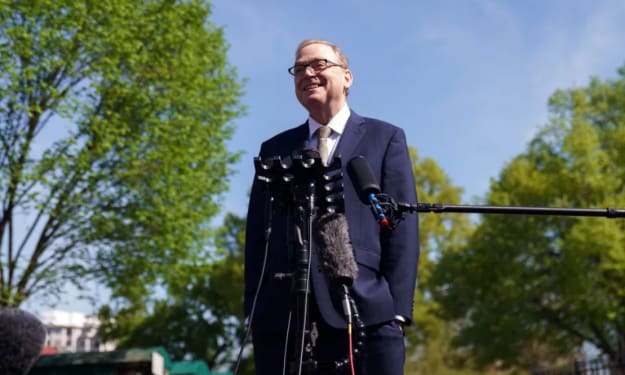
Trump Voices Reluctance at Nominating Hassett as Fed Chair
Former President Donald Trump has publicly expressed reluctance to nominate economist Kevin Hassett as the next Chair of the Federal Reserve, igniting discussion across political and financial circles. Hassett, a well-known economic adviser during Trump’s administration, has long been considered a candidate capable of bridging the divide between market confidence and presidential expectations. Yet Trump’s latest statements suggest hesitation, prompting questions about the dynamics between the White House, the Federal Reserve, and Wall Street. The Federal Reserve and Its Importance The Federal Reserve, or Fed, is the central bank of the United States and plays a crucial role in steering the economy. Its responsibilities include controlling inflation, stabilizing employment, and guiding monetary policy through tools such as interest rates and quantitative easing. The selection of a Fed Chair is one of the most significant economic decisions a president can make, as the position directly impacts financial markets, consumer confidence, and international economic relations. Hassett’s name has circulated in financial and political circles as a potential candidate due to his extensive background in economic policy. He previously served as Chairman of the Council of Economic Advisers under Trump and has consistently advocated for growth-oriented policies. His nomination could signal continuity with Trump-era economic priorities, but the former president’s reluctance has created uncertainty. Trump’s Reluctance In recent interviews, Trump expressed hesitation over formally nominating Hassett, citing concerns about market volatility and potential political backlash. Analysts suggest several factors could be influencing his reluctance: Public Scrutiny: Nominating a high-profile economist invites intense media attention and political debate. Any misstep could impact Trump’s image and perceived influence over economic policy. Policy Differences: Although Hassett and Trump worked closely during his administration, disagreements over interest rates, inflation control, or fiscal strategy could cause hesitation. Timing and Strategy: The timing of a Fed nomination is critical. Trump may be weighing market conditions, congressional response, or broader political calculations before making a decision. Market Implications Financial markets respond strongly to news about Fed leadership. The Chair influences interest rates, lending policies, and overall investor confidence. Uncertainty around the nomination can lead to short-term market volatility, affecting stock prices, bond yields, and the U.S. dollar. Economists argue that hesitation in announcing a nominee could signal indecision or caution, which may affect investor sentiment. “Markets value predictability,” says Julia Ramirez, a senior economist at Global Insights. “A prolonged period without a clear candidate can create temporary instability, particularly in sectors sensitive to interest rate changes, such as banking and real estate.” Hassett’s Profile Kevin Hassett is widely recognized for his academic and policy expertise. He co-authored several influential works on economic growth, tax policy, and productivity. During his tenure as Chairman of the Council of Economic Advisers, Hassett emphasized tax reform, deregulation, and measures aimed at stimulating investment. Supporters argue that Hassett’s experience equips him to manage complex economic challenges, including inflationary pressures, labor market fluctuations, and post-pandemic recovery strategies. Critics, however, question whether his policy preferences align with the current economic landscape, particularly with inflation and debt concerns dominating headlines. Political Dynamics Trump’s reluctance also reflects broader political dynamics. The Federal Reserve, while independent, often becomes a focal point for political debate. Decisions about leadership, policy direction, and rate adjustments carry political weight. By hesitating to nominate Hassett, Trump may be signaling caution, balancing his desire to influence economic policy with the need to avoid potential criticism from lawmakers, economists, or the media. The situation underscores the intersection of politics and economics, where decisions extend beyond technical expertise to considerations of public perception and political strategy. Historical Context Presidents have historically faced scrutiny over Fed appointments. The Chair’s term typically spans four years, but the position’s influence extends well beyond the tenure of any single administration. Past presidents have occasionally delayed nominations, weighing the impact on markets, the Senate confirmation process, and economic policy continuity. Trump’s reluctance echoes these historical patterns. By pausing, he may be ensuring that any nomination strengthens both market stability and his political positioning, rather than generating controversy or uncertainty. Potential Outcomes Several scenarios could emerge from Trump’s hesitation: Nomination Moves Forward: After careful consideration, Trump could formally nominate Hassett, signaling confidence in his abilities and reinforcing Trump-era economic priorities. Alternative Candidate: Hesitation might indicate Trump is exploring other options, potentially favoring a candidate with different policy views or broader bipartisan appeal. Prolonged Uncertainty: Extended delay could increase market anxiety and political debate, complicating the nomination process and influencing investor sentiment. Each outcome carries implications not only for Hassett and the Fed but also for the broader economy, highlighting the significance of leadership decisions at the nation’s central bank. Reactions from Economists and Analysts Reactions to Trump’s statements have been mixed. Some economists see the reluctance as prudent, emphasizing the need to assess market conditions and congressional sentiment before nominating a Fed Chair. Others view it as unnecessary delay, creating uncertainty in a period when stable leadership is critical. Investors and analysts are watching closely, understanding that the Fed Chair’s influence extends to mortgage rates, borrowing costs, and overall economic growth. Even perceived hesitation can ripple through financial markets, underscoring the intertwined nature of politics and economics. Conclusion Trump’s reluctance to nominate Kevin Hassett as Fed Chair highlights the complex balance between politics, economics, and leadership. While Hassett’s credentials suggest he could provide stability and continuity, the former president’s hesitation underscores the broader considerations at play, from market confidence to political optics. As discussions continue, the financial world and the public remain attentive. The Fed Chairship is one of the most consequential appointments in U.S. economic history, affecting everything from consumer borrowing to global markets. Whether Hassett eventually receives the nomination or an alternative candidate emerges, the situation illustrates the delicate interplay between political decision-making and economic stewardship—a dynamic that shapes not just Washington, but the daily financial lives of millions of Americans.
By Muhammad Hassan5 days ago in Humans
Rachel Reviews: The Spiral Archive by Pieter Hendrik
It's difficult for me to know where to start with a review of this book as it was, for me, an entirely unique experience and one that I'll probably never have again. I don't want that to be interpreted as unenjoyable but it has left me scratching my head a little and ruminating on its content, its themes and its characters.
By Rachel Deeming4 days ago in BookClub



Comments (1)
Talks of old people.