
Voices in the Rubble
The Unseen Strength of Women in Gaza

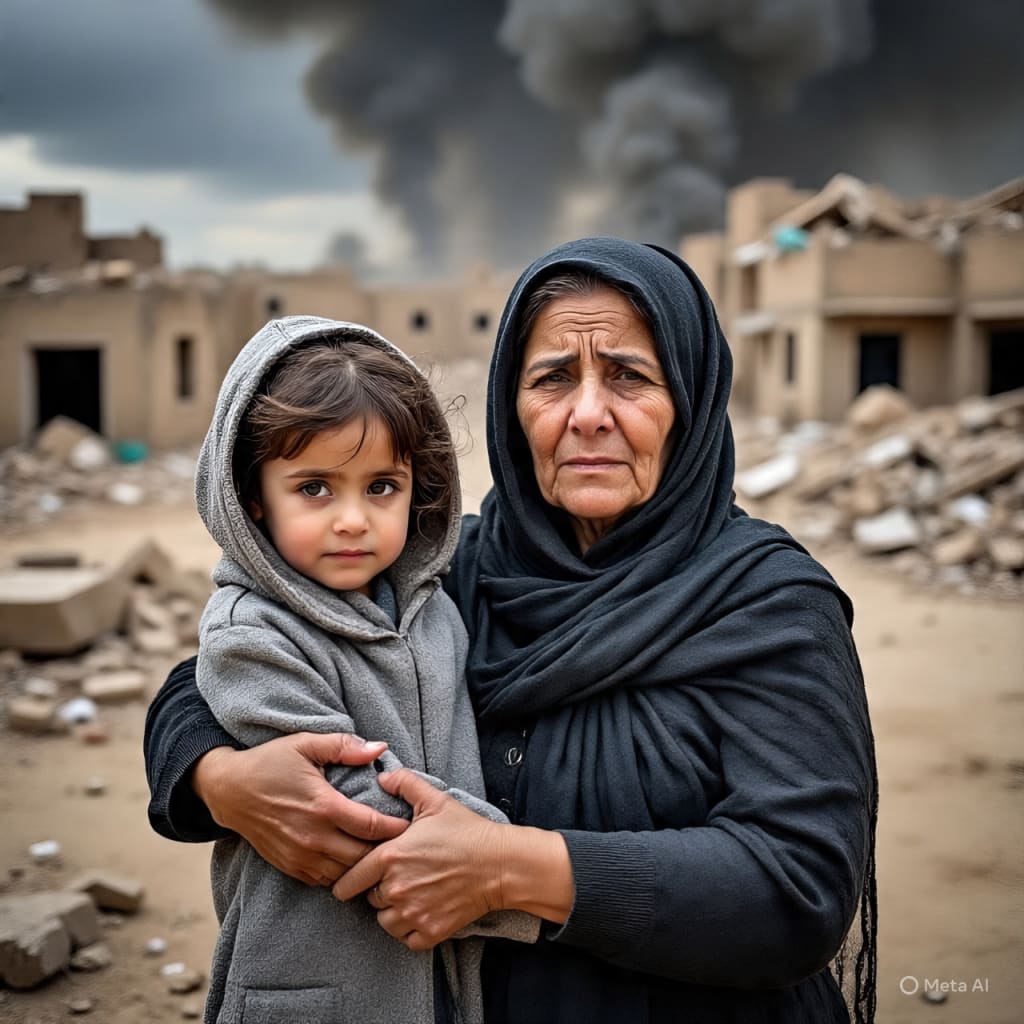
Fatima clutched her youngest daughter’s hand tightly as the sky above Gaza darkened with smoke. The distant thuds of explosions shook the ground beneath their feet, and the once-bustling streets had turned into a maze of destruction and fear. Her home, like so many others, was reduced to rubble — walls torn apart, memories buried under debris.
For Fatima, a mother of five, the war was not just about the sounds of bombs or the threat of violence. It was about survival — for her children, her family, and her own dignity in a world turned upside down.
In Gaza, women like Fatima live at the crossroads of crisis and courage. The conflict has shattered lives, but it has also awakened a fierce spirit among those who bear the heaviest burdens. They are nurses, teachers, and activists; they are the threads holding their families and communities together.
Fatima had never imagined her life would be so hard. Before the war, she taught young children in a small neighborhood school, filling their days with stories, laughter, and hope. Now, with schools destroyed and families displaced, she found herself teaching her own children in the ruins, using chalk on a cracked wall.
Her eldest son, Ahmad, was too young to fully understand the politics that tore their homeland apart, but he saw the pain in his mother’s eyes and the exhaustion in her movements. “Mama, when will the fighting stop?” he asked one night, his voice trembling.
Fatima could only whisper back, “I don’t know, my son. But I promise, we will stay together.”
In Gaza’s crowded shelters, women shared stories and sorrows, creating bonds stronger than any destruction. Layla, a nurse, worked tirelessly in overwhelmed hospitals, patching wounds and calming frightened children. Her hands trembled less than her heart as she faced the endless stream of injured — many of them women and children like Fatima’s family.
Despite the chaos, Layla refused to lose hope. “Every life saved is a victory,” she said, her voice steady as she bandaged a young girl’s arm. “We must keep fighting—not with weapons, but with care and love.”
The women of Gaza also carry the invisible wounds — trauma, loss, and fear that no bomb can shatter but silence can deepen. Many have lost husbands, brothers, and fathers in the fighting, leaving them as heads of households in a society where such roles come with heavy challenges.
Yet in the face of despair, women like Fatima have shown extraordinary resilience. They organize food distributions, support networks, and small businesses to keep families afloat. They educate children about peace, dreaming of a day when their voices will no longer be drowned out by gunfire.
One afternoon, Fatima met with a group of women in a small community center, their faces tired but determined. They shared plans for rebuilding, not just homes but hope. “Our strength is our unity,” Fatima said. “If we stand together, nothing can break us.”
International aid often focuses on the immediate needs — food, shelter, medical supplies — but the stories of Gaza’s women reveal a deeper struggle. Their fight is for dignity, justice, and a future where their daughters can grow up free from fear.
Amira, a young activist, spoke at a small gathering about the power of women’s voices. “We are not just victims,” she declared. “We are survivors, leaders, and the heartbeat of Gaza. Our stories must be heard.”
As night fell over Gaza, Fatima sat quietly with her children in the shelter. Outside, the stars flickered through the smoke like distant promises. She told her children stories of their ancestors’ courage and the dreams they still held.
In a land where every day is uncertain, the women of Gaza keep the flame of hope alive. Their courage is a testament to the human spirit’s ability to endure, to heal, and to dream of peace amid the darkest nights.
Because even in the rubble, life persists — carried forward by the voices of women who refuse to be forgotten.
About the Creator
saqib rehman
journalist
Keep reading
More stories from saqib rehman and writers in Humans and other communities.
How Art Empowers Women to Find Their Voice and Shape Their Futures
In every corner of the world, art has been a language beyond words—a way to express feelings, dreams, and struggles. For women, especially those marginalized or silenced by society, art offers more than just beauty; it offers power. It is a catalyst for empowerment, enabling women to find their voices, heal from trauma, and claim their rightful place in history and society.
By saqib rehman8 months ago in Art
Flirting Men Often Use Body Language Subtle Cues And Humor
Flirting refers to a natural and in most cases a mischievous manner in which individuals express romantic or personal interest. Most men show their attraction not just by means of words, but also body language, acting hints, and jokes. These actions aid in building a comfortable and interesting environment and also gives them an opportunity to check if they are interested. Flirting can be rather playful, but it does not lack substance as it can convey feelings and intentions. This knowledge of signals would enable individuals know when someone is interested and how to respond to it and build social bonding and romantic potential.
By Willian James6 days ago in Humans
Early March 2026: 4 Goals Accomplished
It's early March and I've now accomplished my 4th writing goal for the year of 2026. Before diving into the behind-the-scenes of it... why not tell you up front what that accomplishment was? I was published in a 2nd publication for this year. Published in Helix Literary Magazine out of Central Connecticut State University. You can read it for free right now!
By Stephen Kramer Avitabile7 days ago in Writers


Comments
There are no comments for this story
Be the first to respond and start the conversation.