
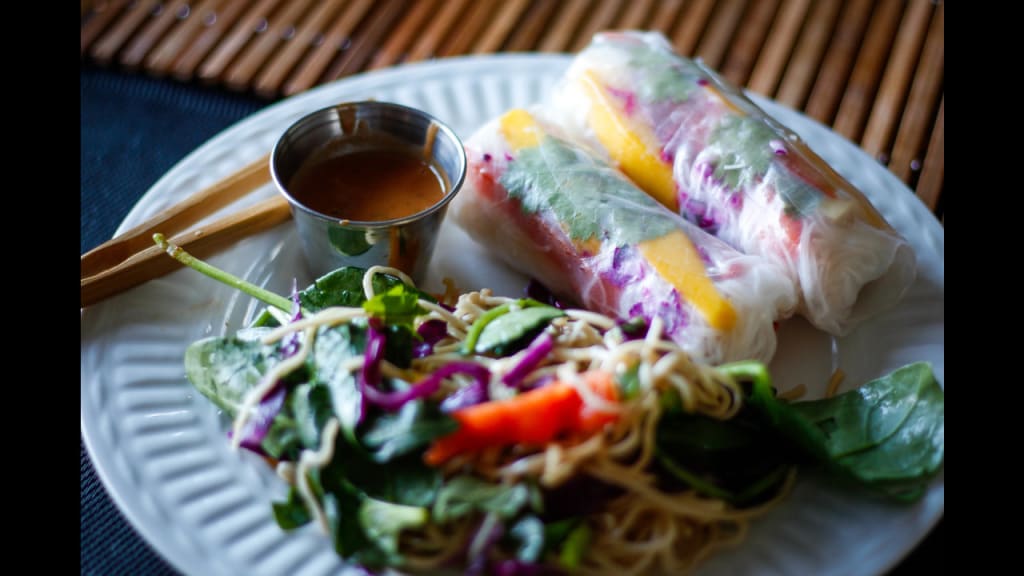
Spring rolls, or "gỏi cuốn" in Vietnamese, are a popular appetizer or snack that can be found in Vietnamese cuisine. They are a type of fresh, non-fried spring roll that is often served as an appetizer or a light meal.
The ingredients for Vietnamese spring rolls typically include
rice paper wrappers,
vermicelli noodles,
fresh herbs,
lettuce or other greens,
and a protein such as shrimp,
pork, or tofu.
Some variations may also include other vegetables such as cucumber or carrots.
Instructions:
To assemble the spring rolls, the rice paper wrappers are first soaked in warm water to soften them. Once pliable, they are laid flat on a plate or cutting board, and the ingredients are added to the center of the wrapper.
The wrapper is then rolled up tightly, with the ends tucked in, to create a neat, compact package.
The spring rolls are often served with a dipping sauce, such as nuoc cham, which is made from fish sauce, lime juice, sugar, and chili.
One of the keys to making delicious spring rolls is to use fresh, high-quality ingredients. The herbs and greens should be crisp and flavorful, and the protein should be cooked just right. The vermicelli noodles should be cooked until tender, but not mushy.
Another important factor is the dipping sauce. Nuoc cham is a classic Vietnamese dipping sauce that is the perfect complement to spring rolls. It is a tangy, sweet, and savory sauce that adds a burst of flavor to the rolls. Other dipping sauce options include peanut sauce or hoisin sauce.
In addition to being tasty, Vietnamese spring rolls are also a healthy option. They are low in fat and calories and are packed with fresh vegetables and lean protein. They are also gluten-free, making them a great choice for those with gluten sensitivities.
Spring rolls can be found on the menu at many Vietnamese restaurants, but they are also easy to make at home. With a little practice, anyone can create delicious, restaurant-quality spring rolls in their own kitchen.
To make your own spring rolls, start by gathering the ingredients. You'll need rice paper wrappers, vermicelli noodles, fresh herbs such as cilantro and mint, lettuce or other greens, and a protein of your choice, such as shrimp, pork, or tofu. You may also want to include other vegetables such as cucumber or carrot.
Recipe
To assemble the spring rolls, start by soaking the rice paper wrappers in warm water until they are pliable. Lay the wrapper flat on a plate or cutting board, and add a small amount of each ingredient to the center of the wrapper. Be careful not to overfill the wrapper, as this can make it difficult to roll up.
Once you've added your ingredients, fold the sides of the wrapper in, then roll the wrapper up tightly, tucking in the ends as you go. Repeat the process until you've used up all of your ingredients.
To make the dipping sauce, combine fish sauce, lime juice, sugar, and chili in a small bowl. Adjust the seasoning to taste, adding more sugar or lime juice as needed.
Serve the spring rolls with the dipping sauce on the side, and enjoy! Vietnamese spring rolls make a delicious and healthy appetizer, snack, or light meal that is perfect for any occasion.
Variations
There are many variations of Vietnamese spring rolls, and you can customize them to suit your taste. For example, you can use different proteins such as grilled chicken or beef, or use a vegetarian protein like tempeh or seitan. You can also vary the vegetables you use, adding things like jicama or bell peppers for extra crunch.
If you want to take your spring rolls to the next level, you can also experiment with different dipping sauces. For example, you can try a sweet and sour sauce made from vinegar, sugar, and soy sauce or a spicy peanut sauce made from peanut butter, soy sauce, and chili paste.
In addition to being a delicious and healthy dish, Vietnamese spring rolls also have cultural significance. In Vietnam, they are often served at festive occasions such as weddings and Lunar New Year celebrations. They are also popular street food and can be found at food stalls and markets throughout the country.
In Vietnamese culture, food is often seen as a way of bringing people together and fostering social connections. The act of sharing food with others is an important aspect of Vietnamese hospitality, and spring rolls are a perfect example of this. They are easy to share, and their bite-sized portions make them perfect for snacking and mingling.
Cultural Significance
In addition to their cultural significance, Vietnamese spring rolls are also a great example of the health benefits of Vietnamese cuisine. Vietnamese food is known for its emphasis on fresh, whole ingredients, and the use of herbs and spices to add flavor. This makes it a great choice for those who are looking for healthy, flavorful cuisine.
In fact, Vietnamese cuisine has been recognized by the United Nations as one of the healthiest in the world. The emphasis on fresh ingredients, lean proteins, and flavorful herbs and spices makes it a great choice for those who want to maintain a healthy diet without sacrificing taste.
In conclusion, Vietnamese spring rolls are a delicious and healthy appetizer or snack that is perfect for any occasion. They are easy to make and can be customized to suit your taste. Whether you're enjoying them at a festive celebration or just as a light meal or snack, Vietnamese spring rolls are sure to please. So why not give them a try? With their fresh, flavorful ingredients and cultural significance, they are sure to become a new favorite in your culinary repertoire.
About the Creator
Investor
finance-educate.com
Autonomy Is The Real Privilege
Good morning, freedom-seekers! Today we’re gonna be looking at autonomy. A strange word, I know; one many would probably look at blankly and run away from on sight. We’re gonna figure out what it actually means, consider how it’s achieved, and decipher just how deeply most of us are tangled up in dependence without realising it.
By That ‘Freedom’ Guyabout 21 hours ago in Humans




Comments
There are no comments for this story
Be the first to respond and start the conversation.