
Unveiling Human Design: A Beginner's Journey to Self-Discovery
Discover Your Unique Energetic Blueprint and Learn To Transform Your Life With Human Design!!!

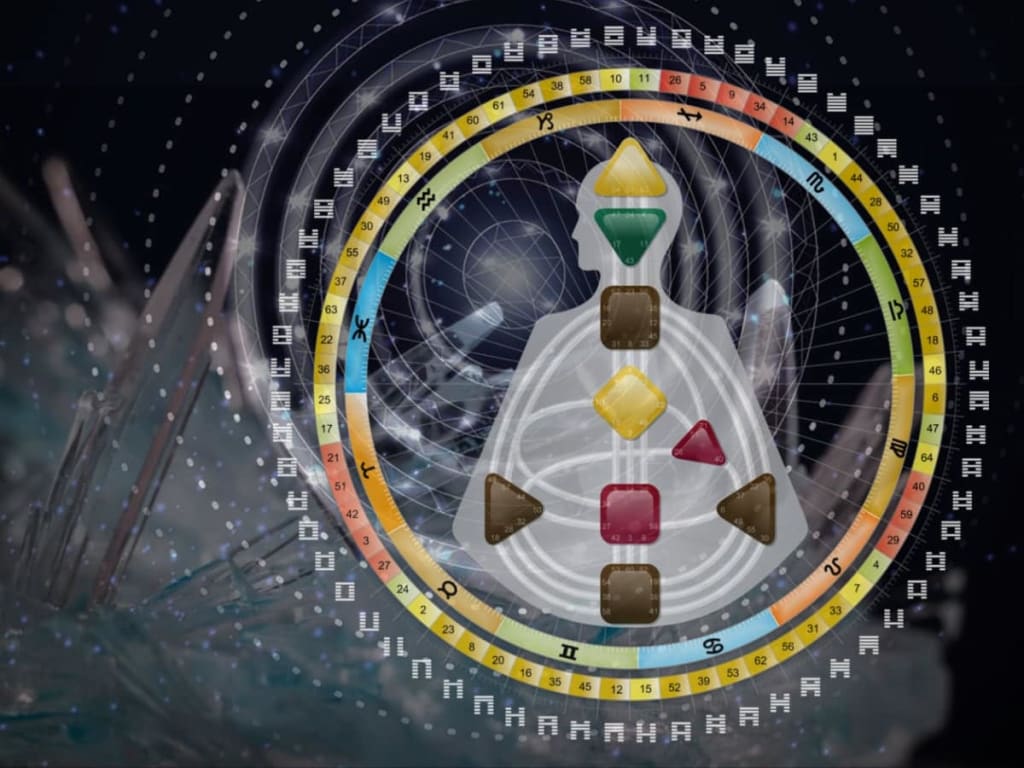
In an age where self-discovery and personal growth have become paramount, many individuals are turning to various tools and frameworks to better understand themselves and their unique life paths. One such framework gaining traction is Human Design. But what exactly is Human Design, and how can it guide you on your journey of self-exploration? This beginner’s guide aims to unravel the complexities of this fascinating system.
What is Human Design?: Human Design is a synthesis of various ancient and modern systems, including astrology, the I Ching, the Kabbalistic Tree of Life, and the chakra system. Created in 1987 by Ra Uru Hu (born Robert Alan Krakower), Human Design offers insights into your personality, strengths, and potential challenges by analyzing your birth data. The system presents a unique “body graph,” which serves as a visual representation of your energetic makeup.
The Basics of Human Design: At its core, Human Design provides a blueprint of your energetic configuration based on your date, time, and place of birth. This blueprint categorizes you into one of five types, each with distinct characteristics and ways of engaging with the world. These types are:
1. Manifestors: About 9% of the population, Manifestors are the initiators. They are driven to bring ideas to life and often work best independently. Their strategy is to inform others before taking action.
2. Generators: Comprising around 70% of the population, Generators are the builders and doers. They have sustainable energy and are designed to respond to life. Their strategy involves waiting to respond to external stimuli.
3. Projectors: Making up roughly 20% of the population, Projectors are the guides. They excel in managing and directing the energy of others but need to wait for invitations before sharing their insights.
4. Reflectors: The rarest type, making up about 1% of the population, Reflectors are highly sensitive and attuned to their environment. Their strategy is to wait a lunar cycle (about 28 days) before making significant decisions.
5. Manifesting Generators: A hybrid of Manifestors and Generators, they can initiate and respond. They make up about 33% of the population and often have a multi-tasking approach to life.
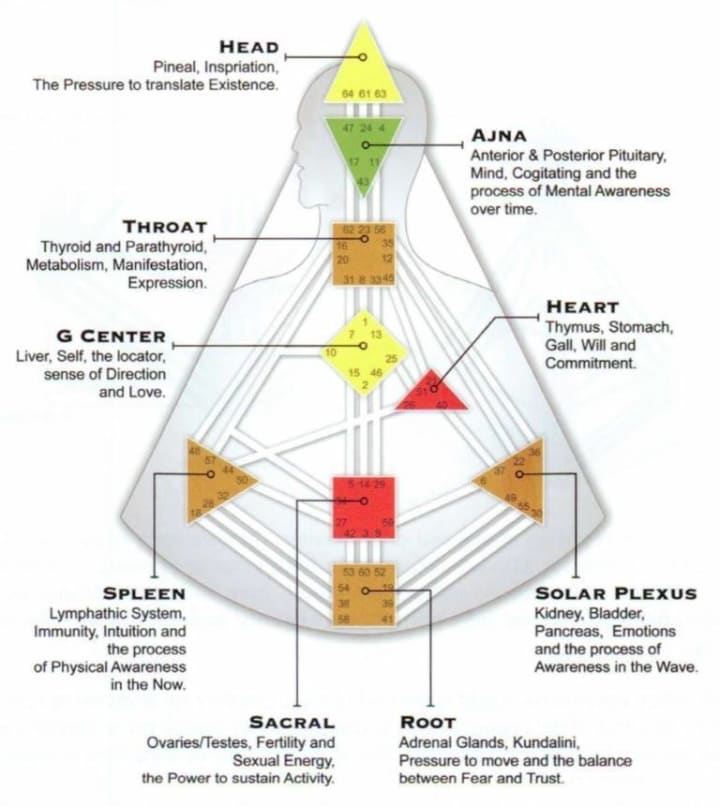
Key Components of Human Design: Beyond types, Human Design incorporates several other elements that deepen your understanding:
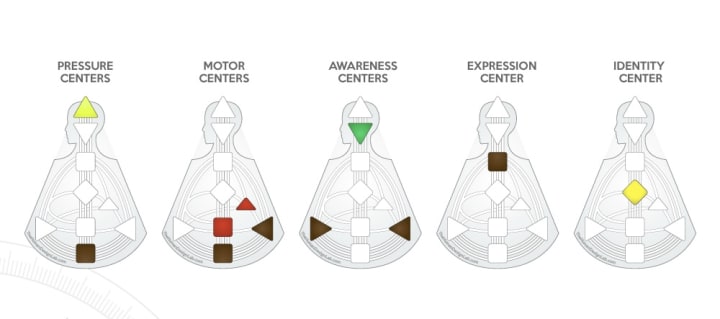
Centers: The body graph features nine centers, each corresponding to different aspects of human experience, such as communication, emotions, and intuition. These centers can be defined (colored in) or undefined (white). Defined centers indicate consistent energies, while undefined centers are where you might take in and amplify energies from others.
Profiles: Your profile consists of two numbers (e.g., 4/6), derived from the I Ching’s hexagrams. It provides insight into your personality traits, life themes, and how you relate to others.
Authority: This refers to your inner decision-making mechanism. It tells you how to make choices that align with your true self. For instance, emotional authority suggests waiting for emotional clarity before making decisions.
Gates and Channels: These are the specific energies that influence your unique design. Gates correspond to particular traits, while channels connect two gates, creating a defined pathway for energy.
Why Use Human Design?: Human Design offers a personalized approach to understanding yourself and others. Here are a few reasons why people are drawn to this system:
1. Self-Discovery: By understanding your type, centers, and authority, you can identify your strengths, weaknesses, and optimal strategies for living authentically.
2. Improved Relationships: Knowledge of Human Design can enhance your relationships by providing insights into how you and others interact. Understanding different types and strategies helps foster empathy and communication.
3. Life Decisions: The system can guide you in making choices that align with your authentic self. By recognizing your decision-making authority, you can move through life with more confidence and clarity.
4. Career Insights: Human Design can inform your professional life by revealing the environments and roles that suit your energetic makeup. This understanding can lead to greater satisfaction and success in your career.
Getting Started with Human Design: If you’re intrigued by the prospect of using Human Design to enrich your life, here’s how to get started:
1. Obtain Your Body Graph: You can find free Human Design chart generators online. Input your birth date, time, and location to generate your unique body graph.
2. Explore Your Type: Start by researching your type and its associated strategies. Understanding how you are designed to interact with the world is foundational.
3. Delve Deeper: Once you grasp your type, explore the other components — centers, authority, and profile. Many resources, including books, podcasts, and online courses, delve into these elements in depth.
4. Join a Community: Engaging with others interested in Human Design can deepen your understanding and provide support. Consider joining online forums or local meetups.
5. Experiment: Human Design is meant to be lived and experienced. Try out your strategy and authority in your daily life, and observe how it influences your decisions and interactions.
Conclusion: Human Design is a powerful tool for self-discovery and personal growth, offering a comprehensive framework to understand your unique energetic configuration. By exploring your type, authority, and centers, you can unlock insights that guide your journey toward authenticity. Whether you’re seeking clarity in relationships, career decisions, or your personal life, Human Design has the potential to illuminate your path. Embrace this system as a tool for empowerment and embark on the fascinating journey of understanding yourself and your place in the world.
Thank you 🙏
Future of Resilience
About the Creator
Future of Resilience
I enjoy writing book and product review, relationship and parenting blogs. I hope you enjoy my writing. Happy Reading!
Keep reading
More stories from Future of Resilience and writers in Humans and other communities.
8 Tips to Navigating Major Life Changes Together in a Marriage: A Journey of Growth, Communication, and Maybe a Little Patience
Life is full of transitions, some exciting and others, well, a bit more challenging. Whether it's moving to a new city, having a baby, switching careers, dealing with loss, or facing a health crisis, major life changes are bound to come up. And when you're married, those changes don't just impact you individually - they affect the dynamic between you and your partner. But here's the good news: navigating these changes together can actually bring you closer, strengthening your bond and making your relationship more resilient.
By Future of Resilience about a year ago in Humans
Thief In The Night
To the thief in the night that took and replicated what once was mine: Honestly, I feel kind of bad for you. It’s funny, because we hardly know each other. I only know of you through the magazines you’ve written and the broadcasts you have televised in the past — as well as through the public mentions of you from your show business connections there.
By Snarky Lisa6 days ago in Humans
The Stranger I Met That Changed Everything
It was one of those quiet afternoons that feel almost invisible. The sky was cloudy, the wind was gentle, and the small park near my apartment looked peaceful. People were walking along the paths, some were jogging, and a few parents were watching their children play near the swings. Normally, it was a place full of life. But that day, I felt completely disconnected from everything around me. I was sitting alone on a wooden bench, holding my phone in my hands but not really paying attention to it. My mind was somewhere else — stuck in a cycle of frustration and disappointment. For weeks, nothing had been going the way I hoped. I had applied for several opportunities, worked on projects that never succeeded, and watched others move forward in their lives while I felt completely stuck. It seemed like everyone around me had a clear direction, while I was just standing in the same place. The worst part wasn’t failure. It was the feeling that maybe I wasn’t good enough. That thought had been sitting quietly in my mind for days. I looked around the park. A group of friends nearby were laughing loudly about something. A child was running toward his mother with a big smile on his face. An old couple was slowly walking together along the path. Everyone seemed to have a place to go. Except me. I sighed and leaned back against the bench, staring at the cloudy sky above. That was when someone sat down beside me. I turned slightly and saw an elderly man, probably around sixty-five or seventy years old. His hair was gray and slightly messy, and he wore a simple jacket that looked a little worn but comfortable. His face had deep lines, the kind that usually come from years of experience and quiet reflection. At first, we both sat there in silence. The park sounds continued around us — birds chirping, leaves moving softly in the wind, distant laughter from children playing. Then, after a few minutes, the man spoke. “You look like someone carrying a heavy thought.” His words surprised me. I hadn’t expected a stranger to notice anything about me. I gave a small awkward smile and replied, “Just thinking about life, I guess.” He nodded slowly. “Life gives us a lot to think about,” he said. Something about his calm tone made me feel comfortable enough to continue the conversation. Without planning to, I started explaining how I felt. I told him about my frustrations, the plans that didn’t work out, the opportunities that slipped away, and the constant feeling that I was falling behind everyone else. He listened patiently the entire time. He didn’t interrupt me once. When I finished talking, he remained quiet for a moment, as if carefully thinking about what to say. Then he looked toward the tall trees across the park and asked me a simple question. “Do you know why you feel stuck?” I shook my head. “You believe that everyone else is moving faster than you,” he said. I thought about it and realized he was right. He smiled gently and pointed toward the trees. “Look at them,” he said. “Some grew quickly, others slowly. But none of them are competing with each other.” I followed his gaze. The trees stood quietly, their branches moving slightly in the wind. “They grow at their own pace,” he continued. “And that’s exactly how life works.” His words made me pause. For the first time in a long while, my thoughts began to slow down. The man then shared a small part of his own story. When he was younger, he had tried to build a business. He failed several times. Friends doubted him, relatives criticized him, and many people believed he was wasting his time. But he kept trying. Not because he was sure he would succeed, but because he believed stopping would mean giving up on himself. Eventually, after many years, things began to improve. But when he looked back, he realized something interesting. “The success wasn’t the best part,” he said with a smile. I looked at him curiously. “The best part was the person I became while trying.” Those words stayed in my mind. After a few minutes, he slowly stood up from the bench. Before leaving, he looked at me and said something that I will probably remember for the rest of my life. “Don’t rush your story,” he said. “The most meaningful chapters often take the longest to write.” Then he walked away along the park path, disappearing among the trees and people. I never saw him again. But that short conversation with a stranger changed something inside me. Sometimes we search for answers in complicated plans, long books, or big life events. But sometimes, the lesson we need the most comes from a simple conversation with someone we may never meet again. That afternoon, a stranger reminded me of something important. Life isn’t a race. Everyone moves at their own pace. And sometimes, the moment you feel most lost is actually the moment your story begins to take a new direction.
By Sahir E Shafqat5 days ago in Humans



Comments (1)
This is quite the interesting book review you have written. Really is something to think about.