
Unstoppable Rise
Exploring the Unstoppable Rise of a Business Tycoon to Political Power

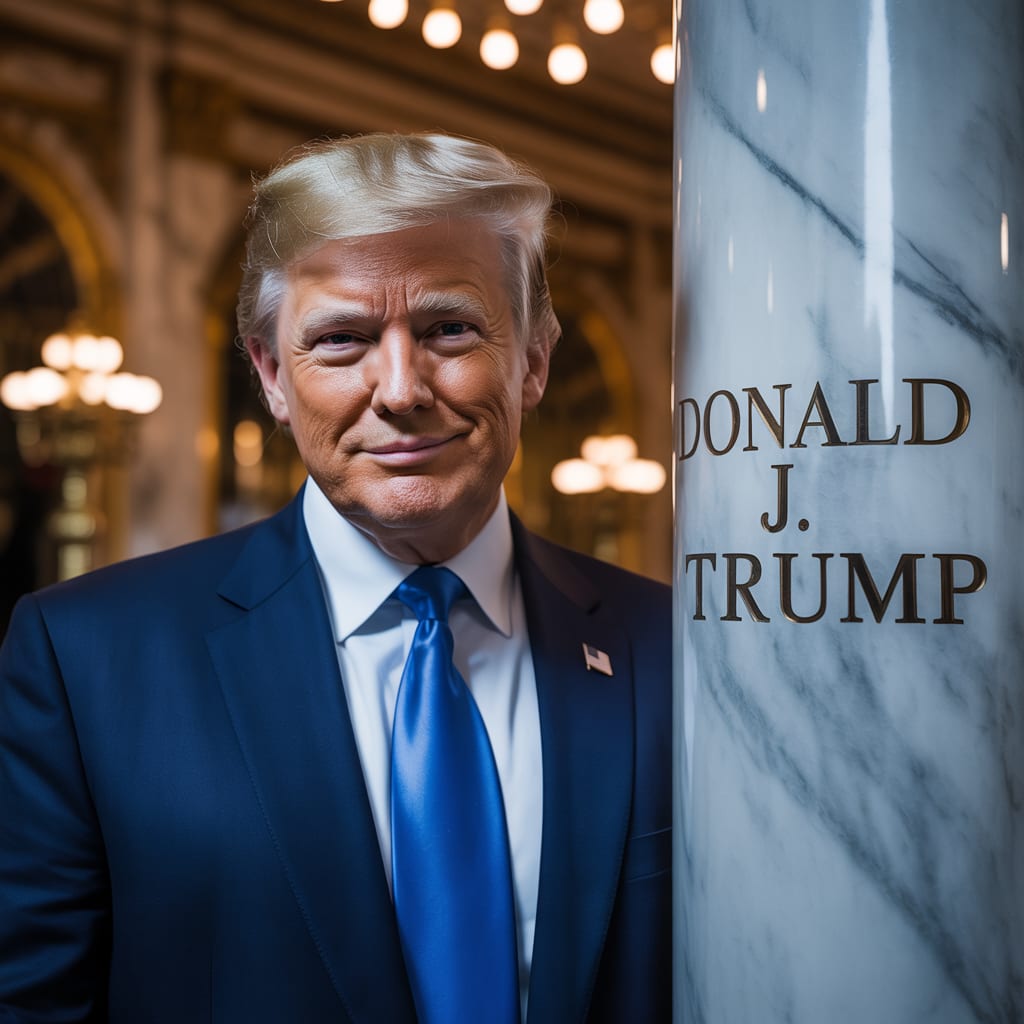
Donald Trump is a name that resonates powerfully across the globe. Known for his bold personality, controversial opinions, and relentless pursuit of victory, Trump is not only a billionaire businessman but also one of the most polarizing political figures in American history. Rising from the flashy world of real estate to becoming the 45th President of the United States, his journey is nothing short of extraordinary.
Trump’s political legacy is defined by disruption, change, and a relentless challenge to the political status quo. His path to the presidency not only defied expectations but also reshaped the very nature of American politics. This article provides an in-depth exploration of who Donald Trump is and how he managed to become president twice, shaking the foundations of traditional governance.
From Real Estate Mogul to Reality TV Icon
Donald Trump’s Early Life and Business Empire
Donald John Trump was born on June 14, 1946, in Queens, New York City. He was the fourth of five children in the Trump family. His father, Fred Trump, was a successful real estate developer who built middle-income housing in New York’s outer boroughs. Inspired by his father’s success, Donald joined the family business after graduating from the Wharton School of the University of Pennsylvania.
Trump quickly expanded the Trump Organization’s real estate empire, taking on ambitious projects like the Trump Tower in Manhattan and several luxury hotels, casinos, and golf resorts. His name became a brand symbolizing opulence and power. He was known not just for his developments but for his aggressive self-promotion.
In 2004, Trump became a household name with his hit reality TV show, The Apprentice, which aired on NBC. His signature catchphrase, “You’re fired,” turned him into a pop culture icon. This exposure widened his public appeal and laid the foundation for his political ambitions.
The First Presidential Bid That Shocked the World
Donald Trump’s Entry into Politics in 2015
Donald Trump announced his candidacy for president on June 16, 2015. He entered the race as a Republican outsider with no prior political or military experience. Many critics and media outlets dismissed his campaign as a publicity stunt. However, Trump’s message resonated with millions of Americans who felt alienated by the political elite.
He ran on a platform that promised to “Make America Great Again,” focusing on tough immigration policies, economic protectionism, and a strong America-first foreign policy. His blunt rhetoric and disregard for political correctness drew both praise and condemnation. Despite the controversy, Trump surged ahead in the Republican primaries.
In the general election, Trump faced Democratic candidate Hillary Clinton. While most polls predicted a Clinton victory, Trump defied the odds and won the Electoral College with 304 votes, becoming the 45th president of the United States on January 20, 2017. His victory was one of the most stunning political upsets in modern history.
Trump’s First Term: Policies, Achievements, and Controversies
Analyzing the Impact of His First Presidency (2017–2021)
Trump's first term was marked by a blend of conservative policymaking and controversial governance. He fulfilled several campaign promises, including passing major tax reforms, appointing three conservative Supreme Court justices, and renegotiating trade deals like NAFTA, which was replaced by the USMCA.
His administration also focused heavily on deregulation, especially in the energy sector, and aggressively cracked down on illegal immigration. Trump's foreign policy centered on America’s interests, withdrawing from global agreements like the Paris Climate Accord and the Iran Nuclear Deal, while fostering closer ties with countries like Israel.
However, his presidency was also riddled with controversy. His harsh rhetoric, frequent Twitter use, and attacks on the media polarized the nation. He was impeached twice by the House of Representatives—once in 2019 over the Ukraine scandal and again in 2021 after the Capitol riot—but was acquitted both times by the Senate.
Losing 2020 but Remaining Politically Powerful
How Trump Lost the Election but Maintained His Base
In the 2020 election, Trump ran for re-election against Democrat Joe Biden. Despite a strong economy before the COVID-19 pandemic, the administration’s response to the health crisis became a central issue. Trump lost the popular vote and the Electoral College to Biden. However, he refused to concede, claiming widespread voter fraud—a claim widely debunked by courts and election officials.
Though he left office on January 20, 2021, Trump’s influence over the Republican Party remained strong. He continued holding rallies, endorsing candidates, and shaping the national political discourse. His loyal base viewed him as a symbol of resistance against the “deep state” and mainstream media.
The Unprecedented Comeback: Trump’s Second Presidential Run
How He Won Back the White House After 2020
Trump’s second successful presidential bid came as a surprise to many, especially after the events surrounding the 2020 election and the January 6 Capitol riot. However, Trump’s strategic campaigning, unwavering support base, and criticism of Biden’s policies helped fuel a powerful comeback.
In the lead-up to the election, Trump capitalized on economic issues, inflation concerns, immigration challenges, and foreign policy missteps by the Biden administration. He positioned himself as the only candidate who could fix what he called a “broken” America.
During the Republican primaries, he outmaneuvered his rivals once again with strong debate performances, aggressive fundraising, and relentless media coverage. His nomination was nearly inevitable. In the general election, Trump’s message of law and order, economic revival, and border security struck a chord with millions of voters.
Winning key swing states, he secured enough Electoral College votes to reclaim the presidency. Trump made history by becoming the first U.S. president to serve two non-consecutive terms since Grover Cleveland. This cemented his legacy as a political powerhouse with unmatched influence.
Media Mastery and Messaging Strategy
How Trump’s Communication Helped Him Dominate Elections
One of Trump’s greatest strengths has always been his ability to dominate media coverage. Whether through traditional press, cable news, or social media, he managed to stay at the center of public conversation. His use of platforms like Twitter (before being banned) allowed him to communicate directly with millions, bypassing traditional media filters.
Trump’s messaging was often simple, emotional, and direct. Slogans like “Drain the Swamp,” “Build the Wall,” and “America First” were easy to remember and resonated with core voter concerns. His unfiltered speaking style made him relatable to many Americans tired of polished political speech.
Even his critics contributed to his media presence, ensuring that Donald Trump remained in the spotlight. His understanding of branding, publicity, and storytelling played a pivotal role in both of his presidential victories.
Dividing or Uniting? The Legacy of Trump’s Presidency
A Leader Loved and Loathed in Equal Measure
Donald Trump remains one of the most divisive figures in U.S. political history. To his supporters, he is a patriot who challenged the establishment, revitalized the economy, and stood up for forgotten Americans. To his critics, he is a demagogue who undermined democratic institutions and fueled division.
His legacy will be debated for generations, but one thing is certain—Trump changed the rules of American politics. He proved that outsider candidates with media savvy, strong branding, and a populist message could win against the odds. Whether you agree with him or not, his impact is undeniable.
Conclusion: A Political Journey Unlike Any Other
Will Donald Trump Shape the Future of American Politics Again?
Donald Trump’s journey from a New York real estate mogul to a two-time president is one of the most fascinating stories in American political history. His rise challenged the norms, broke barriers, and redefined leadership in the 21st century.
By leveraging his brand, connecting emotionally with voters, and refusing to play by traditional political rules, Trump carved a unique path to power—twice. His story is far from over, and his influence continues to shape political debates, party platforms, and public opinion.
About the Creator
Lana Rosee
🎤 Passionate storyteller & voice of raw emotion. From thoughts to tales, I bring words to life. 💫
Love my content? Hit Subscribe & support the journey! ❤️✨
Keep reading
More stories from Lana Rosee and writers in Humans and other communities.
Chain breaker
The story of Nelson Mandela's struggle is one of unwavering courage, resilience, and moral integrity. His journey from a small village in South Africa to becoming a global symbol of peace and resistance against oppression is both heartbreaking and inspirational. Mandela’s life is a beacon of hope for those who believe in the power of justice and nonviolence.
By Lana Rosee8 months ago in Humans
When the Shelter Closes
Across the street from my house, a man slept under a tree, his dog by his side. My first, naive thought: he must be traveling through. But he kept coming back, often sleeping there during the day. Then it hit me—that person might not have a home.
By Bride of Sound6 days ago in Humans
Lifestyle Problem-Solving Techniques To Reduce Anxiety About Commitment
Commitment anxiety can be painful but it does not normally manifest itself without reason. However, the key to its solution is to first know its origins. Psychologist John Bowlby postulated that early attachment experiences determine relationship pattern in adults. The subjects of relationships that were not stable or those who have had emotional imbalance may relate commitment to loss or vulnerability. Instead of saying that you are afraid of commitment, it can be more beneficial to have a look at the emotional meaning of commitment, whether it is fear of rejection, loss of freedom, or a repetition of the past pain. Consciousness will eliminate the mystique and will enable specific individual development.
By Kellee Bernierabout 9 hours ago in Humans


Comments
There are no comments for this story
Be the first to respond and start the conversation.