
Chain breaker
A Legendary Fight for Freedom, Justice, and Equality in South Africa

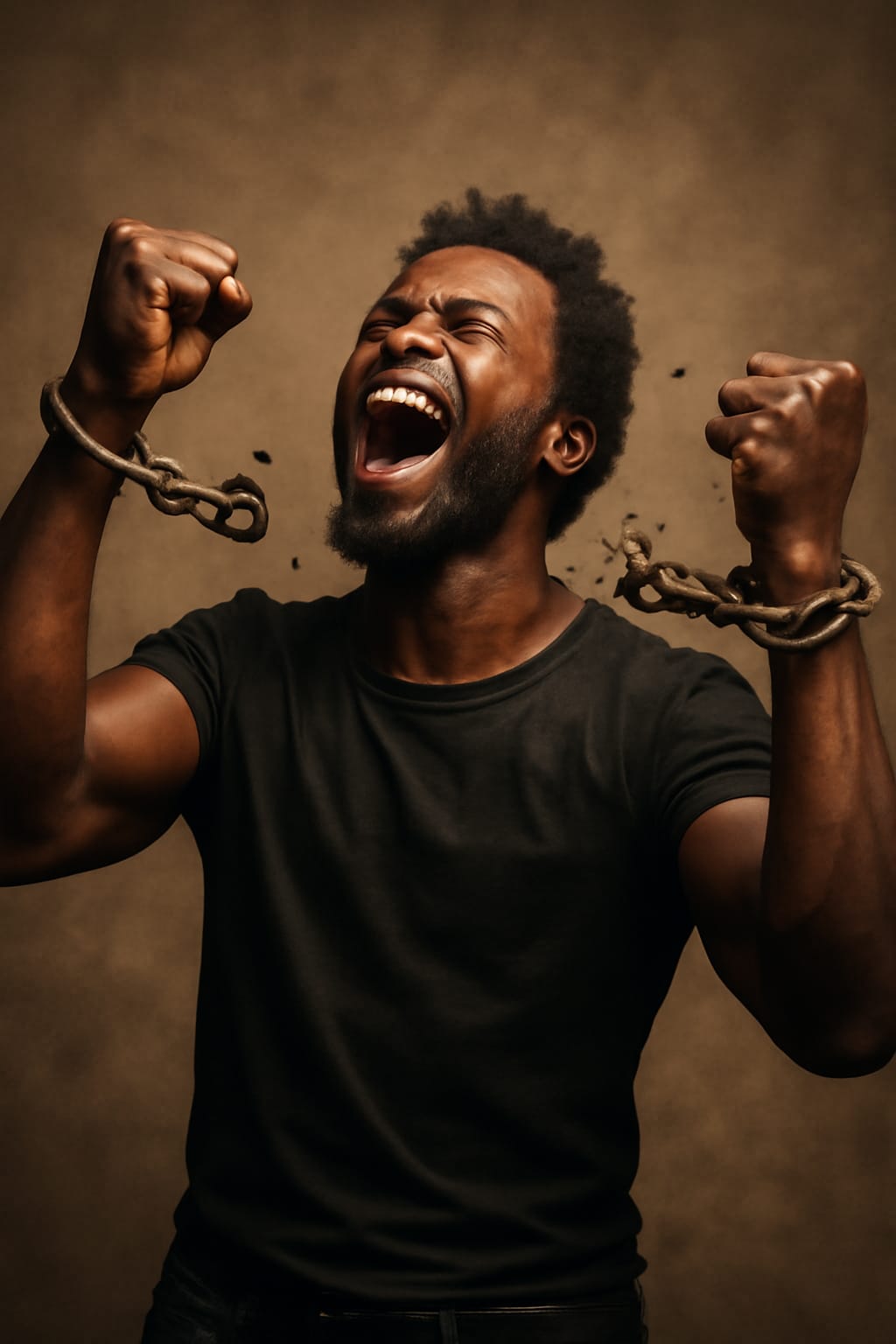
The story of Nelson Mandela's struggle is one of unwavering courage, resilience, and moral integrity. His journey from a small village in South Africa to becoming a global symbol of peace and resistance against oppression is both heartbreaking and inspirational. Mandela’s life is a beacon of hope for those who believe in the power of justice and nonviolence.
Mandela's struggle was not born out of ambition but rather necessity. As a young man growing up under apartheid—a brutal system of racial segregation in South Africa—he quickly realized that the law was not made for black South Africans. Instead, it was crafted to keep them in chains, both literally and metaphorically.
From the beginning, Mandela showed signs of leadership and compassion. Born in the village of Mvezo in 1918, he was given the forename Rolihlahla, which means “pulling the branch of a tree” or “troublemaker.” He lived up to that name by challenging the deeply rooted injustices he witnessed throughout his youth. Later, he adopted the name "Nelson" from a teacher, a colonial tradition at the time.
Mandela’s early political journey began in earnest during his time at Fort Hare University and the University of Witwatersrand, where he studied law. Witnessing firsthand the unfair treatment of black South Africans, Mandela joined the African National Congress (ANC) in 1944. He and others formed the ANC Youth League, advocating for more radical and direct actions against apartheid policies.
The institutionalized racism in South Africa during the mid-20th century was ruthless. Black South Africans could not vote, own land in most areas, or use public facilities designated for whites. They were treated as second-class citizens in their own country. Mandela’s protest began with peaceful methods, such as organizing boycotts and strikes. He believed that diplomacy and peaceful protest could dismantle apartheid, but the government's response was severe and violent.
In 1952, Mandela and Oliver Tambo opened South Africa’s first black law firm, helping those affected by racist laws. But as police brutality and government oppression increased, Mandela’s belief in nonviolence began to shift. In 1961, he co-founded Umkhonto we Sizwe, the armed wing of the ANC, and began organizing sabotage against government infrastructure—not to harm people, but to disrupt systems of injustice.
His arrest in 1962 marked a turning point in the freedom movement. Sentenced to life imprisonment for conspiring to overthrow the government, Mandela spent 27 years behind bars, mostly on Robben Island. The prison was harsh, the work was backbreaking, and letters from family were infrequent. Yet Mandela did not break. Instead, he educated himself and others, becoming a leader and mentor even in captivity.
One of the most remarkable aspects of Mandela’s imprisonment was his refusal to compromise his principles for personal freedom. The South African government offered to release him on several occasions, on the condition that he renounce armed struggle. He refused every time, insisting that freedom for himself meant nothing without freedom for his people.
While Mandela was in prison, the anti-apartheid movement grew globally. International pressure mounted. Countries imposed sanctions and cultural boycotts against South Africa. Free Mandela became a rallying cry around the world. His name was synonymous with hope and resistance. Artists, politicians, and ordinary citizens raised their voices, demanding his release and an end to apartheid.
In 1990, after immense global and domestic pressure, Mandela was finally released from prison. But he did not return with vengeance. Instead, he preached reconciliation. He believed that forgiveness, not revenge, was the path forward. His powerful message of peace helped prevent a civil war in South Africa.
Mandela’s election as South Africa’s first Black President in 1994 marked the climax of his lifelong struggle. The country voted for the first time in a fully democratic election, and millions of black South Africans cast their votes. Mandela won overwhelmingly, ushering in a new era of equality and unity.
As president, Mandela focused on healing a fractured nation. He created the Truth and Reconciliation Commission, allowing victims and perpetrators of apartheid to share their stories. Instead of seeking retribution, he sought understanding and peace. His leadership style was marked by humility, grace, and a deep commitment to justice.
Despite his incredible achievements, Mandela remained humble. He stepped down after one term, believing that true democracy depends on leaders not clinging to power. His actions demonstrated that leadership is not about domination but service. Mandela's legacy is not just in what he did but in how he did it—with dignity, patience, and an unwavering moral compass.
Nelson Mandela’s struggle wasn’t just political; it was personal, spiritual, and cultural. He endured unimaginable pain, separation from his family, and decades of silence. Yet he emerged not bitter, but hopeful. His story teaches us that change is possible—even in the darkest of times—when one stands firm in the face of oppression.
Mandela’s impact on the world cannot be overstated. His principles inspired civil rights movements across continents. From the United States to India, people looked to his life as a guide to justice through nonviolence. His speeches, writings, and actions continue to resonate in movements for racial equality, prisoner rights, and peaceful protest.
His autobiography, Long Walk to Freedom, is more than a memoir. It’s a manifesto of endurance, an insight into a man who loved his people more than his own comfort. He speaks honestly about his fears, mistakes, and triumphs, painting a portrait of a real, complex human being who dared to dream.
In 2013, the world mourned the passing of Nelson Mandela, but his spirit lives on. Streets, schools, and organizations bear his name, but his greatest monument is the democratic South Africa he helped create. Each July 18th, people around the globe celebrate Mandela Day by dedicating time to community service, reflecting his commitment to helping others.
The legacy of Nelson Mandela’s struggle for freedom reminds us that silence in the face of injustice is complicity. It challenges us to ask: What are we doing to combat inequality in our own communities? How are we uplifting those who have been marginalized or silenced?
Mandela's life is not just a chapter in history books—it is a call to action. His example pushes us to become better citizens, stronger advocates for peace, and braver in the face of injustice. Whether you’re a student, leader, or everyday citizen, there’s something powerful to learn from Mandela's journey.
He taught us that courage is not the absence of fear, but the triumph over it. He proved that enemies can become partners, and that reconciliation is stronger than revenge. He showed us that no matter how long the night, the dawn always comes.
In the words of Nelson Mandela himself: “It always seems impossible until it is done.” His struggle teaches us that change may be slow and painful, but it is always worth fighting for.
About the Creator
Lana Rosee
🎤 Passionate storyteller & voice of raw emotion. From thoughts to tales, I bring words to life. 💫
Love my content? Hit Subscribe & support the journey! ❤️✨
Keep reading
More stories from Lana Rosee and writers in Humans and other communities.
The Greatest
In the realm of sports, few names have etched their place in history with the brilliance and charisma that Muhammad Ali commanded. A name synonymous with strength, confidence, and an unyielding spirit, Ali’s journey wasn’t just about punches and titles—it was about revolutionizing what it meant to be a champion. Known widely as “The Greatest,” his lustrous career as a boxer remains one of the most inspirational sagas in sports history.
By Lana Rosee8 months ago in Humans
A Historic Declaration
We the People of the Husbands of the United States of America, in Order to form a more perfect Union, and I mean you...with me...establish Justice, insure domestic Tranquility, provide for the common defence, promote the general Welfare, and secure the Blessings of Liberty to ourselves, after Puberty, do ordain and establish this Declaration of Co-Dependence.
By Gerard DiLeo7 days ago in Humans
The Quiet Violence of Merit
We like to believe in merit. We say the word as if it were a clean equation: work hard, get results. Study longer, rise higher. Try again, succeed eventually. Merit promises fairness without sentimentality. It offers order. It tells us that outcomes are earned.
By Ajan Lori Abei5 days ago in Humans
Review of 'Man on the Run'
My wife and I saw Man on the Run, a nearly 2-hour documentary on Amazon Prime, about Wings, Paul McCartney's group that flew around the world from shortly after The Beatles broke up in early 1970 to shortly after John Lennon was murdered at the end of 1980, making a Beatles reunion forever impossible.
By Paul Levinson4 days ago in Beat



Comments
There are no comments for this story
Be the first to respond and start the conversation.