
Unraveling the Human Brain: Journey into the Mysteries of the Mind
Exploring the Wonders of Neuroplasticity, Consciousness, and Emotions in the Brain's Complex Tapestry

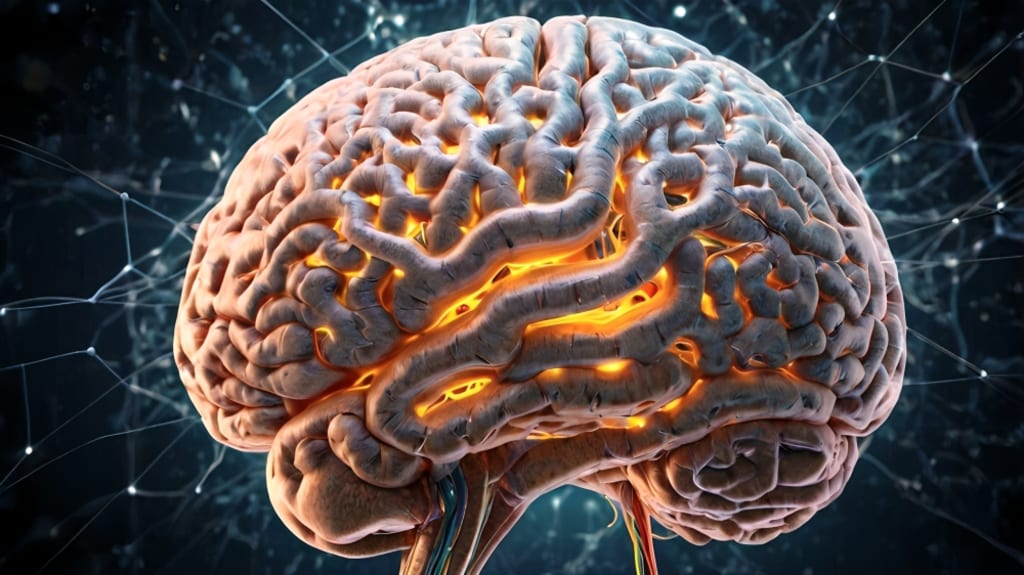
Unraveling the Secrets of Our Minds: Mysteries of the Human Brain
The three-pound human brain is the essence of our identity, encompassing the central idea, memory, dream, and emotion. However, it has remained one of the greatest enigmas in science since its discovery. So this incredible organ keeps on fascinating neurologists and scientists as we wrestle with its complexity and attempt to solve its mysteries as it concerns our capacities for thought, emotion, choice learning, and all the adaptation we can muster.
The Structure of the Brain: A Network of Neurons
The brain consists of billions of neurons, which are specialized cells that carry information throughout the body. These are associated with synapses that create a very complex network in which ideas, behaviors, and feelings are exchanged. Consider a big city in which every neuron acts as an individual who carries information from one place to another. From just talking to us through solving the arithmetic problem to simply gazing at a beautiful sunset, all these are achieved by those tiny impulses that hit each other so fast.
Despite knowing all this, the whole extent of how the neurons cooperate is still unknown. It remains a mystery as to how they create complex networks that would enable us to acquire new skills, make new memories, and mold our behavior. How do ideas emerge from this network? How can a single, tiny electrical spark cause someone to feel love or sadness? Even as technology develops and neuroscientists continue their quest to know the "how to" on how this brain functions, many questions remain left out.
Neuroplasticity: The Mind Astounds by Its Ability to Change
As far as brain abilities go, this one—the human brain's ability to change—is arguably the most amazing. The idea is called neuroplasticity, which means that brain connections can change according to what one learns or experiences, including injury. This is why we can slowly begin changing behaviors, recover from strokes, and learn to speak a new language. All of these prove that the brain is a dynamic organ that is constantly changing and not static.
For example, when we learn any new skill—in this case, cooking or playing the piano—there is the making of new connections. The more of these connections we make, the better we become at the task at hand. Similarly, following a devastating brain injury, sometimes a portion of the brain will reorganize itself in compensation for lost functions and so assist in someone's recovery of mobility or speech. Although we still do not fully comprehend how it functions, its adaptability is both astounding and humble.
The Mysteries of Awareness
Perhaps the greatest puzzle of all is consciousness—what makes us aware of ourselves and the world. How can we possibly feel and think about our thoughts and have a "self" at all? While we may locate certain ideas or emotions within the processes of the brain, the start of awareness remains a mystery to this day.
Imagine waking up one morning and being able to see everything around you clearly but not having any idea how or why. How does the brain create all of this consciousness, and where does it come from? It's one of the greatest philosophical and scientific conflicts, and so far, nobody has been able to provide definitive answers. Being "you" is one of the greatest mysteries of humanity, considering that it is astonishing how our minds are the output of complex brain processes.
Emotions: A Chemical and Cognitive Dance
The same trend is traced to brain activity and our emotions of love, fear, sorrow, and joy. Chemicals like adrenaline, serotonin, and dopamine are released by the brain in response to both internal and external events, shaping our emotions. Fear leads to the adrenaline rush, whereas falling in love causes a "feel-good" neurotransmitter surge in the brain. Therefore, emotions belong both to the biological sphere and the psychological stream, linked to our memories, experiences, and thoughts.
But why is it that some appear to be more affected by emotions than others? What part of the brain does it mean to be elated in pleasure or to be overtaken with sadness? Though we know how chemistry ultimately produces the mechanisms involved in emotion creation, we are not yet completely aware of how those mechanisms interact to produce our reactions.
Brain Conditions and Diseases: An Insight into the Fragility of the Mind
The brain can do fantastic things, but it is fragile. Conditions such as depression, Parkinson's, and Alzheimer's disease illustrate this fragility. Alzheimer's patients lose their memories little by little along with their identity. How these diseases emerge and how to treat them is one of the key issues facing modern medicine today. To discover treatments for these crippling disorders, researchers are putting in endless effort to uncover the secrets of the brain.
Conclusion: The Exploration Process Continues
The human brain is a remarkable organ whose complexity and potential never cease to amaze us. Scientists are learning new things about the brain every day, yet every discovery raises more questions. We will surely continue to learn more about how the brain forms our identity, emotions, and experiences as time goes on. We may never be able to fully unravel and comprehend all of the brain's complexities, yet this exploration is the most fascinating and significant undertaking of our time. We might learn more about the brain itself and what it means to be human in the process of unraveling its mysteries.
About the Creator
kalu ram meena
Inventive narrator mixing creative mind and knowledge. From nature's excellence to life's examples, I create content to rouse, illuminate, and enrapture. Go along with me on an excursion of revelation, each story in turn!
Keep reading
More stories from kalu ram meena and writers in Humans and other communities.
4 Essential Skills to Nurture and Strengthen Your Long-Distance Relationship
Four skills to nourish long-distance relationships After all, long-distance relationships are like tending to a delicate yet beautiful garden; they require care and attention from both sides to make it bloom. The physical distance can be tough, but love and connection do not depend on the distance between two people. With the right approach and emotional commitment, a long-distance relationship can flourish with a bond that's even stronger than ever.
By kalu ram meenaabout a year ago in Humans
My First Time Skiing and I Got Lost, Alone, in the French Alps
Looking back, I can trace some of my life’s biggest adventures to a simple action from my sister. She’d introduced me to Tommy (a very long time ago), a colleague of hers, who had overshared his penchant for Italian-looking women, and I ticked that box.
By Chantal Christie Weiss3 days ago in Humans
Libra Woman and Capricorn Man Compatibility Score
When a Libra woman and a Capricorn man come together, their relationship blends the graceful charm of air with the grounded determination of earth. At first glance, these two zodiac signs may seem very different. Libra is ruled by Venus, the planet of love, beauty, and harmony, while Capricorn is ruled by Saturn, the planet of discipline, responsibility, and long-term planning.
By Inspire and Funa day ago in Humans



Comments (1)
I love this🧠🧐☘️☘️☘️