
Universal Healers: Exploring Antibiotics in All Living Things
Understanding how antibiotics protect humans, animals, and plants alike

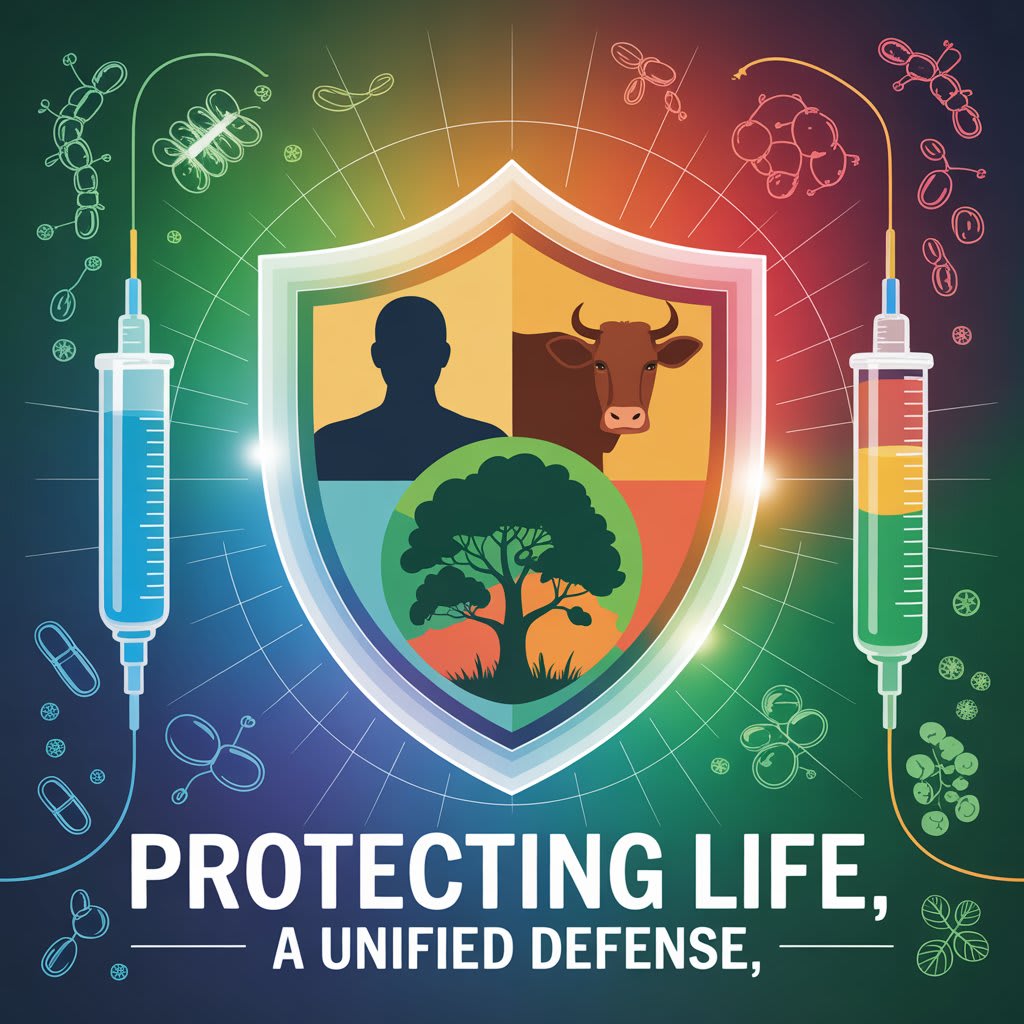
Long before modern hospitals and white-coated scientists, the world was already teeming with tiny wars invisible to the human eye. Deep in the soil, on the skin of animals, within plant roots, and even inside our own bodies, microbes have been battling each other for survival. Among the most powerful weapons to emerge from these battles were antibiotics — nature’s microscopic protectors, later harnessed by humans to fight disease and safeguard life.
Dr. Lina Torres, a microbiologist and global health researcher, had always been fascinated by this hidden world. Her passion for antibiotics began during her childhood on her grandparents’ farm in southern Spain. She remembered watching her grandmother crush garlic and herbs to treat small wounds on sheep, marveling at the idea that plants could heal. Those early memories would one day inspire her to dedicate her life to studying how antibiotics work across all living things.
After earning her PhD, Dr. Torres began working at an international research center focused on antibiotic resistance. She traveled across continents — from urban hospitals in New York to poultry farms in Thailand and vegetable fields in Kenya — documenting the role antibiotics play in human health, animal welfare, and agriculture. Through her journey, she uncovered stories that highlighted just how universal and vital these medicines are.
Humans: A Lifeline Beyond the Microscope
In the busy surgical wing of Saint Mark’s Hospital in London, antibiotics are as essential as scalpels and sutures. Without them, even routine surgeries would carry a high risk of deadly infections.
Dr. Torres spent time with Dr. Samuel, a trauma surgeon, who told her about a young motorcyclist named Tom. After a severe accident, Tom underwent multiple surgeries to repair broken bones and internal injuries. Each incision was a potential doorway for harmful bacteria. Thanks to carefully timed intravenous antibiotics, Tom’s recovery was swift and infection-free.
"People think antibiotics are only for when you have the flu or a bad cough," Dr. Samuel said. "But they are the silent guardians behind every surgery, cancer treatment, and organ transplant. Without them, modern medicine would collapse."
Dr. Torres also visited community clinics, where she met elderly patients receiving antibiotics for pneumonia, children treated for ear infections, and diabetic patients healing from foot ulcers. In each case, antibiotics weren’t just pills or injections — they were lifelines.
Animals: Guardians of the Herd
From London, Dr. Torres flew to a dairy farm in Wisconsin, USA. There, she met Lisa, a veterinarian dedicated to keeping the farm’s cows healthy.
One frosty morning, Lisa called Dr. Torres to the barn. A young cow named Daisy had developed a severe udder infection known as mastitis. Left untreated, it could spread rapidly, cause severe pain, and threaten Daisy’s life.
Lisa prepared an antibiotic injection and explained, "Antibiotics help us save individual animals, but they also protect the whole herd. One sick cow can infect many others if we don’t act quickly."
With proper dosage and careful monitoring, Daisy recovered in a few days and returned to the pasture.
Dr. Torres also visited chicken farms where antibiotics are used to prevent bacterial outbreaks, and pig farms where they help treat respiratory infections. She learned that while antibiotics are critical for animal health, their misuse can contribute to antibiotic resistance, a global threat that demands careful stewardship.
Lisa emphasized, "We’re always working to use antibiotics responsibly — only when truly needed, and always following strict guidelines. Healthy animals mean healthy food and safe communities."
Plants: Silent Protectors in the Field
The final leg of Dr. Torres’s journey took her to the sun-drenched tomato fields of southern Spain — not far from where her grandmother had once tended herbs and sheep.
There, she met Javier, an agricultural scientist who introduced her to a different, often overlooked world: antibiotics in plants.
Javier explained that certain bacterial infections, such as bacterial spot and blight, can devastate entire crops. For decades, plant pathologists have used specific antibiotics, like streptomycin and oxytetracycline, to control these infections and prevent widespread loss.
As they walked through rows of vibrant green tomato plants, Javier pointed out small yellowing leaves on one section. "Without treatment, these infections could spread and destroy the whole field," he said. "But with careful antibiotic application, we protect the plants, ensure food security, and support farmers’ livelihoods."
Dr. Torres observed workers applying antibiotics in precise, controlled doses — a stark contrast to the blanket spraying often portrayed in media. She saw how important education and regulation were in preventing misuse and protecting the environment.
A Shared Responsibility
Returning to her laboratory in Madrid, Dr. Torres gathered her notes, photographs, and countless stories from her journey. Each page told a different version of the same truth: antibiotics are universal healers, connecting humans, animals, and plants through a shared thread of vulnerability and resilience.
Yet, she also recognized the growing shadow of antibiotic resistance — a looming threat driven by misuse and overuse. In hospitals, bacteria once easily defeated by penicillin now defied treatment. On farms, resistant strains threatened animal and human health alike. In fields, over-reliance on antibiotics risked contaminating soils and impacting future crops.
Dr. Torres decided to host a community seminar titled "Universal Healers: Protecting the Future of Antibiotics." She invited farmers, veterinarians, doctors, students, and local policymakers.
Standing before the audience, she began, "Antibiotics are not merely medicines — they are threads that weave together the health of all living things. From a child’s recovery after surgery to a farmer’s healthy herd and a gardener’s thriving tomato plant, antibiotics silently defend life."
She paused, letting her words sink in. "But their power is not infinite. Resistance is growing, and if we lose antibiotics, we risk returning to an era where minor infections are deadly and simple surgeries become impossible."
The audience listened, rapt. A farmer raised his hand and asked, "What can we do to protect them?"
Dr. Torres smiled. "Each of us has a role. Doctors can prescribe only when necessary and educate patients. Farmers and veterinarians can follow strict guidelines and explore alternative health strategies. Consumers can avoid pressuring doctors for antibiotics when they’re not needed and support responsible agricultural practices."
She continued, "Even small actions matter — completing prescribed courses, not sharing leftover pills, and supporting policies that encourage research into new antibiotics and alternative treatments."
After the seminar, people approached Dr. Torres to thank her and share their own stories. A mother spoke of her child’s life saved by antibiotics; a beekeeper described fighting bacterial diseases in hives; a young medical student vowed to become an advocate for responsible prescribing.
A Global Call
That evening, Dr. Torres sat at her desk, reflecting on her journey. She thought of Daisy the cow, Tom the motorcyclist, and the sun-warmed tomatoes in Spain. Despite their differences, they all shared the same silent guardians — antibiotics.
She opened her journal and wrote:
"Antibiotics are universal healers, but they are fragile treasures. Their future depends on the choices we make today, across every field, farm, and hospital. Together, we must protect them, so they continue to protect us — humans, animals, and plants alike."
Dr. Torres closed her journal and looked out at the starlit sky. She felt a renewed sense of purpose, knowing her work was not just about studying bacteria or writing papers. It was about safeguarding the delicate, invisible threads that connect all life on Earth.
As the world slept, the microscopic wars continued. But thanks to universal healers — and the people working to preserve them — there was hope that life in all its forms could continue to thrive, side by side.
About the Creator
FAROOQ HASSAN
Expert in "Content writting" in every language 100% human hand writting
Reader insights
Outstanding
Excellent work. Looking forward to reading more!
Top insights
Compelling and original writing
Creative use of language & vocab
Easy to read and follow
Well-structured & engaging content
Excellent storytelling
Original narrative & well developed characters
Expert insights and opinions
Arguments were carefully researched and presented
Eye opening
Niche topic & fresh perspectives
Heartfelt and relatable
The story invoked strong personal emotions
Masterful proofreading
Zero grammar & spelling mistakes
On-point and relevant
Writing reflected the title & theme
Keep reading
More stories from FAROOQ HASSAN and writers in Humans and other communities.
A Guide to IV and IM Injections
It was a quiet Monday morning at Serenity Community Hospital. The sun streamed gently through the tall windows of the outpatient clinic, where nurses bustled around preparing their stations. Among them was Emily, a young nurse who had just finished her training and was about to start her first full shift.
By FAROOQ HASSAN6 months ago in Humans
The CEO of Everything
They say "jack of all trades, master of none," but they forgot to mention the part where the jack of all trades is also the camera woman, the makeup artist, and the person currently yelling at a tangled Wii microphone cable in a her own bathroom while recording herself singing and trying to make it look realistic and professional. (As professional as you can make it with nothing but a cell phone camera and a mic that doesn't work)
By Sara Wilson4 days ago in Humans
The Line We Were Never Meant to Cross — Part 1
I knew better than to trust silence. Silence had a way of tempting people into saying things they couldn’t take back. The night I went to Aarav’s house, the city was under a power cut. No streetlights. No neighbors awake. Just rain scratching against windows like it wanted to be let in. I told myself I was there for closure. That was a lie. The door opened before I knocked twice. Aarav stood there barefoot, sleeves rolled up, eyes dark in the candlelight behind him. He looked… undone. Like someone who hadn’t slept, or forgiven himself, or stopped thinking about me. “You shouldn’t be here,” he said. “I know.” Neither of us moved. The storm thundered. Somewhere inside the house, a clock ticked loudly—counting down to something neither of us was ready for. “Come in,” he said finally, stepping aside. The door shut behind me with a sound that felt too final. The house smelled like coffee and rain and something unmistakably him. The living room was lit only by two candles on the table. Shadows clung to the walls, turning familiar furniture into something dangerous. “You said you were done with me,” I said, crossing my arms. “I said I was trying,” he corrected. “There’s a difference.” We had history. Ugly history. Stolen looks that lasted too long. Conversations that went too deep at the wrong hours. A kiss we pretended never happened. And the night he walked away without explanation. “I didn’t come to argue,” I said. “I just wanted to understand why you left.” Aarav laughed softly. Not amused. Bitter. “Because wanting you made me someone I didn’t recognize.” That should’ve scared me. Instead, it pulled me closer. “I waited,” I said quietly. “You disappeared, and I waited like an idiot.” He took a step toward me. One. Slow. Careful. Like approaching a wild thing. “If I touch you,” he said, voice low, “I won’t stop.” My heart slammed against my ribs. “Then don’t touch me,” I whispered. He stopped inches away. Close enough that I could feel his breath. Close enough to smell the rain on his skin. “You’re shaking,” he said. “So are you.” His hand rose—hesitated—then gripped the edge of the table instead of me. Wood cracked softly under his fingers. “This is why I left,” he said tightly. “Because you make me lose control.” I should’ve walked out. Instead, I reached for him. The moment my fingers brushed his wrist, something in him snapped. He pulled me against the wall—hard enough to steal my breath, careful enough not to hurt me. His body caged mine, his forehead resting against my shoulder as if he was fighting himself. “Say the word,” he breathed. “And I’ll let you go.” I didn’t. I tilted my head, exposing my neck without meaning to. That was all it took. His mouth found my skin—slow, claiming, dangerous. Not rushed. Like he wanted to memorize every reaction, every gasp. My hands fisted in his shirt, pulling him closer even as my mind screamed warnings. This wasn’t soft love. This was hunger. He kissed me like he was afraid I’d disappear again. Like the world might end if he didn’t take this moment. When his lips met mine, it wasn’t gentle—it was controlled, deliberate, full of restraint barely holding together. “I hate how much I want you,” he murmured against my mouth. “I hate that I came back,” I replied, breathless. We kissed anyway. Time blurred. The storm raged louder. Candlelight flickered wildly, shadows dancing around us like witnesses. His hand rested on my waist, thumb pressing into my skin like a promise and a threat. Then he stopped suddenly. Forehead against mine. Breathing uneven. “If we keep going,” he said, “this won’t end clean.” I looked at him. Really looked. At the man who ran because he cared too much. At the darkness he carried. At the way he still held me like I mattered. “Nothing about us ever was,” I said. The power came back on with a sharp click. Light flooded the room. Reality rushed in. We stepped apart instantly. I smoothed my clothes. He ran a hand through his hair. The moment shattered, but the damage was already done. I walked to the door. “Don’t disappear again,” I said without turning around. “I won’t,” he replied. I believed him. That was the most dangerous part.
By Rosalina Janeabout 12 hours ago in Humans




Comments (9)
vip
EXCELLENT WRITTING WORK
GOOD STORY
excellent sir
Good thincking
It's an absolute amazing sir
Absolute amazing
Outstanding writting and story
Good work