
A Guide to IV and IM Injections
Through the Vein or Into the Muscle: A Guide to IV and IM Injections

It was a quiet Monday morning at Serenity Community Hospital. The sun streamed gently through the tall windows of the outpatient clinic, where nurses bustled around preparing their stations. Among them was Emily, a young nurse who had just finished her training and was about to start her first full shift.
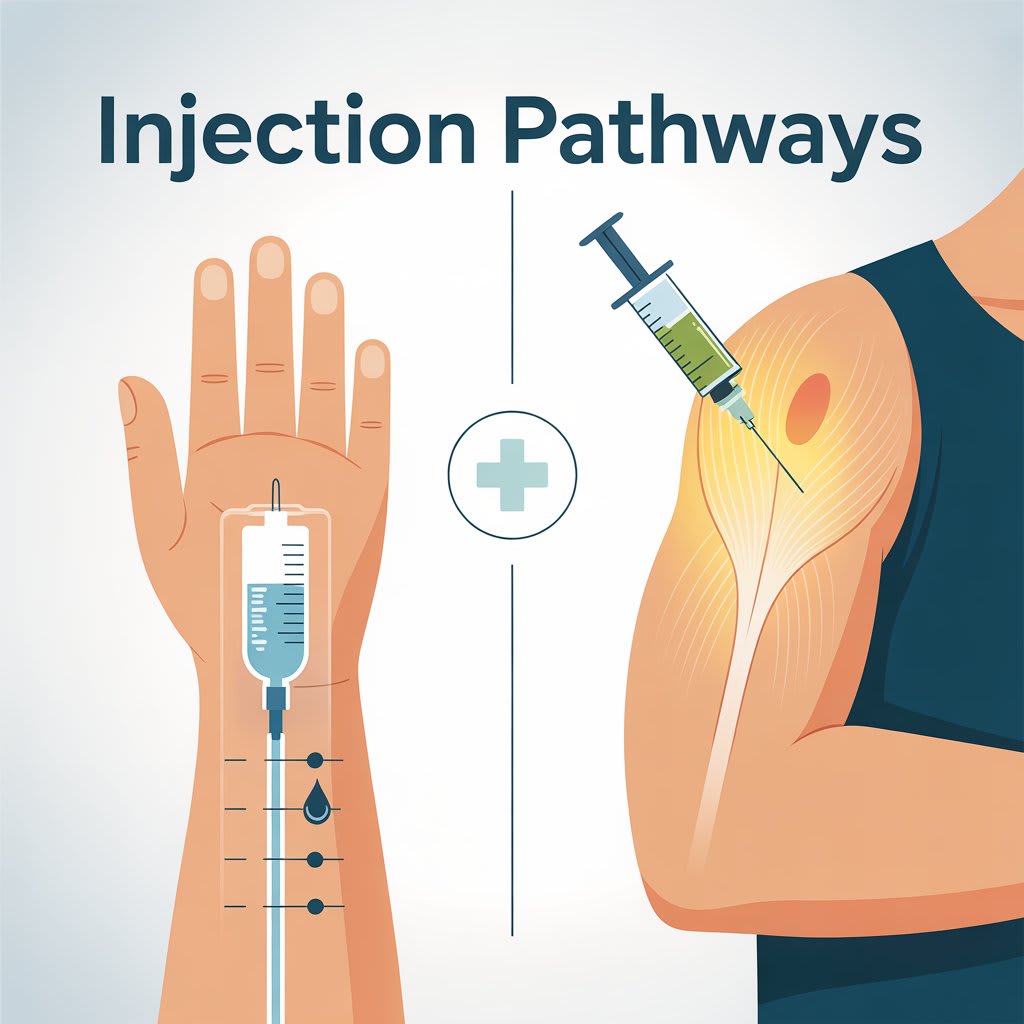
Emily had always loved science, but what really drew her to nursing was her fascination with the human body’s remarkable ability to heal — and the many ways medicine could support that process. She knew that one of the most common procedures nurses perform is administering injections. Yet, even as a newly certified nurse, she felt a mix of excitement and anxiety. Today, she would get a true taste of the difference between intravenous (IV) and intramuscular (IM) injections — two techniques she had practiced in simulations but had only begun to experience in real life.
Her first patient of the day was Mr. Johnson, a 72-year-old man with a long history of heart failure and chronic infections. He needed an IV antibiotic infusion. As Emily entered the room, she saw him sitting in a recliner, looking tired but cheerful.
"Good morning, Mr. Johnson," she greeted warmly.
"Morning, dear. Ready for my morning 'cocktail'?" he joked, pointing to the IV bag hanging beside him.
Emily laughed softly, feeling her nerves begin to settle. She checked his chart, confirmed the medication, and prepared the IV line. As she tied the tourniquet around his forearm, she explained each step.
"You'll feel a small pinch," she said, gently sliding the catheter into his vein.
Mr. Johnson barely flinched. Within minutes, the antibiotic began its journey directly into his bloodstream. Emily watched closely for any signs of reaction. The beauty of IV injections, she thought, was their immediate effect. The medicine travels quickly through the veins, ready to work without delay. In cases of severe infections or emergencies, IV is a lifesaver.
While monitoring Mr. Johnson, Emily thought back to her classes. She remembered how IV injections offer nearly 100% bioavailability — meaning the body receives the entire dose as intended. But they also require precise technique, a sterile environment, and careful monitoring for complications like phlebitis or infiltration. It wasn’t simply "putting a needle in a vein"; it was a delicate dance of science, skill, and empathy.
After Mr. Johnson’s IV infusion was complete, Emily tidied up and headed to her next patient, a young woman named Sarah. Sarah had come in for a vitamin B12 injection to help with her chronic anemia. Unlike Mr. Johnson, she would receive an intramuscular (IM) shot.
Sarah looked visibly nervous, clutching her phone tightly. Emily knelt beside her. "Hi, Sarah. Have you had an IM injection before?"
Sarah shook her head. Emily smiled reassuringly. "I’ll explain everything as we go. This type of shot goes into the muscle, usually because muscles have a good blood supply and can absorb medicine gradually."
She showed Sarah the small syringe and explained the process. IM injections deliver medication more slowly than IV, allowing it to be absorbed over time. This makes them ideal for vitamins, vaccines, and certain hormones or antibiotics.
Emily chose the deltoid muscle in Sarah’s upper arm, the most common site for adults. After cleaning the area, she quickly inserted the needle at a 90-degree angle. Sarah winced, but it was over in seconds. Emily applied gentle pressure and covered the site with a small bandage.
Sarah looked relieved. "That wasn’t as bad as I imagined," she said, laughing shakily.
"You're braver than you think," Emily replied, helping her roll down her sleeve.
As Sarah left, Emily took a moment to reflect on the two procedures she had just performed. Both patients had received medicine, but through completely different routes and for very different reasons.
IV injections offer rapid action. They're essential in emergencies — like severe allergic reactions, heart attacks, or sepsis — when immediate results can mean the difference between life and death. They also allow for precise control over dosage and continuous infusion, such as when a patient needs fluids or certain chemotherapy agents.
In contrast, IM injections have their own advantages. They are easier and faster to administer than IV, require less equipment, and are less invasive in many cases. They're ideal for medications that need to be absorbed slowly or when veins are difficult to access. In resource-limited settings or rural areas, IM injections are often the preferred method.
Throughout the day, Emily continued seeing patients, each requiring different types of care. An elderly woman came in for an influenza vaccine — another IM shot. A dehydrated teenager with a severe stomach bug received IV fluids to quickly restore balance. A young man with schizophrenia arrived for his monthly antipsychotic injection, delivered intramuscularly to ensure slow, steady absorption and consistent levels in the bloodstream.
Each encounter added new layers to Emily’s understanding. She realized that beyond technical skills, successful injections required deep listening and trust-building. For many patients, a needle meant fear or past trauma. Her gentle words and calm presence were just as important as her sterile gloves and precise hands.
Later that afternoon, she returned to the staff room to take a short break. There, she found her mentor, Nurse Alicia, sipping tea. Emily sat beside her, recounting her experiences.
Alicia listened intently, then nodded. "You know, Emily," she said, "injections are more than just about medicine delivery. They are about connection. The moment you hold a patient’s arm or reassure them before a jab, you create a bridge of trust. Whether it’s through the vein or into the muscle, what matters most is the human touch."
Emily thought about that as she returned to her rounds. She felt a new sense of pride in her profession. Her role wasn't just to inject medicine, but to deliver comfort and confidence, to empower patients with knowledge and support.
Before the end of her shift, Emily visited Mr. Johnson one last time to check on him. He smiled warmly, his energy already improving.
"Thanks for the care, young lady," he said. "I think I might actually get to enjoy my lunch today."
"That's the goal," Emily replied, her eyes bright.
As she cleaned up and prepared to leave, she looked around the clinic. Each patient room held a story: an elderly man gaining strength to attend his granddaughter’s wedding, a young mother getting the vitamins she needed to care for her newborn, a college student overcoming illness so he could return to class.
Through her hands, medicine flowed — sometimes rapidly through veins, sometimes steadily into muscles. But always, it carried the same intention: to heal, to comfort, to give hope.
By the time Emily stepped outside, the sun was beginning to set, painting the sky with strokes of orange and purple. She felt tired but deeply fulfilled. Her day had been a living lesson in the art and science of medical care. She realized that the difference between IV and IM injections wasn't just a technical distinction taught in classrooms. It was a testament to the complexity and beauty of the human body and the endless ways healthcare professionals help support it.
As she walked to her car, Emily whispered to herself, "Through the vein or into the muscle — each route is a promise of care." And she knew she would carry that promise into every shift, every patient encounter, and every gentle pinch that might seem small but meant the world.
About the Creator
FAROOQ HASSAN
Expert in "Content writting" in every language 100% human hand writting
Reader insights
Nice work
Very well written. Keep up the good work!
Top insights
Compelling and original writing
Creative use of language & vocab
Easy to read and follow
Well-structured & engaging content
Excellent storytelling
Original narrative & well developed characters
Expert insights and opinions
Arguments were carefully researched and presented
Eye opening
Niche topic & fresh perspectives
Heartfelt and relatable
The story invoked strong personal emotions
Masterful proofreading
Zero grammar & spelling mistakes
On-point and relevant
Writing reflected the title & theme
Keep reading
More stories from FAROOQ HASSAN and writers in Humans and other communities.
Healing or Harm? The Tale of Medicine and Drugs
Sitting by the window of her small clinic, Dr. Sara looked at the fading sunlight with a weary sigh. She had spent the day seeing patients — young and old, rich and poor, each carrying their own fears and hopes in small, crumpled prescription slips. Outside, the city was alive: neon signs blinking, cars honking, and street vendors calling out their final sales of the day. But hidden among the crowded alleys and bright lights was another world — a world ruled by drugs that didn’t heal, but harmed.
By FAROOQ HASSAN6 months ago in Humans
Autonomy Is The Real Privilege
Good morning, freedom-seekers! Today we’re gonna be looking at autonomy. A strange word, I know; one many would probably look at blankly and run away from on sight. We’re gonna figure out what it actually means, consider how it’s achieved, and decipher just how deeply most of us are tangled up in dependence without realising it.
By That ‘Freedom’ Guyabout 7 hours ago in Humans
I Saved My Family from a House Fire
It was November, and just a handful of weeks since I’d moved up to senior school. I was only eleven and wouldn’t be twelve until the following June. I had spent the recent long summer holidays, carefree, happy, and, for the last time, playing with my old friends. But my twin brother and I were both ecstatic to have left junior school far behind us.
By Chantal Christie Weissabout 12 hours ago in Humans
The Devil's Cut
“Comrade, finally you’re awake.” The voice was smooth, sensual. A flickering incandescent bar was all that lit the white, sterile room. All Vladimir remembered was everything going black. He tried to move his arms and found them strapped to the gurney.
By Matthew J. Fromm6 days ago in Fiction



Comments (8)
Nice work sir
original narrative
I love your writting
Looking great
Awsome
Very Nice
Good efforts bro
Great.