
Understanding Bipolar Disorder
Symptoms, Causes, and Treatment
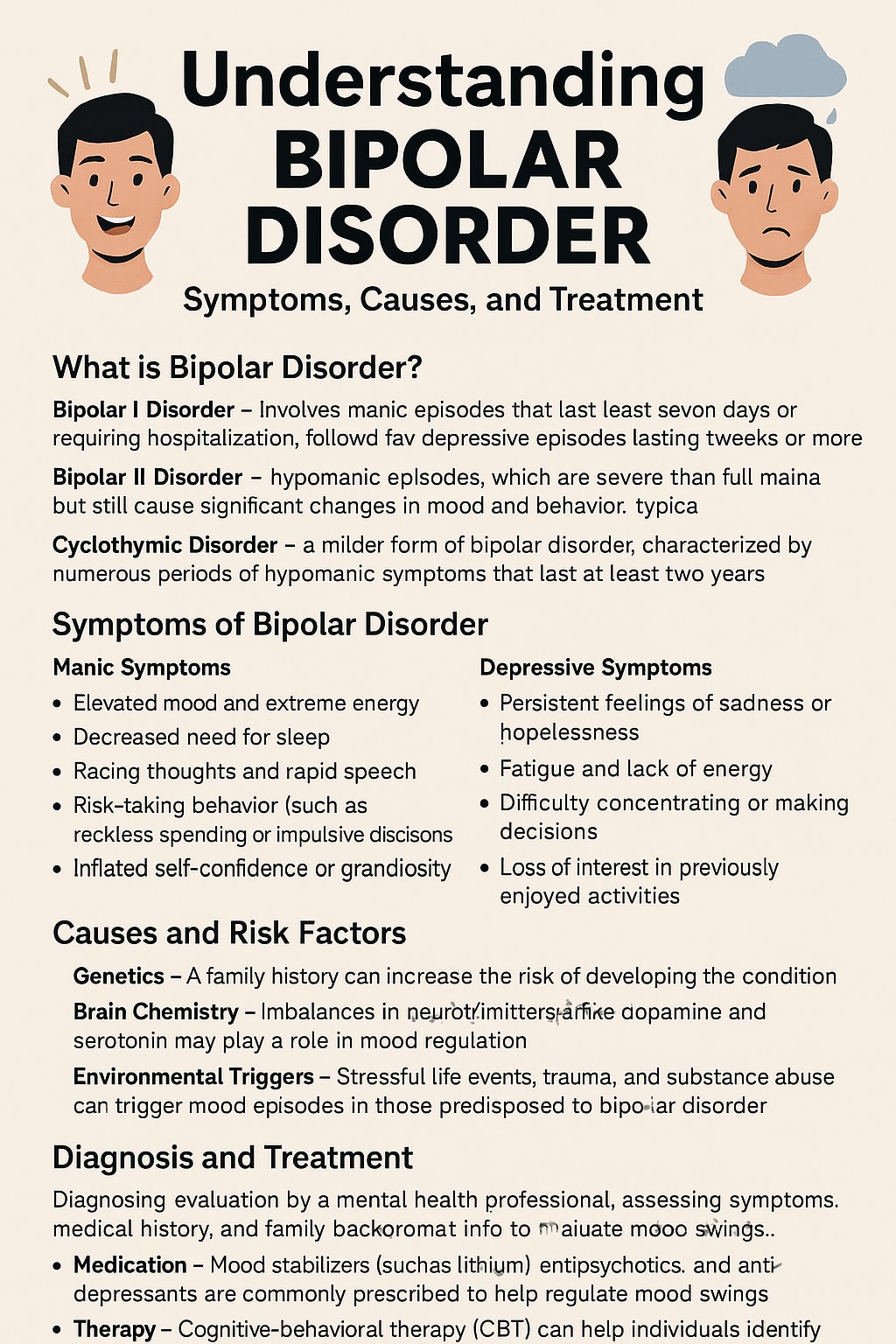
Bipolar disorder is a complex mental health condition that affects millions of people worldwide. Characterized by extreme mood swings that range from manic highs to depressive lows, it can significantly impact a person's daily life, relationships, and overall well-being. Despite its challenges, with the right treatment and support, individuals with bipolar disorder can lead fulfilling lives.
What is Bipolar Disorder?
Bipolar disorder is a mood disorder that causes intense emotional states. These shifts are more severe than typical mood fluctuations and can last for days, weeks, or even months. There are different types of bipolar disorder, including:
- Bipolar I Disorder – Involves manic episodes that last at least seven days or are so severe that hospitalization is required. Depressive episodes often follow, typically lasting two weeks or more.
- Bipolar II Disorder – Features hypomanic episodes, which are less severe than full mania, but still cause significant changes in mood and behavior. People with bipolar II often experience prolonged depressive episodes.
- Cyclothymic Disorder – A milder form of bipolar disorder, characterized by numerous periods of hypomanic and depressive symptoms that last at least two years.
Symptoms of Bipolar Disorder
Symptoms vary depending on whether a person is experiencing mania or depression.
- Manic Symptoms:
- Elevated mood and extreme energy
- Decreased need for sleep
- Racing thoughts and rapid speech
- Risk-taking behavior, such as reckless spending or impulsive decisions
- Inflated self-confidence or grandiosity
- Depressive Symptoms:
- Persistent feelings of sadness or hopelessness
- Fatigue and lack of energy
- Difficulty concentrating or making decisions
- Loss of interest in previously enjoyed activities
- Suicidal thoughts or feelings of worthlessness
Causes and Risk Factors
The exact cause of bipolar disorder is not fully understood, but research suggests several contributing factors:
- Genetics – A family history of bipolar disorder can increase the risk of developing the condition.
- Brain Chemistry – Imbalances in neurotransmitters like dopamine and serotonin may play a role in mood regulation.
- Environmental Triggers – Stressful life events, trauma, and substance abuse can trigger mood episodes in those predisposed to bipolar disorder.
Diagnosis and Treatment
Diagnosing bipolar disorder involves a thorough evaluation by a mental health professional, who will assess symptoms, medical history, and family background. Since bipolar symptoms often resemble other mental health conditions, accurate diagnosis is essential.
Treatment usually combines medication and therapy:
- Medication – Mood stabilizers (such as lithium), antipsychotics, and antidepressants are commonly prescribed to help regulate mood swings.
- Therapy – Cognitive-behavioral therapy (CBT) can help individuals identify and manage negative thought patterns. Psychoeducation and support groups also provide coping strategies and emotional support.
- Lifestyle Changes – Establishing a routine, getting regular sleep, and managing stress through mindfulness or exercise can greatly improve symptoms.
Living with Bipolar Disorder
While bipolar disorder presents unique challenges, many individuals successfully manage their condition with the right resources. Maintaining a strong support system, staying consistent with treatment, and prioritizing self-care are key strategies.
By raising awareness and reducing stigma, society can encourage those affected to seek help and lead fulfilling lives despite the ups and downs. Mental health advocacy, education, and open conversations can foster a more understanding and supportive world for everyone.
About the Creator
Keep reading
More stories from Alice Webb and writers in Humans and other communities.
Impulse Control? I Don’t Know Her.
It started, as most minor disasters do, with what seemed like a harmless idea. “Wouldn’t it be cool if we made our own bread from scratch?” The words barely left my mouth before my partner let out a sigh—one borne of years of experience, the kind that speaks volumes without uttering a single word. His expression, an expert blend of amusement and cautious resignation, told me everything: he already knew what was coming.
By Alice Webb8 months ago in Humans


Comments
There are no comments for this story
Be the first to respond and start the conversation.