
UN Chief Warns: World Order Breaking Down as 'Law of the Jungle' Returns
In an urgent address to the Security Council, Antonio Guterres issues a stark warning that foundational international laws are being ignored, threatening global peace and security.

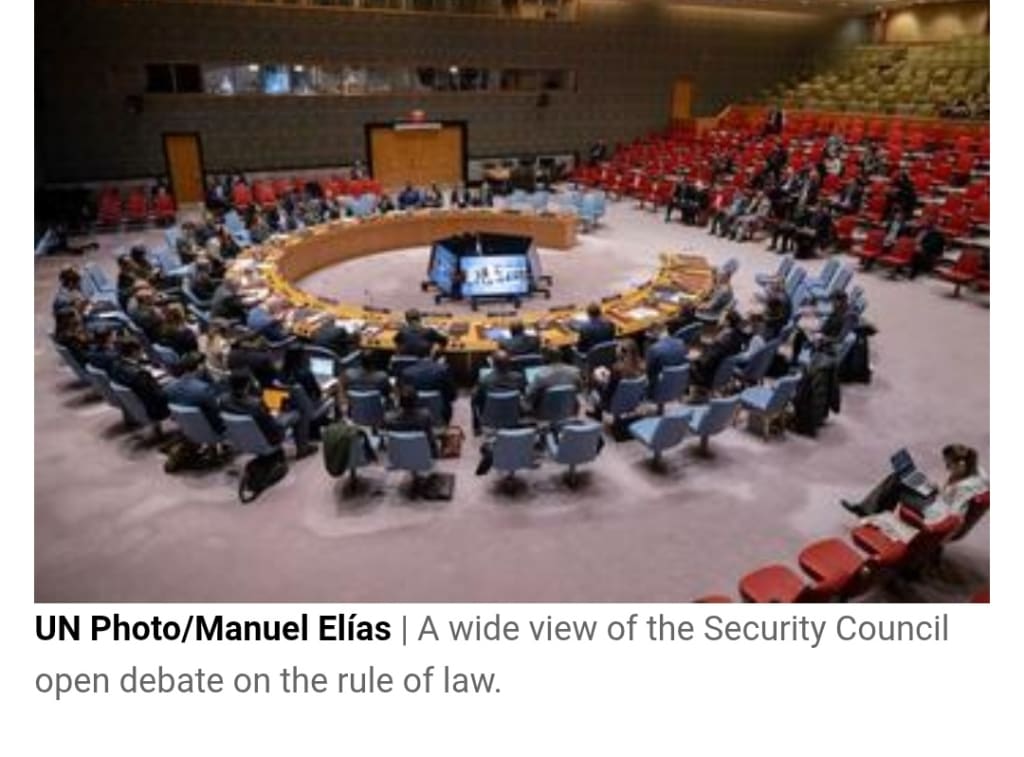
UN Chief's Stark Warning: Global Order Eroding as 'Law of the Jungle' Takes Hold
A Call to Action at the Security Council
United Nations Secretary-General António Guterres delivered a stark and urgent warning to the international community on Monday, stating that the rule of law worldwide is being replaced by "the law of the jungle". Addressing a high-level Security Council debate titled "Reaffirming the International Rule of Law," Guterres painted a picture of a global system in dangerous decline, marked by flagrant violations of international law and a brazen disregard for the foundational principles of the United Nations Charter.
His remarks came during a meeting organized by Somalia, which holds the Security Council presidency for January, and was attended by representatives from over 80 nations. The Secretary-General's speech served as a direct call for world powers to recommit to international law as the essential foundation for peace, justice, and multilateral cooperation.
The Erosion of an 80-Year Foundation
Guterres began by framing what is at stake. He reminded the Council that for the past eight decades, the international rule of law has served as a critical safeguard for humanity. This system, built on the UN Charter and other key instruments, has helped avoid a third world war and reduced deaths from smaller conflicts. He described it as a "robust and resilient collective security system" that binds all nations, large and small, to the same rules.
For smaller and weaker nations, international law provides a "lifeline" to fair treatment, sovereignty, dignity, and justice. For powerful nations, it acts as a necessary "guardrail" during disputes and conflicts. However, Guterres asserted that this vital system is now under unprecedented threat.
Core Principles Under Attack:
· Sovereign Equality: The principle that all states, regardless of size or power, are equal under international law.
· Prohibition of Force: The UN Charter's ban on the threat or use of force against another state's territorial integrity.
· Peaceful Dispute Resolution: The obligation for nations to settle conflicts through negotiation, mediation, and arbitration.
A World Treating Law as an "À La Carte Menu"
The Secretary-General did not mince words in describing the current state of global affairs. "Around the world, the rule of law is being replaced by the law of the jungle," he stated. He lamented that despite UN member states adopting the "Pact for the Future" in 2024, which included a commitment to act in accordance with international law, "words are not being matched with action".
Guterres pointed to conflicts "from Gaza to Ukraine, from the Sahel to Myanmar, in Venezuela and elsewhere" as evidence that "the rule of law is being treated as an à la carte menu". He listed a series of violations that states are committing with impunity:
· The illegal use of force.
· Attacks targeting civilian infrastructure.
· Widespread human rights violations and abuses.
· The illegal development of nuclear weapons.
· Unconstitutional changes of government.
· The denial of life-saving humanitarian aid.
"These violations set dangerous precedents," Guterres warned, "encouraging other countries to do what they want, instead of what they are required to do under international law". He argued that such actions fuel distrust and division among states and undermine public confidence in the ability to find common solutions.
The Unique Role and Need for Reform of the Security Council
In an era he described as "crowded with initiatives," Guterres strongly defended the unique and legal authority of the UN Security Council. He emphasized that the Council "stands alone in its Charter-mandated authority to act on behalf of all Member States on questions of peace and security".
"No other body or ad hoc coalition can legally require all member states to comply with decisions on peace and security," Guterres asserted. "Only the Security Council can authorize the use of force under international law, as set out in the Charter. Its responsibility is singular. Its obligation is universal".
However, he directly linked this defense with a call for change, stating that reform of the Council is "essential" and that the world must "act without delay to enhance the representation and effectiveness of this Council". This point was strongly echoed by other speakers. Mahmoud Ali Youssouf, Chairperson of the African Union Commission, noted that the Security Council still has not corrected the "serious historical injustice" of not having a permanent seat for Africa.
A Three-Part Pathway Forward
Guterres outlined three concrete areas for action to reinvigorate the international rule of law:
1. Keep Promises and Uphold the Charter
Nations must move from rhetoric to action. The purposes and principles of the UN Charter are not optional. All countries have an obligation to settle disputes peacefully, protect human rights and dignity, and respect the principles of self-determination and sovereign equality.
2. Fully Utilize Dispute-Settlement Tools
Member states must make full use of the conflict prevention mechanisms already embedded in the UN Charter, including negotiation, inquiry, mediation, and arbitration. Guterres also highlighted the need to strengthen partnerships with regional organizations.
3. Promote Fair and Independent International Justice
The Secretary-General called for stronger support for international judicial bodies. He urged all countries to accept the compulsory jurisdiction of the International Court of Justice and to respect its binding rulings. He also stressed that "the International Criminal Court... must be able to operate independently," adding that "there can be no sustainable or just peace without accountability".
Global Reactions and the Road Ahead
The open debate revealed deep fractures within the international community, while also showcasing broad agreement on the core principles at risk.
The representative from Venezuela, speaking for the "Group of Friends in Defense of the Charter," condemned what he called an "unjustified and unprovoked armed aggression by the United States" against his country earlier in January. He warned that such conduct "epitomizes the replacement of the rule of law with the law of force".
Iran's delegate accused the United States of seeking to replace UN authority with unilateral action, asking, "If the United States can use threats of force, unlawful military action, coercion, and regime-change policies as routine tools without facing any consequences, what remains of the UN Charter?".
The United States representative defended its actions, stating that President Trump "inherited a world on fire" and has taken "real action," including brokering peace agreements. The Russian Federation's delegate blamed Western-led actions for the world going "awry," while China's representative argued that "no single country should dictate terms based on its power" and cautioned against creating alternative mechanisms that bypass the UN.
Despite these clashes, a common thread emerged. The delegate from Bahrain stated, "The rule of law must be respected and applied by all without exception". Somalia's representative, concluding the session, shared a poignant national proverb: "If what happened yesterday is not examined today, there is no progress for tomorrow".
Guterres's message is clear: the framework that has maintained a degree of global order for 80 years is fraying. The choice, as presented in the Council, is between a system of shared rules and a destabilizing descent into a world where might makes right. The response from the international community will determine which path prevails.
About the Creator
Saad
I’m Saad. I’m a passionate writer who loves exploring trending news topics, sharing insights, and keeping readers updated on what’s happening around the world.
Autonomy Is The Real Privilege
Good morning, freedom-seekers! Today we’re gonna be looking at autonomy. A strange word, I know; one many would probably look at blankly and run away from on sight. We’re gonna figure out what it actually means, consider how it’s achieved, and decipher just how deeply most of us are tangled up in dependence without realising it.
By That ‘Freedom’ Guy7 days ago in Humans
The Hidden Valentine part 5
The Blueprint of a Heart Maya returned home with her mind buzzing like a swarm of bees. The city outside her apartment felt like a different world—bright lights, loud music, people laughing, couples holding hands, the whole world celebrating love in the most obvious way possible. The irony hit her like a cold wave.
By Ahmed aldeabella5 days ago in Humans




Comments
There are no comments for this story
Be the first to respond and start the conversation.