
Tyson Vs Paul; From Legend to Parody. The Tyson-Paul Ring fight-dance Disaster”
The boxing legend, Mike Tyson, returned to the ring after years of absence, and the result was an event which got everyone talking—but certainly not for the right reasons.
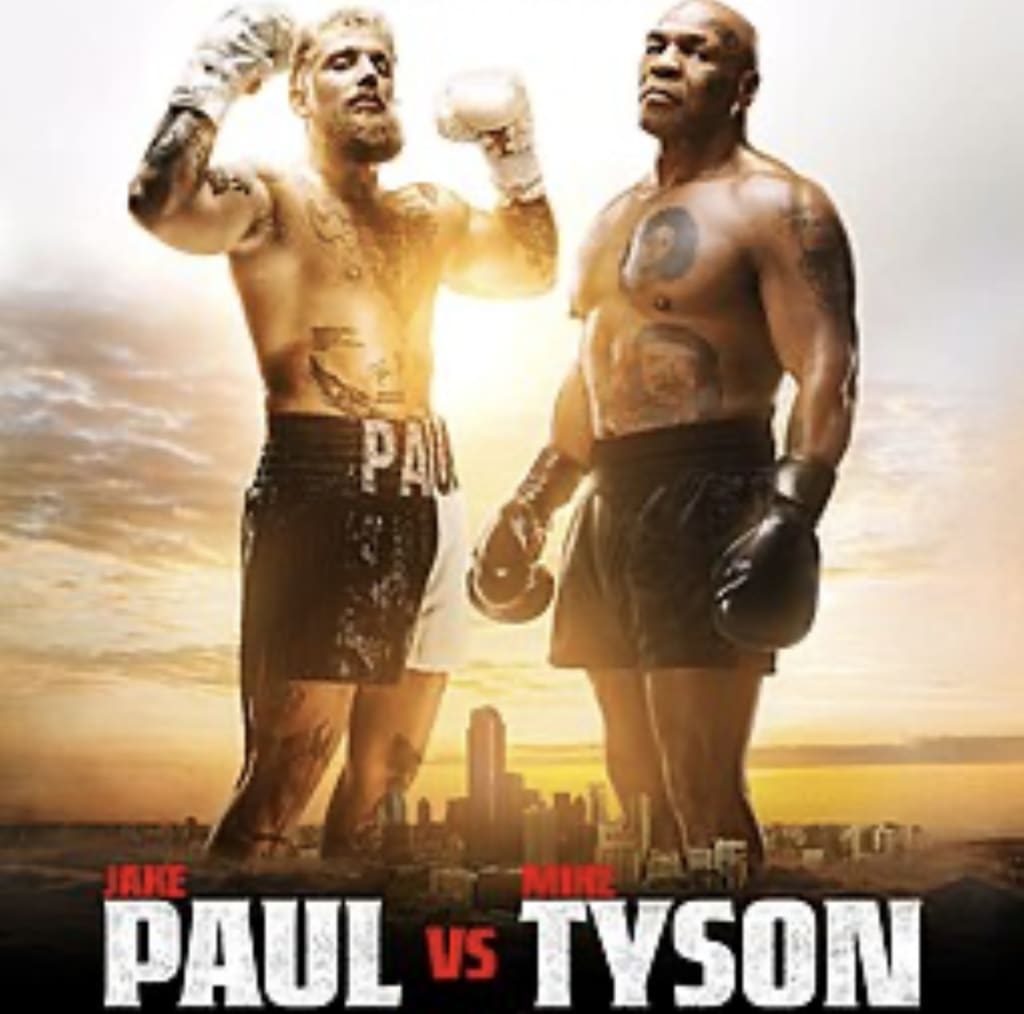
The boxing legend, Mike Tyson, returned to the ring after years of absence, and the result was an event which got everyone talking—but certainly not for the right reasons. Eight rounds of what was supposed to be “the fight of the year” turned out to be little more than a one-way ticket to boredom town. Tyson, now 58 and visibly struggling, delivered a performance far removed from his glory days.
The most exciting moment? Probably the slap Tyson gave Jake Paul during the weigh-in, which went viral. After that taste of action, some might have hoped for an exciting match, but the ring at AT&T Stadium in Arlington offered little more than a horror show for 80,000 spectators (and millions online), caught somewhere between a soap opera and a pantomime.
The truth is, this fight was more business than boxing. That Tyson, even at 58, has the strength to overpower young boxers is not in question. But technically? His stamina, reflexes, and ability to string together combinations seemed like distant memories. Jake Paul, a 28-year-old influencer turned occasional boxer, fulfilled his dream: defeating his idol. Then again, it’s not hard to beat a legend moving like a drunken zombie. Moreover, on retirement!
Yet, it’s hard to find anything glorious in all this. The event reduced an iconic fighter like Tyson to a spectacle closer to a circus act than a genuine sporting competition. A prime Mike Tyson would have swallowed Jake Paul in a single round, but that Tyson now lives only in memories (and YouTube videos). What we saw in the ring was nothing more than a caricature of himself, a shadow which drew more ironic smiles than sincere applause.
The entire world of entertainment contributed to turning this into a soulless marketing operation. Joking rumors suggest Jake Paul’s next opponent might be former president Joe Biden or, who knows, another guest from a retirement home. Why not?
To make matters worse, Netflix streamed the event worldwide but failed to manage the influx of viewers. Continuous buffering and interruptions made the experience frustrating, as if the spectacle in the ring wasn’t disappointing enough.
As for Tyson, one wonders what convinced him to participate. Perhaps the $20 million paycheck? A man who once dominated the ring with the charisma and ferocity of a predator now seemed like nothing more than a pawn in a game orchestrated to fulfill the whims of a young “influencer.” Paul, for his part, did the bare minimum to win: a few well-placed punches, lots of defense, zero spectacle.
What’s left of all this? Eight soporific rounds, a match which could have been scripted before it even began, and a general sense of emptiness. The problem isn’t just that Tyson-Paul was a bad fight. The problem is that it represents another step in the transformation of sports into disposable “content.” A hollow exhibition, destined to be forgotten as soon as another equally shallow spectacle takes its place.
For those hoping to see the “old” Tyson, the one who instilled fear and delivered KOs in less than a minute, this match was nothing but a painful reminder: that time is gone. We will never see that Tyson in the flesh again; we can only relive his glory days in archive footage. Watching this version of the boxer is like seeing a golden statue crumble at the touch. Legends should remain untarnished, not reduced to caricatures.
Even Rolling Stone Australia magazine called the fight a parody of modern American culture, comparing it to the film The Wrestler, where a washed-up fighter keeps battling because he knows nothing else. The difference? The Wrestler was a conscious tragedy. Tyson-Paul was a farce masquerading as a historic event, with Paul walking away $40 million richer (compared to Tyson’s “modest” $20 million), thanks to a massive fanbase built on outrageous pranks, neighborly feuds, and publicity stunts.
However, Jake Paul is a marketing genius, capable of turning anything into media gold, even an event that, from a sporting perspective, had no reason to exist. Tyson, despite everything, remains an icon. No one will forget his better days, but perhaps it would have been better if he had chosen to retire gracefully, allowing his legend to remain intact.
What was supposed to be a dream—Tyson’s return to the ring—turned into a grotesque nightmare. And real boxing inevitably emerged diminished. Events like this do not celebrate the sport: they reduce it to a stage for marketing stunts, where prestige and glory are sacrificed on the altar of profit and clicks. What was once a noble and brutal discipline—an art grounded in respect, sacrifice, and skill—now seems hostage to influencers and unscrupulous promoters intent on selling soulless spectacles.
In an era where everything is entertainment, it’s hard not to see Tyson-Paul as a symbol of a broader trend: the decline of authentic sports, replaced by exhibitions blending nostalgia, celebrity, and scandal. But even nostalgia has a price, and in this case, it was high: the untouchable memory of a champion who deserved better. Life becomes a mere acting script.
Paradoxically, Jake Paul emerges as the winner, not just in the ring but outside it too. With his ability to turn any event into an opportunity to gain visibility and money, he’s proven himself more of a business mastermind than a boxer. Tyson, for his part, played along, perhaps knowingly, perhaps driven by a mix of personal challenge and a desire for one last moment in the spotlight.
If anything remains of this evening, it’s a bitter lesson: not every “dream come true” is a good idea, especially if that dream risks tarnishing a legacy built on blood, sweat, and history. Tyson-Paul was not the “fight of the year,” as some dared to call it. It was a forgettable spectacle, a perfect example of how not all myths deserve a sequel.
As an audience, perhaps we should take a step back and reflect. The next time we see a similar event promoted as “unmissable,” we should ask ourselves: do we really want to contribute to this decline? Tyson remains a legend, but some legends should be celebrated with respect, not sold to the highest bidder. Because the memory of an unbeatable fighter is far more valuable than any sum of money or number of views.
About the Creator
Reader insights
Outstanding
Excellent work. Looking forward to reading more!
Top insights
Compelling and original writing
Creative use of language & vocab
Easy to read and follow
Well-structured & engaging content
Excellent storytelling
Original narrative & well developed characters
Eye opening
Niche topic & fresh perspectives
On-point and relevant
Writing reflected the title & theme
Keep reading
More stories from Simone Nunziata and writers in Humans and other communities.
Donald Trump, the man of the ‘I’m Fucking Crazy’: A New Chapter at the White House.
Well, what can we say. If America’s face once seemed ambiguous or contradictory, there’s no doubt now: the United States has once again chosen the New York tycoon as the 47th President. After a campaign filled with twists and turns, Trump has triumphed over Kamala Harris, reaching and surpassing the crucial 270 electoral votes with a lead of 5 million votes. Like it or not, the result reflects exactly what over half of Americans want for the White House.
By Simone Nunziataabout a year ago in Journal
Minnesota and Illinois Invoke the 10th Amendment in Lawsuits to Block Federal Agents in Their Cities — Here’s Why That Matters
States Push Back Against Federal Enforcement Minnesota and Illinois have launched high-profile lawsuits invoking the 10th Amendment of the US Constitution in an effort to block or limit the actions of federal agents—particularly immigration enforcement officers—operating within their cities. The legal challenges mark a significant escalation in the long-running conflict between state governments and Washington over who has the authority to enforce immigration laws and how far federal power can reach.
By Aarif Lashari4 days ago in Humans
How to Succeed at the Benson Directory®
Congratulations and welcome to the Benson Directory® employee #22391! As our newest call handler, you will have the privilege of speaking with dozens of unique and interesting people on a daily basis as well as the opportunity to earn bonuses for high performance. Contained within this handbook you will find a set of ease to follow instructions designed to help you settle in to your new role and begin paving the way to success.
By S. A. Crawford2 days ago in Fiction



Comments
There are no comments for this story
Be the first to respond and start the conversation.