
Trump is Not the Victim of a Hoax...
We Are

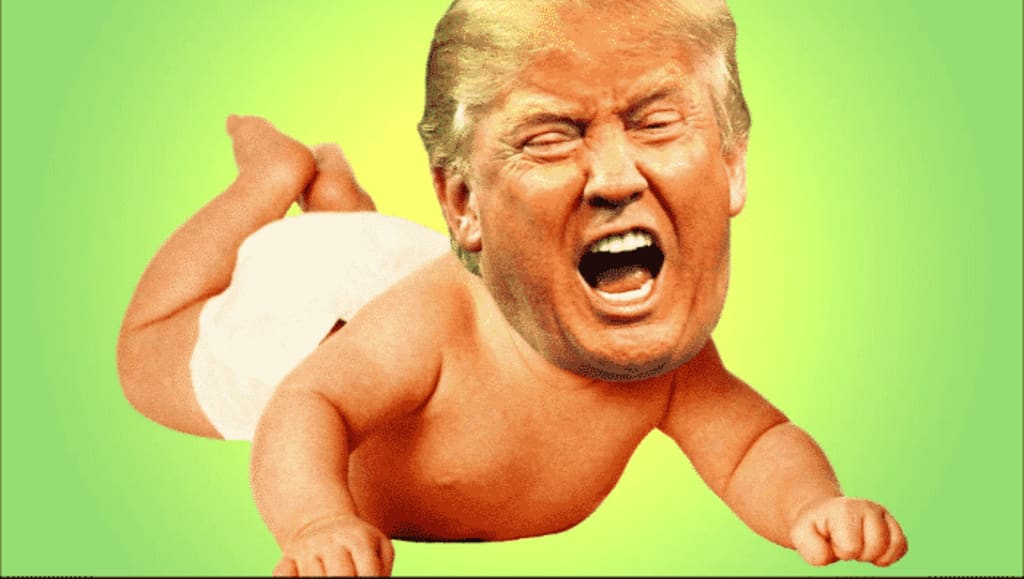
I am so sick and tired of Trump and his tantrums and narcissistic behavior. He is not a victim oF a hoax or a witch hunt. He is a perpetrator preying on the stupidity and ignorance of bigots. ANd he is the perpetrator of a huge hoax which is what con men do. Feel free to share.
A hoax is a deliberate falsehood intended to deceive, often for gain or spectacle. To prove something is a hoax, one must demonstrate intent to mislead and falsity of the claim. Donald Trump frequently misuses the terms “hoax” and “witch hunt” to deflect legitimate scrutiny, despite lacking evidence of persecution or fabrication.
The Anatomy of a Hoax: Definition, Proof, and Political Misuse
I. What Is a Hoax?
A hoax is a deliberate deception, typically designed to mislead an audience for humorous, malicious, or financial gain. According to Britannica, a hoax is “a falsehood generally intended to fool and to entertain”. Wikipedia expands this definition, describing a hoax as “a widely publicized falsehood created to deceive its audience with false and often astonishing information”.
Hoaxes differ from simple lies or mistakes in their intentionality and scale. They often involve elaborate setups, false evidence, and public dissemination. Historical hoaxes range from Jonathan Swift’s satirical predictions to fraudulent medical cures in the 18th century.
II. Legal and Evidentiary Standards for Proving a Hoax
To legally establish that something is a hoax, especially under U.S. law, prosecutors must prove several elements:
- Falsity: The claim must be demonstrably untrue.
- Intent: The person must have knowingly spread false information.
- Impact: The falsehood must be likely to cause public harm or emergency response.
Under 18 U.S.C. § 1038, it is a federal crime to knowingly convey false information about serious offenses like terrorism or biological threats. The law requires proof that the individual knew the information was false and that it was likely to provoke emergency action.
This standard protects against criminalizing honest mistakes while targeting deliberate deception. Evidence such as digital communications, prior statements, and witness testimony are used to establish intent.
III. The Political Weaponization of “Hoax” and “Witch Hunt”
In recent years, the term “hoax” has been co-opted by political figures—most notably Donald Trump—to discredit investigations, media reports, and critics. Trump has repeatedly labeled the Russia investigation, impeachment proceedings, and even the COVID-19 pandemic as “hoaxes,” despite overwhelming evidence to the contrary.
Misuse of “Hoax”
Trump’s use of “hoax” often conflates disagreement or criticism with fabrication. For example:
- He called the Mueller investigation a “hoax,” despite its findings that Russia interfered in the 2016 election and that his campaign welcomed the help.
- He referred to COVID-19 as the Democrats’ “new hoax,” a statement widely interpreted as downplaying the virus’s seriousness.
In both cases, the term “hoax” was used not to describe a deliberate falsehood, but to delegitimize opposing narratives.
Misuse of “Witch Hunt”
The phrase “witch hunt” historically refers to irrational persecution, often without evidence. Trump has used it to describe:
- The Mueller investigation
- His impeachments
- Criminal indictments related to classified documents and election interference
However, these proceedings were based on substantial evidence, legal process, and bipartisan oversight. Labeling them as “witch hunts” distorts their nature and undermines accountability.
IV. Why Trump Is Not a Victim of a Hoax or Witch Hunt
To be the victim of a hoax, one must be deceived by a falsehood. To be the target of a witch hunt, one must face baseless persecution. Trump’s legal and political challenges stem from documented actions, credible investigations, and judicial review.
- The Mueller Report confirmed Russian interference and identified multiple instances of potential obstruction.
- His impeachments were based on documented abuse of power and incitement.
- His indictments involve evidence such as recordings, witness testimony, and classified documents.
None of these meet the criteria for a hoax or witch hunt. They are not fabrications, nor are they irrational persecutions. They are responses to real actions with legal consequences.
V. The Consequences of Misusing These Terms
Trump’s rhetorical strategy has broader implications:
- Erosion of Trust: Calling factual reporting a “hoax” undermines public trust in journalism.
- Delegitimization of Institutions: Labeling investigations as “witch hunts” weakens faith in the justice system.
- Polarization: These terms fuel division by framing accountability as persecution.
This misuse reflects a broader trend of strategic falsehoods—where language is weaponized to distort reality and evade responsibility.
Sources:
- Britannica on Hoaxes
- Wikipedia on Hoaxes
- LegalClarity on 18 U.S.C. § 1038
About the Creator
Julie O'Hara - Author, Poet and Spiritual Warrior
Thank you for reading my work. Feel free to contact me with your thoughts or if you want to chat. [email protected]
Keep reading
More stories from Julie O'Hara - Author, Poet and Spiritual Warrior and writers in Humans and other communities.
The Merge: How Catastrophe in One World Reshapes the Soul Across Realities
About two weeks ago, I received a powerful and unmistakable message from my spirit guides: a major energetic event was approaching. I didn’t know the details, only that something significant was imminent. As it turns out, that event occurred on 11/11—an energetically charged date that often marks portals of transformation. So it’s no surprise.
By Julie O'Hara - Author, Poet and Spiritual Warrior2 months ago in Humans
Superhero
Have you ever seen a superhero? As soon as this question is asked, many names come to mind. Heroes wearing colorful costumes, masks on their faces, flying through the air, fighting villains with special powers. We have all seen such superheroes in movies and cartoons. But have you ever seen a real superhero in real life? Most people would say no.
By Sudais Zakwana day ago in Humans
Ludacris and Nelly draw backlash over bookings at MAGA-coded music festival
Ludacris and Nelly headlining a mostly right-wing event is good for them. It’s also great for the genre of hip hop. The two rap veterans have showcased their talents on other stages. Why can’t they perform for mostly MAGA folks and grab that bag?
By Skyler Saunders4 days ago in Beat


Comments
There are no comments for this story
Be the first to respond and start the conversation.