
Scrupulously, ridiculously honest—that was Mary. A reaction to the way she was raised: her mother’s picaresque embellishments, her sister’s history of insurance fraud. She arrived at the threshold of adult life with a visceral horror of falsehood, exaggeration, misleading or noncommittal statements. No cutting a corner, shaving an edge, downplaying or soft-pedaling could be tolerated.
She'd lost her first love because she told him she had been fleetingly attracted to another man, and wondered if that meant something, if maybe they were not supposed to marry. She couldn’t promise forever with her fingers crossed behind her back.
So there she was, cut loose. Not wanting to go back to that family life, the lying to bill collectors on the phone and pretending not to be home with the landlord knocked. Cleaning the front room while the rest of the place fell into filth and disarray—another brand of lie. One by one she dropped the pretenses: ceasing to alter or prettify the exterior, when her interior felt so ugly. Makeup was the first thing to go: she associated the smell of it with her mother, painting her face on in the wrecked bathroom. She hacked off her hair in the airport rest room with nail scissors. Then threw away the nail scissors, because who cares what your nails look like. You can always just chew them short.
Nothing would be swept under the rug. What you see, she informed herself in the mirror (that pale face with the brush of disorganized locks sticking this way and that around it) is all there is.
Waiting for the flight, she inspected her backpack for any further forms of artifice she might jettison to make room for the great emptiness that she felt coming towards her: her future.
She had already deleted her Facebook and Instagram accounts, those flickering backdrops for all the posing and posturing, the fake friendships.
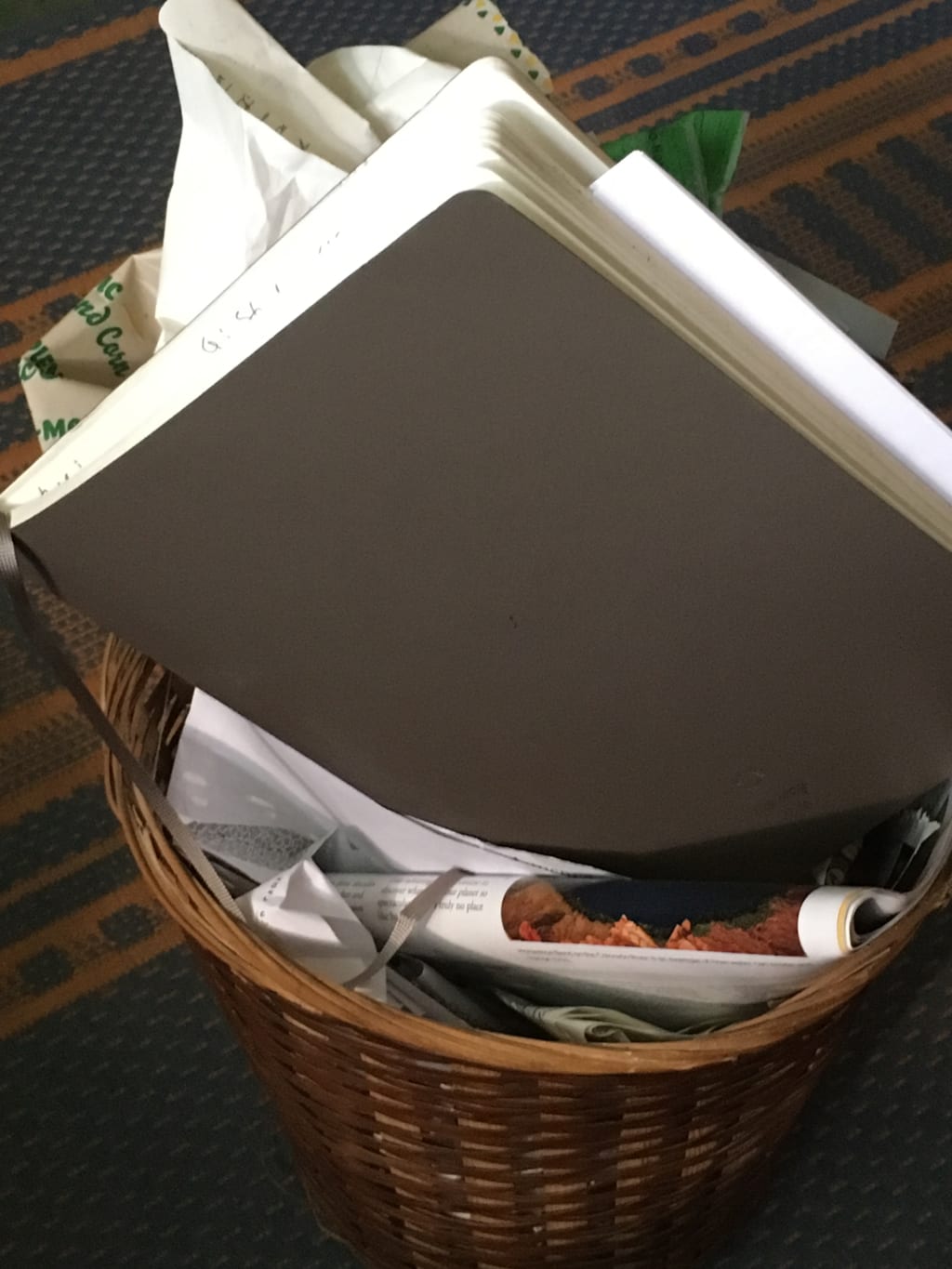
At the bottom of the bag finally she ran up against a headwind of resistance. Her hand paused on the stack of slim black notebooks. The more she felt attached to their contents, the more she reasoned they had to go.
What was fiction, after all, but a passel of lies? Was it Pat Conroy who called novel writing “telling lies for fun and profit”? It might be possible to lead a life of complete honesty as a nonfiction writer, but even a memoirist constantly turns, seeking a more flattering or dramatic angle. And novels? Complete claptrap from start to finish. What did she think she was doing in these notebooks, with their thinly-disguised hatchet jobs on people she hated, their pathetic rationalizations about the actions of those she loved? The world was full of stories already. Look: that pregnant woman from India or Pakistan, with her weary eyes, her little ones asleep on her lap. She has a story. Her and every other person in the terminal. And then every living thing—hell, even the rocks, probably—stories upon stories. What point is there in making up bullshit?
Mary jumped up, abruptly, before she could change her mind, and carried the stack of notebooks to the trashcan. Shoved them in, brutally: she could almost hear the plotlines yelp. Immediately she felt light, as though she had been carrying those characters on her back for 100 miles. She smiled at the woman in the blue headscarf, relieved.
***
"Look," Shamira said to her husband the next day. They’d gotten the kids off to bed, at last. The tea was brewing.
What are those?
I saw this woman put them in the trash at JFK, she said. I was curious, you know. Also I thought she might regret it and come back. And the janitors were coming along the hall, emptying the cans.
He frowned. It seems wrong, he said. It is personal? He reached out for the top book, flipped its supple black cover, thumbed through the closely scribbled pages. The writing was minute, each word precisely formed, page after page.
No, I don’t think so. A novel. Well, maybe semi-autobiographical, the way first novels tend to be. But, fictionalized. Character lists. Plot diagrams. It’s quite good, actually.
You read it? He looked at her in surprise.
Shamira shrugged. It’s a long flight. And once I got started … I couldn’t put it down. It was twice as good as the manuscript I was supposed to be working on. I haven’t liked anything so much in … yonks. The mother character is quite something. It’s almost picaresque.
It’s not finished, she said, as Ali sat down on the couch, turned on the reading light. And of course a bit disjointed, or maybe that’s an element of her style. It would suit the story line, about this family that just seems to live in self-created chaos. Anyway, I’m dying to know how it ends. I looked for her on the flight, but no luck. She must have been headed elsewhere.
He flipped to the front page, where the notebook provided a place to say “In case of loss, please return to:” Nothing but an email. [email protected]. “I think her name might be Mary,” he said.
Shamira dropped onto the sofa beside him, tucked her bare feet up under her skirt. “I’m going to show it to Nigel on Monday,” she said.
“Well, Nigel thinks you hung the moon after your last find got short-listed for the Booker. I should think he’ll jump on it.”
“I do hope so. Poor scrap of a girl. She looked like she was on her last tuppence. Wouldn’t it be something if we could offer her a contract, an advance? Just out of the blue! And for a story she threw away.”
Ali smiled, patted Shamira’s knee. “Two million Mary?"
About the Creator
Jeannette Cabanis-Brewin
Essayist and poet. Herding chickens at the end of the road in the Southern Blue Ridge. Poems: Patriate (Longleaf Press, 2007).
Keep reading
More stories from writers in Humans and other communities.
Time to change your life.
Is it even possible for you to change your life? A lot of people, more than there should be, are unhappy with their lives. But what are they doing about it? Usually nothing. People talk about how shitty their lives are and want change, but are they not taking the actions to change?
By Jen Phillipsabout 22 hours ago in Humans
Not Just For Clean Up: A History Of The MCU's Department of Damage Control
Initially an organisation that seemed to exist to help the heroes of the Marvel Cinematic Universe, from Phase Four onwards, the Department of Damage Control has shifted into a more antagonistic role. Most recently seen in the Wonder Man series, the current incarnation of Damage Control seems to target superpowered individuals, regardless of whether that person poses an active or intentional threat.
By Kristy Andersonabout 6 hours ago in Geeks



Comments
There are no comments for this story
Be the first to respond and start the conversation.