
Title: Gaza Under Siege: A Humanitarian Catastrophe Unfolds
Free Gaza

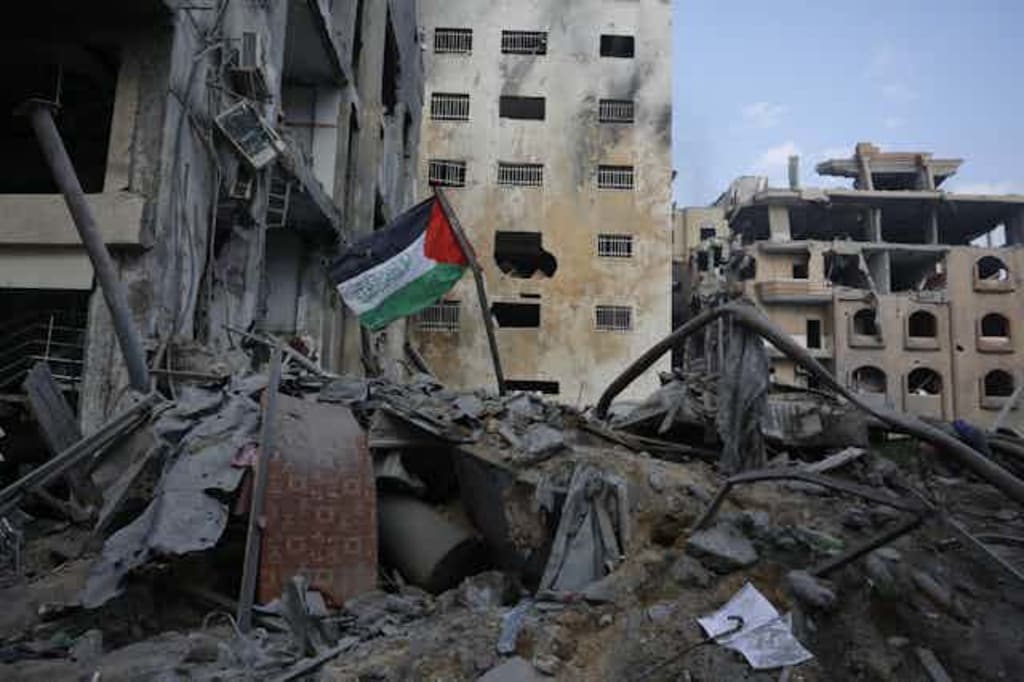
The Gaza Crisis: A Deepening Humanitarian Catastrophe
Introduction
The Gaza Strip, a narrow piece of land along the Mediterranean coast, has become one of the most tragic and volatile regions in the modern world. For decades, the people of Gaza have lived under blockade, war, and political instability. However, the current situation has escalated into an unprecedented humanitarian catastrophe, marked by extreme brutality, mass casualties, and widespread destruction.
This article explores the root causes of the Gaza crisis, the recent events marked by ruthless military assaults, the toll on civilians, and the international community’s response—or lack thereof.
---
Historical Background
To understand the current crisis, one must look back at the complex history of the Israeli-Palestinian conflict. After the end of the British mandate in Palestine in 1948, the State of Israel was established, leading to the first Arab-Israeli war. Hundreds of thousands of Palestinians were displaced—what they call the Nakba (the catastrophe).
Gaza came under Egyptian control until 1967, when Israel occupied it during the Six-Day War. Since then, the territory has been a central point of conflict. In 2005, Israel withdrew its settlements and military from Gaza, but it maintained control over airspace, borders, and coastal access. In 2007, Hamas took control of Gaza after winning Palestinian elections, leading to a severe Israeli-Egyptian blockade.
Since then, Gaza has faced several wars (2008–09, 2012, 2014, and others), each leaving behind massive destruction and loss of life. Yet the latest phase, which began in late 2023, is by far the most brutal.
---
Unfolding Brutality in Gaza
In response to the Hamas-led attack on October 7, 2023, Israel launched a full-scale military assault on Gaza. While Israel claims to be targeting Hamas infrastructure, the sheer scale of destruction and death has raised serious questions about the proportionality and legality of its actions.
According to various humanitarian and journalistic sources, more than 35,000 Palestinians, most of them women and children, have been killed as of early 2025. Thousands more remain trapped under the rubble. Entire neighborhoods have been flattened. Hospitals, schools, refugee camps, and even UN shelters have not been spared.
The use of heavy airstrikes, artillery shelling, and ground invasions has turned Gaza into a graveyard. Reports suggest that white phosphorus, banned in civilian areas under international law, has been used. Water supplies are contaminated, electricity is almost non-existent, and food is scarce. Starvation is being used as a weapon of war.
Videos and images from Gaza show unspeakable suffering: parents carrying the lifeless bodies of their children, overcrowded hospitals with wounded patients lying on the floor, and children crying in fear as bombs explode around them. Entire generations are being wiped out.
This is not just war—it is annihilation.
---
Humanitarian Crisis Beyond Imagination
Gaza was already one of the most densely populated and impoverished areas in the world. The blockade had created a situation where the majority of the population depended on international aid for survival. Now, with borders sealed and aid convoys bombed or denied access, the situation has turned into a full-blown humanitarian collapse.
The UN has described Gaza as "uninhabitable." More than 1.9 million people—about 85% of the population—are displaced. Thousands are living in tents, without adequate food, water, or medical care. Diseases like cholera and hepatitis are spreading rapidly in overcrowded camps.
Hospitals and clinics have been bombed repeatedly, even when their coordinates were shared with Israeli forces. Doctors are operating without anesthesia. Premature babies have died in incubators due to fuel shortages.
International aid organizations like UNRWA, WHO, and Médecins Sans Frontières have all sounded the alarm, saying they are unable to operate under these conditions.
---
Voices from the Ground
Stories from survivors are chilling. Mothers describe how they dig through rubble to find their children. Journalists report on funerals where entire families are buried together. A six-year-old girl, Reem, became a symbol of the crisis when her voice was heard pleading for help over the radio after an airstrike killed her entire family and left her trapped under debris.
Local journalists, the few who remain alive, risk their lives to document the horror. Most international media have no access to Gaza, making independent verification difficult. But the sheer volume of civilian testimonies, videos, and NGO reports paint a clear picture: this is not a conflict between equals, but a massacre.
---
International Response: Condemnation or Complicity?
Despite the scale of the suffering, the international response has been disturbingly muted—or worse, complicit.
While some countries like South Africa, Brazil, Ireland, and Norway have strongly condemned Israel’s actions and called for a ceasefire, major powers like the United States, the UK, and Germany have continued to support Israel diplomatically and militarily.
The U.S. has vetoed multiple UN Security Council resolutions calling for a ceasefire. Billions of dollars in military aid continue to flow to Israel, despite mounting evidence of war crimes.
The International Criminal Court (ICC) has begun investigations into potential war crimes, but such legal processes are slow and often hindered by political pressure.
Many see this as a glaring example of double standards in global politics. When Russia invaded Ukraine, the West responded with sanctions, military aid to Ukraine, and strong moral condemnation. But in Gaza, despite a higher civilian death toll and widespread destruction, Israel is treated as above international law.
---
Global Protests and the Voice of the People
Around the world, millions have taken to the streets to protest the genocide in Gaza. From New York to London, Jakarta to Cape Town, people of all faiths and backgrounds have demanded an end to the bloodshed. University students, trade unions, faith leaders, and activists are organizing rallies, boycotts, and awareness campaigns.
The Boycott, Divestment, and Sanctions (BDS) movement has gained new momentum, urging people to stop supporting companies and institutions complicit in the occupation and assault on Palestinian rights.
Social media has also played a crucial role, with independent Palestinian journalists like Motaz Azaiza and Plestia Alaqad using their platforms to share raw, emotional updates directly from Gaza. Despite censorship and algorithmic suppression, their voices continue to reach millions.
---
The Bigger Picture: Apartheid and Occupation
The Gaza crisis cannot be separated from the broader reality of Israeli occupation and apartheid. Human rights organizations such as Amnesty International, Human Rights Watch, and even Israeli NGO B’Tselem have labeled Israel’s treatment of Palestinians as apartheid—a systematic policy of oppression and domination.
Gaza is essentially an open-air prison. Its people are not free. They cannot move, work, study, or access basic resources without permission. They live under constant surveillance, threat, and bombardment.
The root of the crisis is not just Hamas or terrorism—it is a long-standing system of colonization, displacement, and dehumanization. Without addressing these root causes, peace will remain a distant dream.
---
Hope Amid Ruins?
Amid the darkness, there are glimmers of hope. Human rights lawyers are filing cases at international courts. Brave journalists and activists are keeping the truth alive. Ordinary people are raising funds, organizing aid missions, and pressuring their governments to act.
Ceasefire negotiations have stalled repeatedly, but international pressure is growing. The question is: how many more children must die before the world says “enough”?
---
Conclusion
The Gaza crisis is not just a political issue—it is a test of our shared humanity. What is happening today in Gaza is a moral catastrophe. It is a brutal reminder that silence in the face of injustice is complicity.
History will judge how the world responded to Gaza. Did we stand with the oppressed, or did we turn our faces away?
Gaza bleeds, but it also resists—with dignity, with faith, and with the hope that someday, justice will prevail.
About the Creator
The Nature of Bangladesh: A Land of Timeless Beauty
The Nature of Bangladesh: A Land of Timeless Beauty Bangladesh, nestled in the heart of South Asia, may seem like a small country on the map, but its natural beauty is vast, diverse, and breathtaking. From the mighty rivers that shape its landscape to the lush green forests, golden fields, and serene beaches, the nature of Bangladesh is a reflection of peace, harmony, and abundance. This article explores the natural beauty of Bangladesh, its unique geographical features, and the way it influences the life and culture of its people.
By Md Sohan11 months ago in Photography
How Singles Solve Trust Issues While Navigating Modern Dating Culture
The problems of trusting tend to be based on some prior experiences of relationships, emotional trauma, or some failure in dating. The contemporary dating culture, which is dependent on apps, casual meetups, and ineffective communication can contribute to the problems. Single persons can be wary, suspicious, or too conservative in making new acquaintances.
By Willian James3 days ago in Humans




Comments
There are no comments for this story
Be the first to respond and start the conversation.