
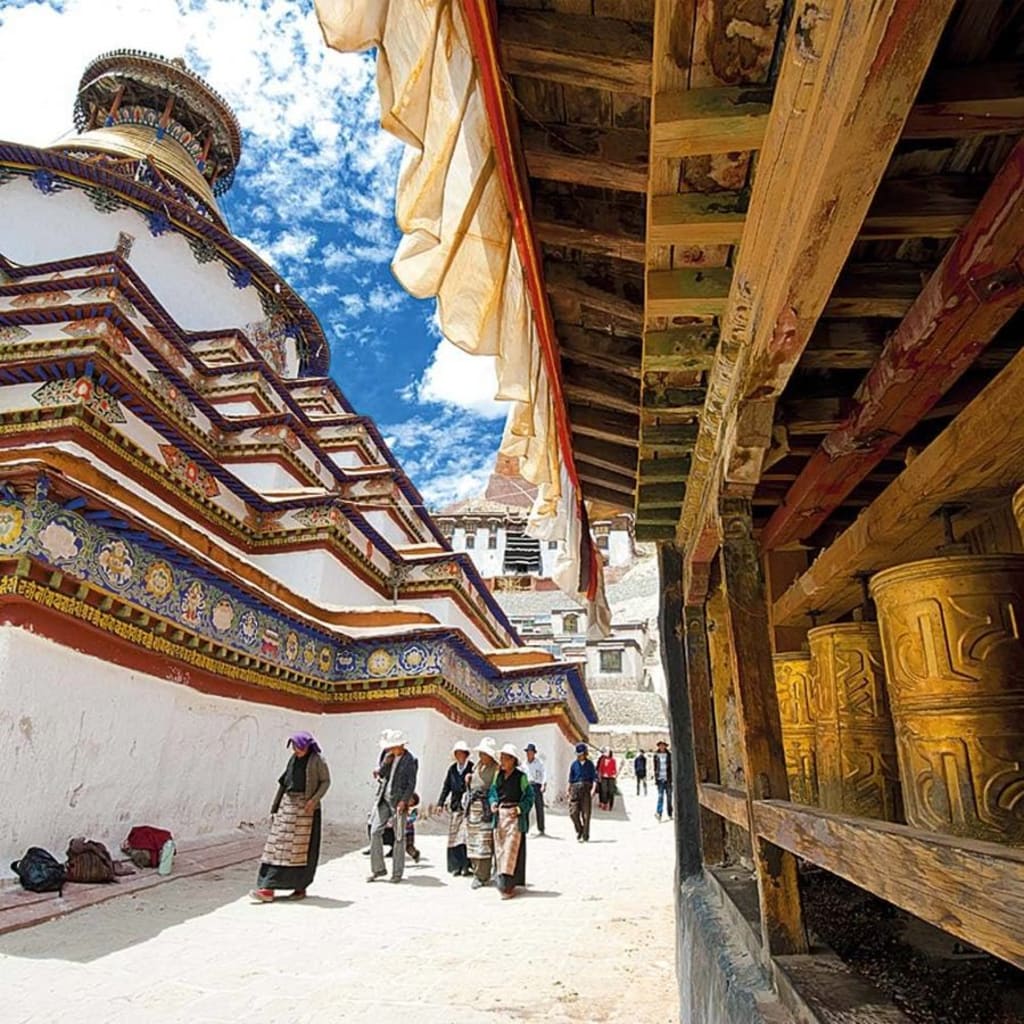
Sky burial is a Tibetan custom whereby people dispose of the corpses of their loved ones. This death ritual entails taking the body to a designated site in the mountains where it is left to feed vultures. The Buddhists in Tibet believe that the soul is immortal and death is only the beginning of a new life. Instead of letting the body vanish naturally, it is better for almsgiving to another kind of life and liberates the soul from the body enabling it to gain entry into rebirth. The method is widely used by common Tibetans.
The practice of sky burial is related to the rise of Tibetan Buddhism and the influence of Indian culture. It was brought by the Indian monk Tamba Sanjee to Tibet around the end of the 11th century. He advocated this kind of burial custom and personally went to the celestial burial platform to recite sutras for the dead. He promoted that this was a merit of imitating Sakyamuni's sacrifice and feeding tigers, which can redeem the sins of one's life and benefit the reincarnation of the soul. It's recognized by the Tibetans and came into being a custom intertwined with the Buddhist beliefs.
vultures and a monk In the Tibetan culture, it is believed that the Vultures are holy birds. Because unlike other birds of prey such as eagles and hawks, vultures do not kill their prey. They wait until the animal dies before descending on it. Therefore, vultures are called Dakini in Tibetan, which means female deities walking in the air. Regarding sky burials, Tibetan Buddhism believes that lighting mulberry smoke is to pave a colorful road and invite the Dakini to the sky burial platform respectfully. The corpse is used as an offering to worship the gods, praying to redeem the sins of the deceased while alive and asking the gods to bring their souls to reincarnation.
If during the sky burial ceremony, the vultures immediately rushing to the corpse and eating up soon is the most auspicious sign. It means that the dead have no more sin and the rebirth of life will begin again. The dead should have attained all the merits and virtues. If it has not been eaten up, on the contrary, it means that the deceased has committed a major sin during his lifetime, and the soul is difficult to get into reincarnation. The family members will be particularly painful and uneasy. They would burn the remains in presence of Lamas and monks who bless the spirits of the dead through prayers and chants. The chants are meant to free the spirit of the dead from the body and cleanse it of all its sins.
There are several taboos and regulations which have to be adhered to during the burial, failure to which will compromise the transition process of the dead's soul. Firstly, strangers are not allowed anywhere near the burial site. This is because the presence of strangers will disturb the soul from getting into bardo.
Family members are also barred from attending the funeral as it is believed that their presence will convince the soul of their dead relative to hang around instead of getting in rebirth. Visitors are greatly advised to keep away from these occasions.
At present, there are several big sky burial platforms in Tibet. The Most famous sky burial platform is Drigung Til Monastery which is situated in Maizhokunggar County; other famous ones still performed sky burial including Samye Temple which is situated in Lhoka and Sera Monastery which is situated in outskirts of Lhasa. Larung Gar Buddhist Academy is also a very famous celestial burial platform in the Tibetan area, which is located in Sertar County.
Among the three sky burial platforms, Drigung Til Monastery's sky burial site is the tallest and largest, almost as high as the towering Drigung Til Monastery. In Tibetan, it means the place of eternal life. Legend has it that the founder of Drigung Til Monastery, Jigten Sumgon, announced to the world before he passed away "I have received God's revelation to build a celestial burial platform in Drigung Til Monastery. The corpses sent here can directly enter the celestial realm and get immortal...
About the Creator
Keep reading
More stories from writers in Humans and other communities.
Whiskey At Dusk
Guess the whiskey was more important to you in the end, wasn’t it? It was more than the well-being of your friends; more vital than showing up to the places you promised you would and could come to; more critical of a matter than fulfilling your damn responsibilities and getting the press off your back.
By Snarky Lisa4 days ago in Humans
The Path to Salvation
The late autumn evening air filled the monk's lungs, but it wasn't the season that chilled his bones. The heavy-handed presence of evil he had sensed upon entering the woods surrounding this mountain village had not bothered to conceal itself from him.
By Made in DNA7 days ago in Fiction



Comments (1)
Great post! Tibetan culture is so rich and fascinating, and it’s wonderful to see its influence in the Khumbu region of Nepal. The traditions and customs there truly reflect the beautiful blend of spirituality and community.