
This Stunning Living Room Opens Up To The Sky & Garden
The CC House Tour

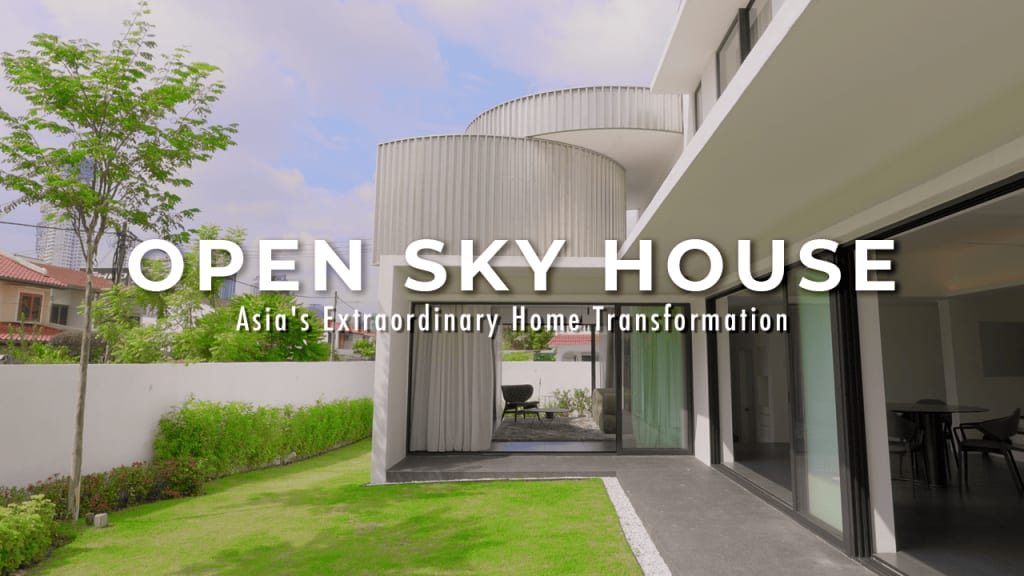
To build their dream house, many homeowners might have the misconception that they need to completely destroy the original structure of an old house. Why not find ideas to improve on the existing structure instead? This opens us to the idea of home extensions, a way of creating extra space through new volumes and voids.
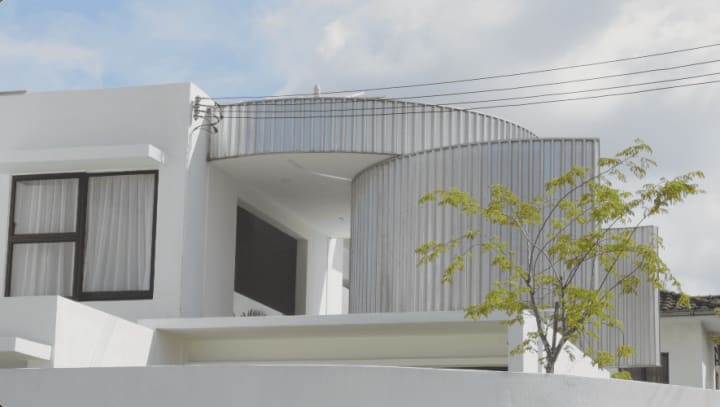
On today’s episode, we are showcasing a terrace house which kept its original structure but redefined its living spaces with a unique pavilion extension. With a land size of 3880 sq ft, this 2 storey corner terrace house has 4 bedrooms.
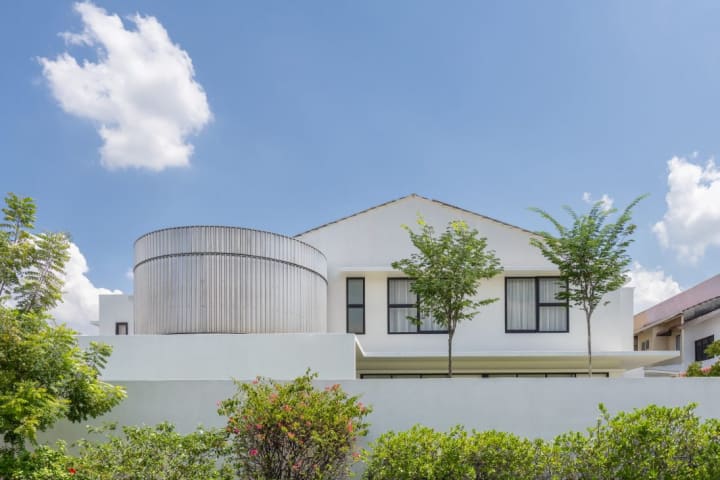
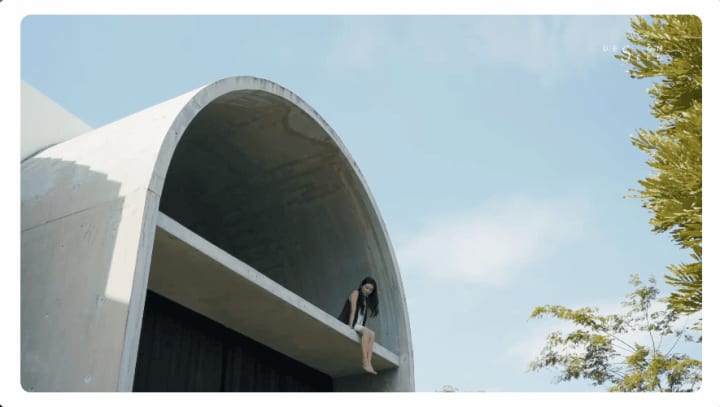
Occupying a corner, a family home is wrapped in minimalist black and white, its white brick wall curving at the corner and greenery peeking over. Nestled in Bangsar, with a stunning city setting, we discovered a house with a fascinating extension of a curious round structure.
But we could never have imagined the architectural innovation inside it. This is a home where you can gaze not only at the city skyline but also at different views created by an architect’s imaginative structural design.
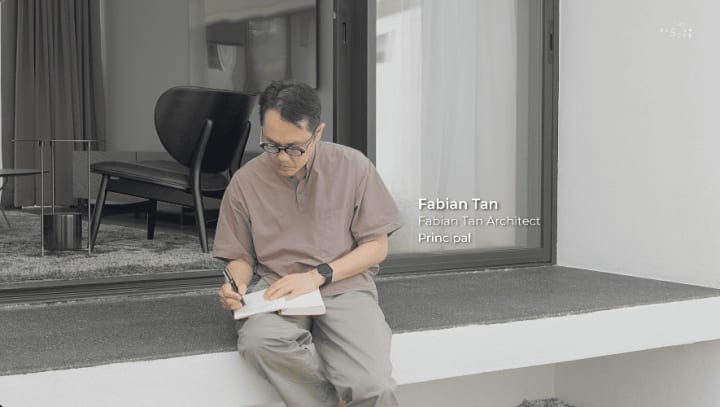
“Hi, I’m Fabian Tan, principal of Fabian Tan Architect. The client’s brief was essentially to maintain the house as it is. They’re a very young couple, so they wanted a house that was comfortable but also maintained the original elements of the house.”
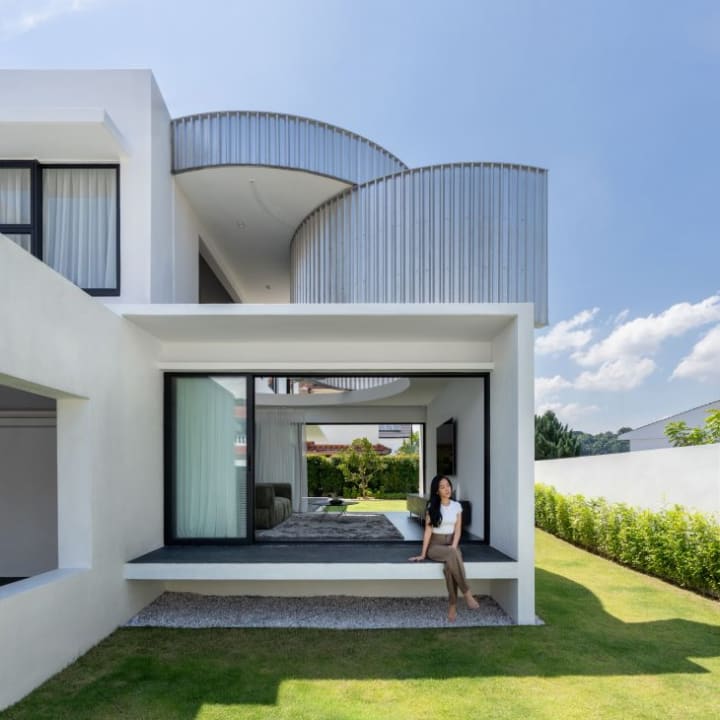
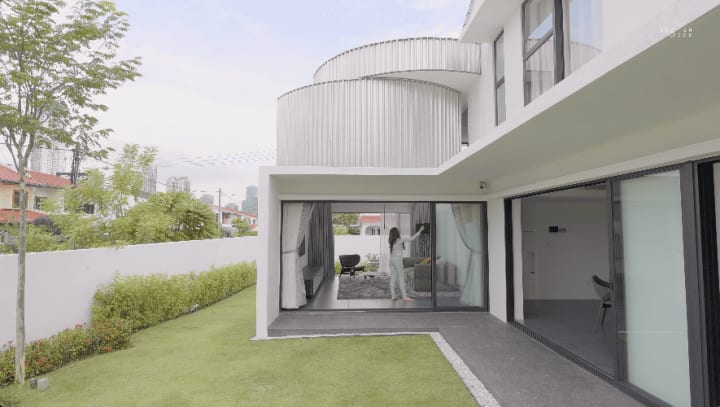
“I believe one of the main ideas behind the house was to utilize the corner garden as much as possible. So, we designed an open linear plan where the dining and kitchen areas open up towards the side of the garden to view into it. The living room was extended to the side to also take advantage of the front and rear views of the garden room,” Fabian explained.
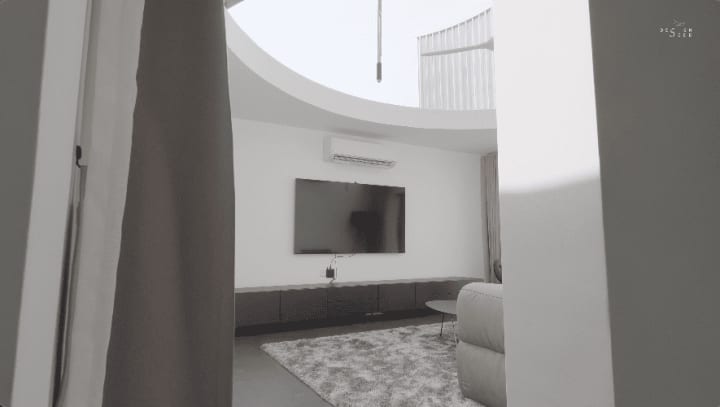
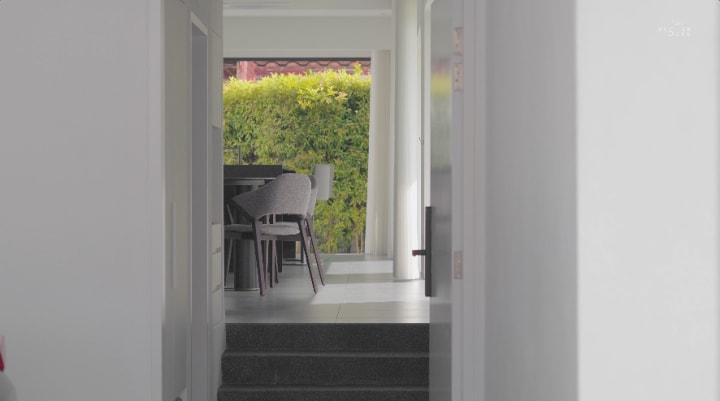
Entering the house, the guest room sits on the left. In minimalist design, the hallway subtly draws attention to the ascending steps. Beyond them, there’s a teaser of an open dining and dry kitchen filled with natural light. Once you reach the top of the steps, you realize the living room extends to the side.
Upon entering, the living room reveals a surprising double-volume pavilion, making full use of the house’s corner lot space. It’s an unconventional living room with different views of both the front and rear garden.
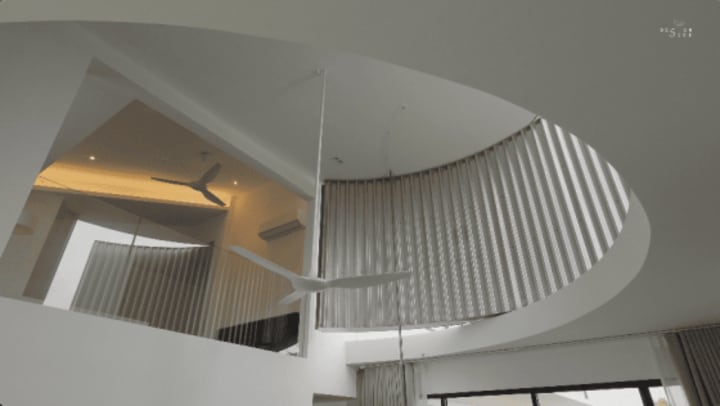
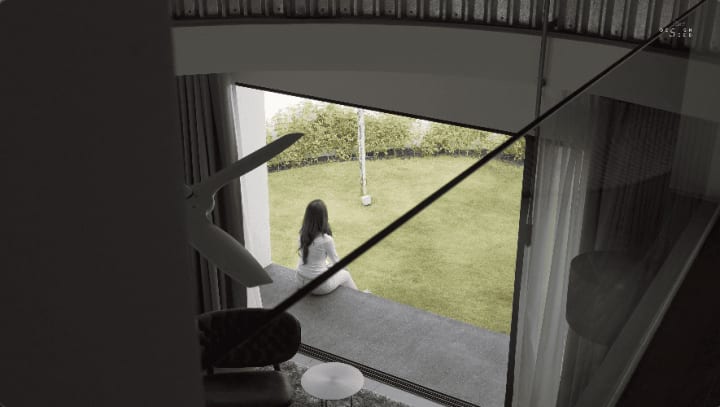
“The main part of the house was extended out, and I wanted it to have the form of a double volume. When in a double volume, it connects to the family room on the first floor via the void that’s created. By doing that, we add interest to the upper part of the house,” shared Fabian.
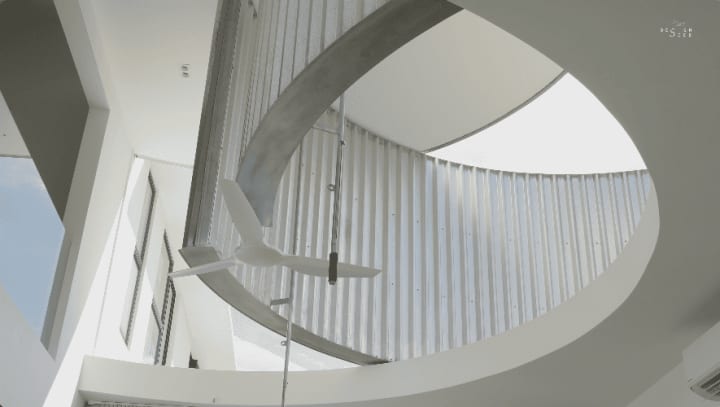
Vertical ridges adorn the inside of the dome roof, and the entire roof is made from shiny metallic material, creating a futuristic and clean look. The reflective surface also makes the room appear larger, and the opening from the first floor overlooks the living room.
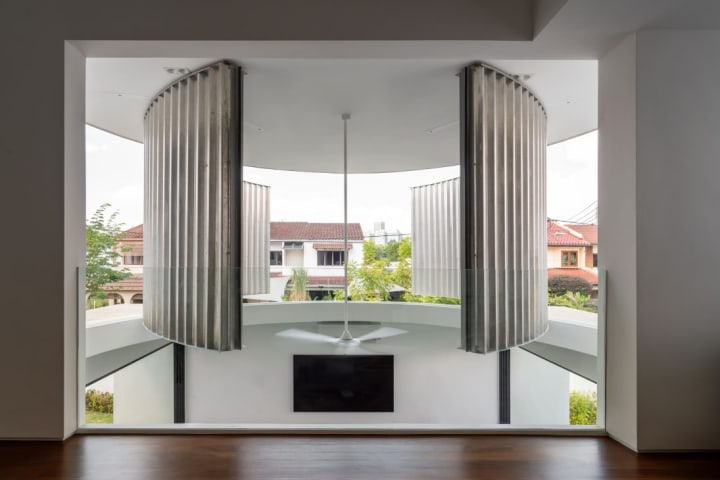
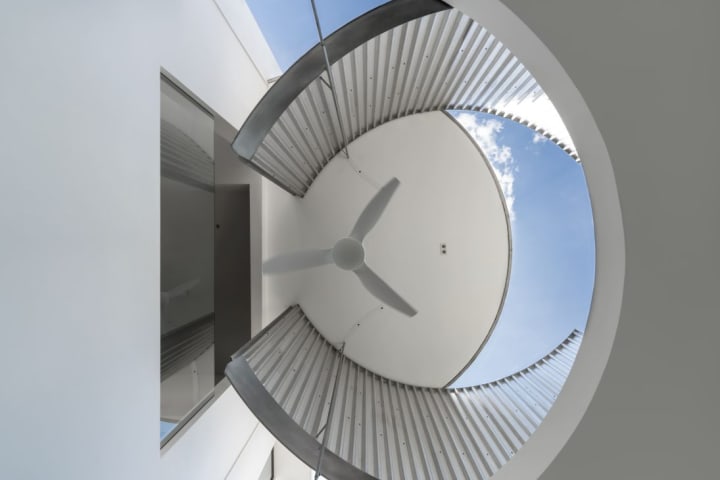
“I’ve always imagined in all houses or shop lots having a retractable roof. The purpose was to bring in light and ventilation, but I wanted to do it in a different perspective. So, I came up with a circular shape that has two C-door panels which pivot in the center. When they open, they create an opening to the sky. When you look up, the sky almost opens up to you. I call it “kissing the sky.” This brings in a lot of light and ventilation and creates an interesting composition in how you view the house,” shared Fabian.

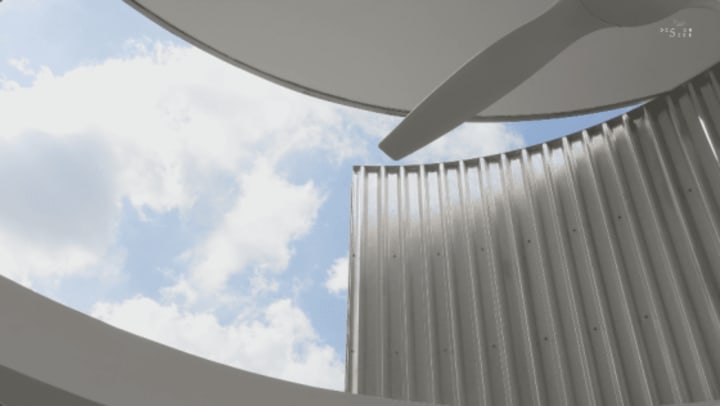
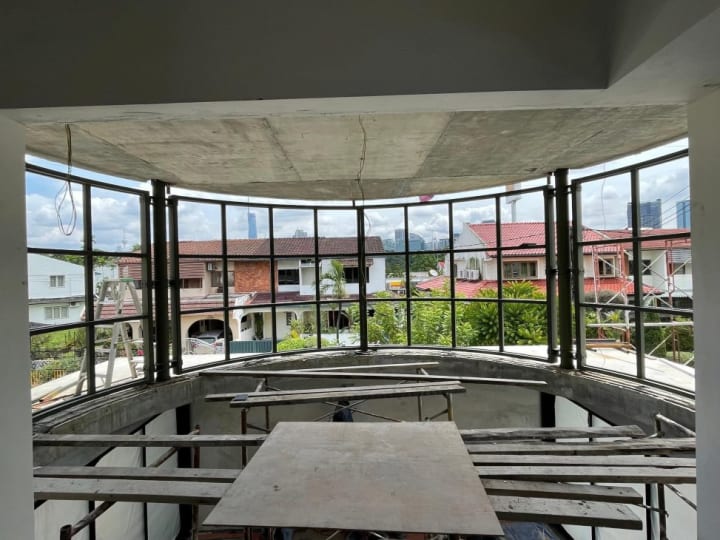
“The complexity of building this structure was quite complicated when we thought of the idea. We also had to figure out how to make it practical because I believe in practicality and design. There’s a flat concrete slab above this, which doubles as a rooftop deck. But if you look closely at the structure, most people don’t notice that it’s supported by two steel columns embedded in the C-panel door itself, where the pivot point actually is. This makes it appear as though it’s floating,” said Fabian.
For those of you new to Design Seed, we previously featured another unique extension project by Fabian Tan called the Bewboc House. The Bewboc House is among various other terrace transformation projects we’ve featured. Don’t miss out on amazing house transformations by subscribing to us now. Click the subscribe button and stay tuned.
Join us in our journey to uplift and inspire the design scene by joining our membership program. With a minimum amount of just $2.50 a month, we can expand our team and continue to bring you more interesting design content.

The extension, paired with the open floor plan for the dining and dry kitchen, reorients the home towards the private garden enclave. Big sliding glass doors create a moving glass wall surrounding the dining and dry kitchen areas, seamlessly connecting both interior and exterior.
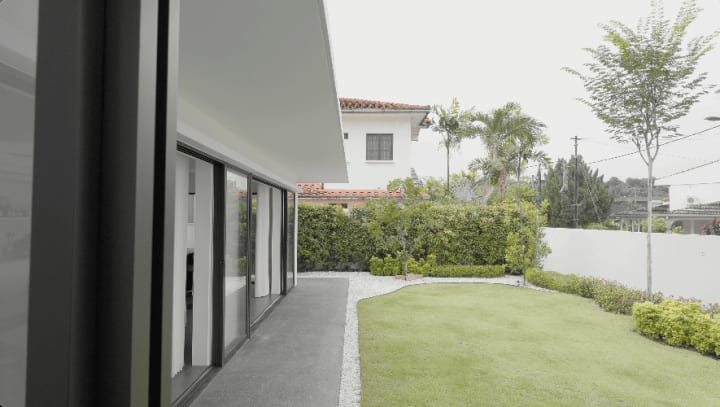
“Initially, the house had an open living and dining area, with the living area at the lower part of the house and the dining areas and kitchens in the upper part. The spaces didn’t open up to the sides as much, so we created an open-plan space in the lower part, where the original house had an entrance foyer. On the left side of the house are the utility areas. By opening up these spaces, we connected the house to the rear and sides with large sliding doors. This extension provides a very private enclave for the garden, embracing nature itself,” said Fabian.
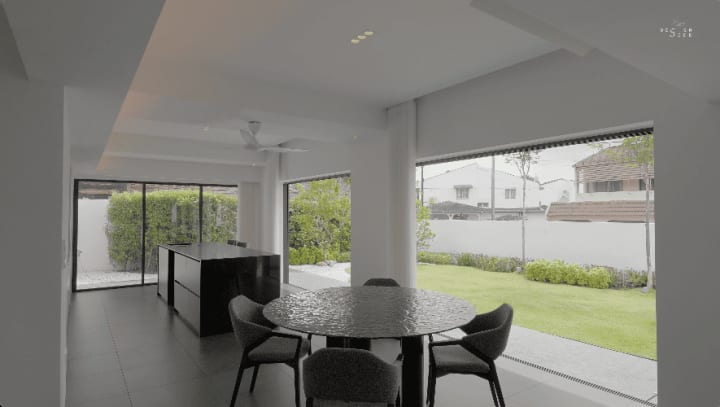
Most of the time when we have sliding glass doors, there’s a fixed panel at the edge, which restricts the opening and view of the garden. The architect, Fabian Tan, came up with an interesting idea where the sliding door panels are hidden behind the column that holds the entire structure of the property. Looking at the floor plan, you can see that when the sliding door opens, the fixed panel hides behind the wall, which functions as a column. This clever idea maximizes the window opening and ensures a direct connection to the private garden.
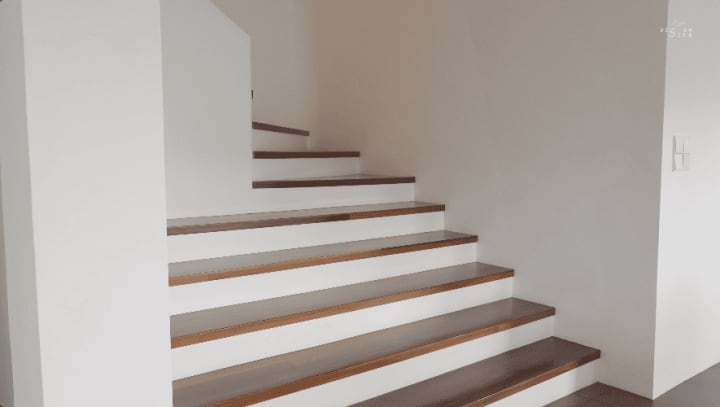
The original staircase was a typical terrace house staircase made of steel and timber treads. But we transformed it into a concrete staircase with timber treads. The difference is that we widened part of the staircase from the ground floor leading up to the first floor. This creates the illusion of a larger space, kind of like a mini amphitheater. Widening the staircase at the base gives the illusion that the space expands towards the dining area. The wooden staircase surface doubles as a cozy seat with a view of the garden, extending the dining area.
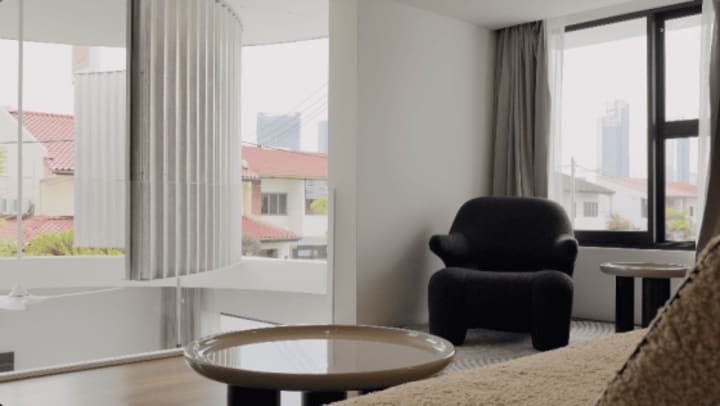
Upstairs, the family area opens into the double-volume space, overlooking the living room. By exploring spatial dimensions within the home, seamless, multi-functional living spaces are created. Similar to the living room, the family area enjoys different scenic views. The panels, once fully open, allow natural airflow and light into the upper floors without sacrificing privacy.
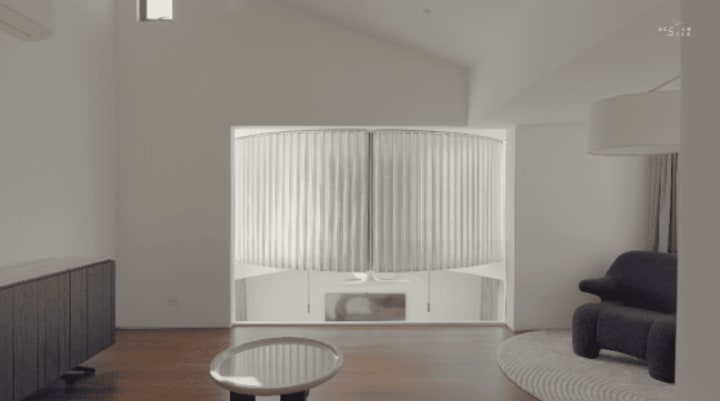
From this space, you face towards the front and, by opening the C-panel doors, create a private space. When the doors are fully open, the family room remains private from the opposite side of the house, creating a different interaction in how the space is opened.
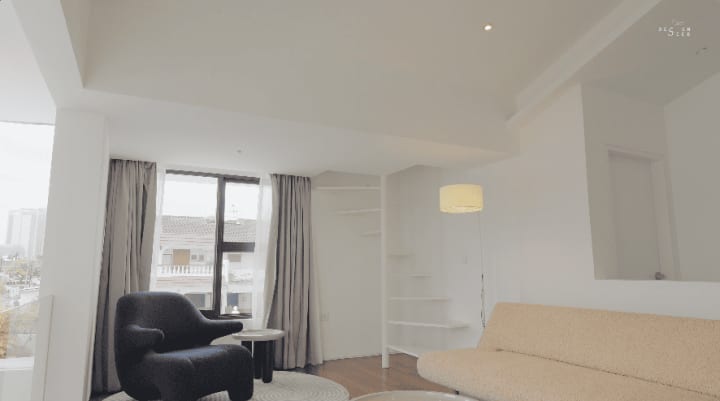
In the corner stands a distinctive spiral staircase leading to a mysterious hatch. In all white, the spiral form blends into the background. Climbing it leads to an open roof viewing deck, built on top of the pavilion extension. It’s an open-air seating area, perfect for cool evenings or star-gazing. This is one of Fabian Tan’s signature pieces.
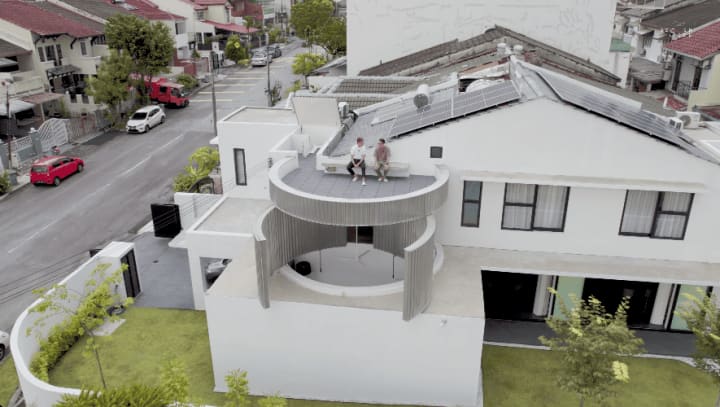
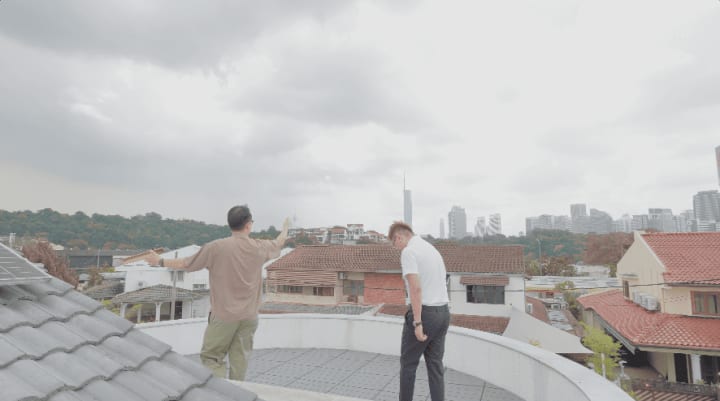
“I don’t know what’s this obsession with rooftops,” Fabian says. “But I always feel that roofs are wasted, and if they were utilized, they’d be much nicer.”
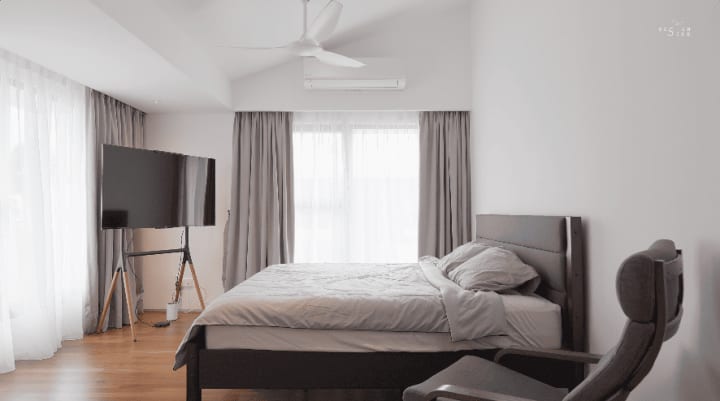
The impression of the master bedroom is clean and sophisticated in its simplicity. A small skylight draws in natural light into the dark corner above the wardrobe, paired with a tranquil view of its own garden. The entire bedroom feels cozy and serene.
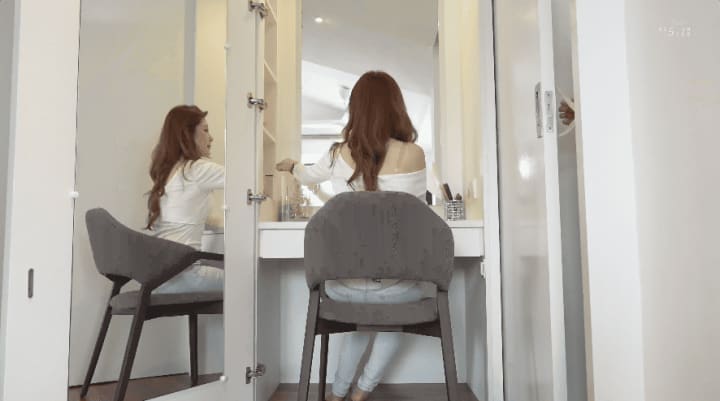
“I don’t like clutter in bedrooms,” Fabian shares. “If possible, I hide it as much as I can. For example, in the bedroom, there are cabinets, and within those cabinets is a hidden dressing table. As you know, dressing tables are always filled with stuff, so I created a cabinet door with a full-length mirror behind it. It can be opened and used, and when it’s not in use, you just close it.”
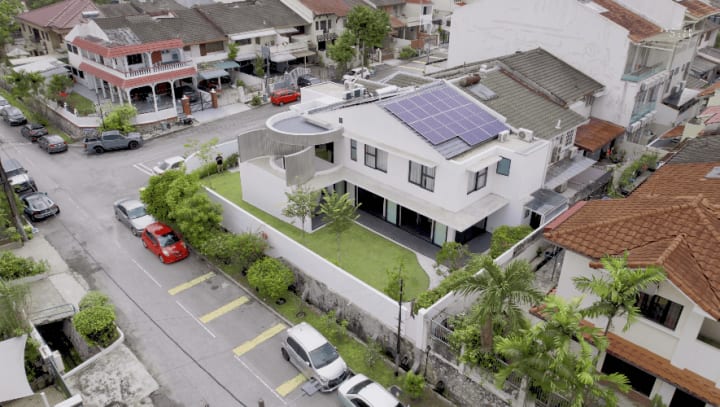
When homeowners renovate in densely populated neighborhoods like terrace houses, the challenge is that most people are forced to follow a fixed template. However, this home defies that by creating light-filled spaces while providing for its residents’ need for privacy. All due to the clever space planning by the architect applied to the existing floor plans of what would have otherwise been a normal terrace house.
About the Creator
Design Seed
A Design & Architecture channel sharing stories, insights and tips. Featuring extraordinary & amazing homes & properties all over Malaysia and globally!
Keep reading
More stories from Design Seed and writers in Humans and other communities.
Inside Amazing 100-Year-Old Tower Hidden In Italy’s Biggest Botanic Garden
When I was offered to visit this tower hidden in Italy’s biggest botanical garden, it was in the middle of nowhere. Ladies and gentlemen, today’s episode on Design Seed, we will be revealing the inside of this jewel of rare beauty of the past, that questions the lines between its past and the future.
By Design Seedabout a year ago in Humans
How to Succeed at the Benson Directory®
Congratulations and welcome to the Benson Directory® employee #22391! As our newest call handler, you will have the privilege of speaking with dozens of unique and interesting people on a daily basis as well as the opportunity to earn bonuses for high performance. Contained within this handbook you will find a set of ease to follow instructions designed to help you settle in to your new role and begin paving the way to success.
By S. A. Crawforda day ago in Fiction




Comments
There are no comments for this story
Be the first to respond and start the conversation.