
These 12 Things Will Destroy Humanity
Subtitle: Navigating Existential Threats: The 12 Potential Catastrophes That Could Shape Humanity's Future
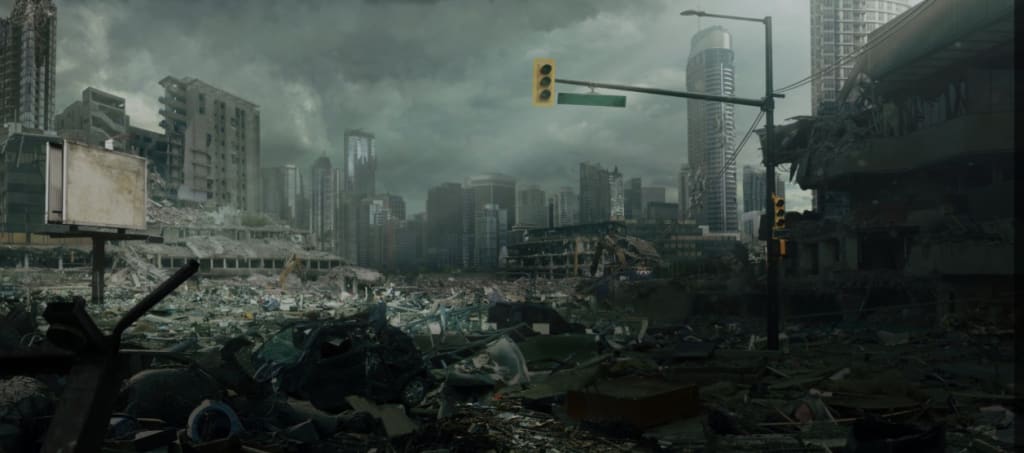
Throughout Earth's history, humanity has faced numerous existential threats, from cataclysmic asteroid impacts to invisible pandemics. Yet, against these daunting odds, humanity has consistently demonstrated resilience and adaptability, overcoming adversity time and again. However, as we peer into the future, the question remains: how long can we continue to survive? What are the chances that one of these twelve scenarios could ultimately spell the end for life on our Blue Marble?
**12. World War III:**
With memories of World War II still haunting global consciousness, the specter of another global conflict looms ominously. In an era of escalating geopolitical tensions and regional conflicts, the possibility of a world war remains a chilling reality. Advanced military technologies, competition over natural resources, and nuclear arsenals pose existential threats on an unprecedented scale. If such a conflict were to erupt, survival strategies might involve seeking refuge in rural areas, away from potential targets, and preparing for prolonged isolation and resource scarcity.
**11. Nuclear Apocalypse:**
An all-out nuclear war between major powers like the United States and Russia could devastate civilization. Even a single 300-kiloton nuclear bomb could vaporize entire cities, leaving behind immense fireballs and radioactive fallout. The ensuing nuclear winter, caused by massive carbon smoke clouds blocking sunlight, could plunge the planet into darkness and freeze temperatures for up to a decade. Survivors would need to seek immediate shelter from fallout, preferably in deep underground bunkers, and consider relocation to remote, less vulnerable regions like New Zealand or Antarctica.
**10. Alien Invasion:**
While often relegated to science fiction, the prospect of extraterrestrial visitors is not purely fantastical. The Drake equation suggests a high probability of intelligent life existing in the Milky Way galaxy. If advanced alien civilizations were to reach Earth, their motives might not be benign—potentially driven by the need for resources or scientific exploration. Surviving such an event would necessitate understanding their technology and intentions, possibly involving strategic retreats or seeking protection in fortified environments.
**9. Asteroid Impact:**
A catastrophic asteroid impact, like the one 66 million years ago that wiped out the dinosaurs, remains a plausible threat. A sizable asteroid, upwards of 12 kilometers wide, could trigger global devastation—unleashing tsunamis, wildfires, and a massive dust cloud that blocks sunlight for years. Survival strategies might involve finding refuge in underground bunkers away from impact zones, preparing for extreme climate changes, and focusing on sustainable food and water sources.
**8. Supervolcano Eruption:**
Supereruptions, such as those observed in Earth's geological history, have the potential to alter global climate and devastate ecosystems. The Yellowstone Caldera, for example, presents a dormant but formidable threat. An eruption of such magnitude could blanket the planet in volcanic ash, disrupt agriculture, and trigger widespread environmental turmoil. Monitoring geological activity and early evacuation planning would be essential in mitigating the impact of such a catastrophe.
**7. Zombie Apocalypse:**
While largely confined to pop culture, the concept of a zombie-like pathogen affecting humans is rooted in real-world phenomena, such as parasitic mind control in insects. Although human physiology may not be conducive to such a scenario, densely populated urban centers could become initial epicenters of infection. Survivors might find safety in remote, less densely populated areas and prioritize defensive strategies against infected individuals.
**6. Another Pandemic:**
The recent COVID-19 pandemic underscores the vulnerability of modern societies to novel infectious diseases. Factors like population growth, changes in food systems, and increased global connectivity heighten the likelihood of future pandemics. Rapid response capabilities, vaccine development, and global cooperation would be critical in containing and mitigating the impact of future outbreaks.
**5. Synthetic Biology Disaster:**
Advances in synthetic biology offer unprecedented opportunities for medical breakthroughs and environmental solutions. However, the deliberate or accidental release of engineered pathogens or organisms could lead to catastrophic consequences. Containment protocols, rigorous biosecurity measures, and international regulatory frameworks are essential safeguards against potential synthetic biology disasters.
**4. Catastrophic Climate Change:**
The ongoing rise in global temperatures poses existential threats, from extreme weather events to rising sea levels and disrupted ecosystems. A 4°C increase in average global temperatures could trigger irreversible environmental changes, impacting food production, causing widespread displacement, and exacerbating socio-economic inequalities. Mitigation efforts, including emissions reductions and adaptation strategies, are crucial in minimizing the severity of climate-related catastrophes.
**3. Oceanic Anoxia Event:**
Historical evidence suggests periods of drastically reduced oxygen levels in Earth's oceans, leading to mass extinctions. While modern conditions differ, anthropogenic activities like nutrient pollution and climate change threaten marine ecosystems. Monitoring and conservation efforts are essential in safeguarding oceanic biodiversity and maintaining ecological balance.
**2. Ecological Collapse:**
The loss of biodiversity and disruption of natural ecosystems pose grave threats to global stability. The collapse of critical habitats, such as coral reefs and rainforests, could trigger cascading ecological impacts, jeopardizing food security and human well-being. Conservation initiatives, sustainable resource management, and international cooperation are vital in preserving Earth's ecological resilience.
**1. AI Catastrophe:**
The rapid development of artificial intelligence (AI) raises concerns about its potential to surpass human intelligence and autonomy. Scenarios involving malevolent AI or unintended consequences of autonomous systems pose significant existential risks. Ethical AI development, robust regulatory frameworks, and safeguards against AI misuse are essential in mitigating the potential risks posed by advanced artificial intelligence.
In conclusion, while humanity has overcome numerous challenges throughout history, the future remains uncertain in the face of these existential threats. Vigilance, preparedness, and global cooperation are paramount in navigating potential catastrophes and ensuring the long-term survival and prosperity of our species on Earth.
---
This expanded version provides a detailed exploration of each scenario while emphasizing strategies for survival and mitigation.
About the Creator
Keep reading
More stories from donte powell and writers in Humans and other communities.
What If Humans Evolved Underwater?
Alright, let's dive deep into the realm of imagination and explore what might happen if humans evolved to live underwater. Imagine a future where our species, having conquered the land and reached the stars, now turns its gaze beneath the waves. What would it take for humans to thrive in the ocean depths, where pressure is immense, light is scarce, and every adaptation must be finely tuned for survival?
By donte powell2 years ago in Humans
Whiskey At Dusk
Guess the whiskey was more important to you in the end, wasn’t it? It was more than the well-being of your friends; more vital than showing up to the places you promised you would and could come to; more critical of a matter than fulfilling your damn responsibilities and getting the press off your back.
By Snarky Lisa6 days ago in Humans
Living with Spirit
A ferry was standing at the New York seashore, the one that carries people to the Statue of Liberty. However, to board the ferry, one first had to buy a ticket. Since it was the weekend, there was a huge crowd, and the ferry was packed to capacity. People standing in line were waiting for the second and third ferries under the scorching sun, holding Coke, burgers, juice, and movie cameras in their hands.
By Sudais Zakwan3 days ago in Humans


Comments
There are no comments for this story
Be the first to respond and start the conversation.