
Them importance of primary health care
Primary health care plays a crucial role in promoting and maintaining the overall well-being of individuals and communities. It serves as the foundation of a healthcare system, emphasizing the importance of preventive care, early intervention, and ongoing management of health conditions. By focusing on primary health care, individuals receive comprehensive and continuous healthcare services, including health promotion, disease prevention, diagnosis, treatment, and rehabilitation. This approach ensures that health issues are addressed at the earliest stages, leading to better health outcomes, reduced healthcare costs, and improved overall population health. Additionally, primary health care fosters strong patient-provider relationships, personalized care, and patient empowerment, allowing individuals to actively participate in managing their health.
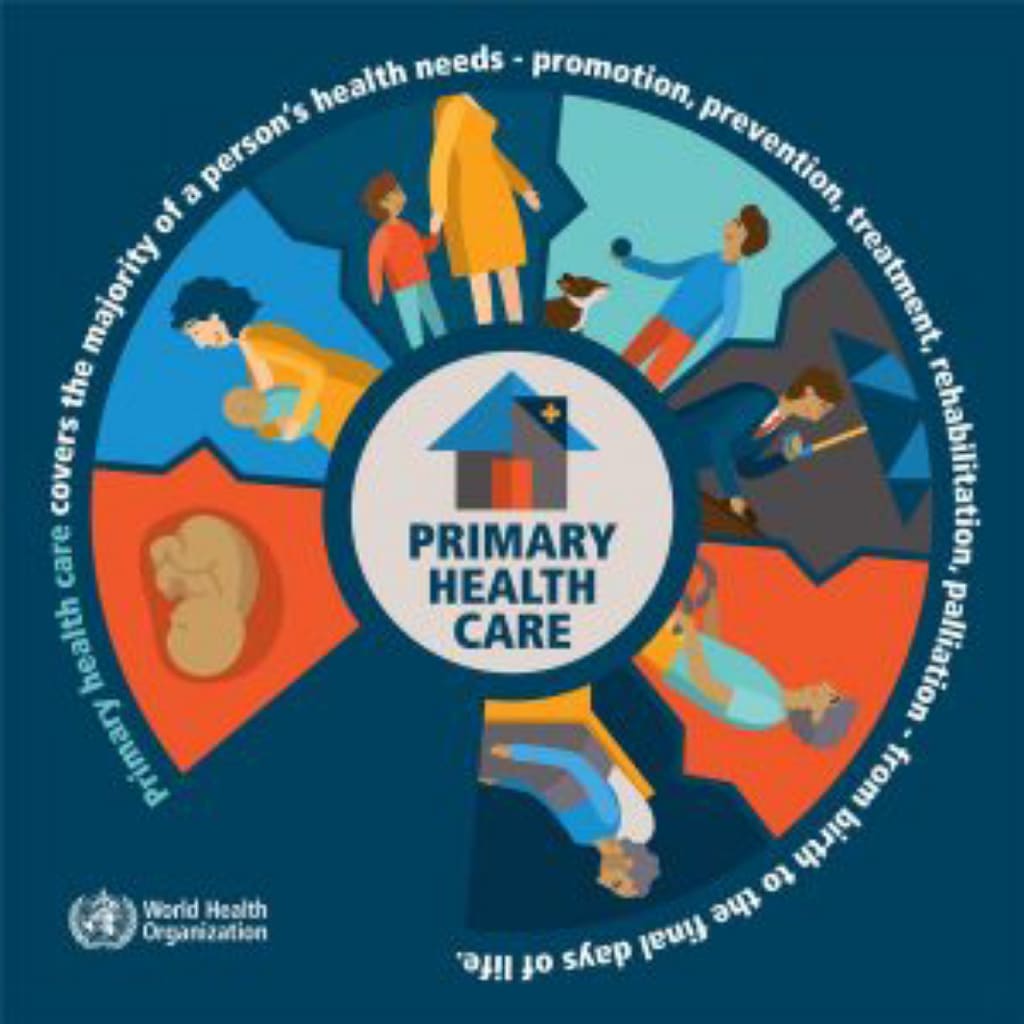
Primary healthcare plays a vital role in promoting and maintaining the health and well-being of individuals and communities. It forms the foundation of a robust healthcare system and encompasses a range of essential services that are easily accessible, comprehensive, and provided by skilled healthcare professionals. This essay explores the importance of primary healthcare in enhancing health outcomes, preventing diseases, promoting early intervention, and reducing healthcare disparities. It highlights the key elements of primary healthcare, its benefits, and its impact on individuals, families, and communities.
I. Definition and Components of Primary Healthcare
Primary healthcare refers to the essential healthcare services that are universally accessible to individuals and communities at the first point of contact with the healthcare system. It is based on the principles of equity, community participation, intersectoral collaboration, and comprehensive care. The core components of primary healthcare include health promotion, disease prevention, diagnosis and treatment of common illnesses, management of chronic conditions, and coordination of care across different healthcare settings.
II. Health Promotion and Disease Prevention
Primary healthcare places a strong emphasis on health promotion and disease prevention. It recognizes the importance of addressing the social determinants of health, such as education, income, housing, and access to healthy environments. Through health education, community outreach programs, and preventive measures like vaccinations, screenings, and counseling, primary healthcare aims to empower individuals to adopt healthy behaviors and reduce the risk of diseases. By focusing on prevention, primary healthcare can significantly reduce the burden on the healthcare system and improve overall population health.
III. Early Intervention and Timely Care
One of the key advantages of primary healthcare is its ability to provide early intervention and timely care. With its emphasis on comprehensive and continuous care, primary healthcare professionals can identify health issues at an early stage, initiate appropriate interventions, and refer patients to specialized care when needed. By detecting and managing diseases early, primary healthcare plays a crucial role in improving treatment outcomes, reducing complications, and enhancing quality of life. It also helps in the effective management of chronic conditions, ensuring regular monitoring, medication adherence, and lifestyle modifications.
IV. Addressing Healthcare Disparities
Primary healthcare is instrumental in addressing healthcare disparities that exist within and across populations. By delivering accessible, affordable, and culturally sensitive care, it helps in reducing inequities related to race, ethnicity, socio-economic status, gender, and geographical location. Primary healthcare providers are trained to understand the unique needs of diverse communities and offer personalized care that respects individual values, beliefs, and preferences. Moreover, primary healthcare acts as a gateway to the broader healthcare system, facilitating referrals, advocating for patients, and bridging gaps in care to ensure equal access to essential health services.
V. Benefits of Primary Healthcare
The benefits of primary healthcare extend beyond individual health outcomes. A strong primary healthcare system leads to more efficient use of healthcare resources, reduced hospitalizations, and lower healthcare costs. By focusing on preventive care, primary healthcare helps in averting expensive treatments and interventions associated with advanced diseases. It also contributes to improved productivity and economic development by keeping individuals healthy, enabling them to participate fully in the workforce, and reducing the burden of illness on families and communities
.VI. Patient-Centered Approach and Continuity of Care
Primary healthcare adopts a patient-centered approach, focusing on the whole person rather than just treating specific ailments. It emphasizes building strong relationships between healthcare providers and patients, ensuring effective communication, shared decision-making, and respect for individual autonomy. This approach fosters trust, promotes active patient participation in their own care, and leads to improved health outcomes. Additionally, primary healthcare emphasizes continuity of care, providing ongoing support and follow-up, which is particularly important for individuals with chronic conditions or complex healthcare needs. The long-term patient-provider relationship allows for better management of health issues, improved medication adherence, and effective coordination of care among different healthcare professionals.
VII. Community Engagement and Health Advocacy
Primary healthcare plays a crucial role in engaging communities and advocating for their health needs. It recognizes that health is influenced by social, economic, and environmental factors, and therefore involves community members in decision-making processes, health planning, and program development. Primary healthcare professionals collaborate with local organizations, community leaders, and stakeholders to address health disparities, develop health promotion initiatives, and implement interventions tailored to the specific needs of the population. This community engagement approach not only enhances the effectiveness of healthcare interventions but also empowers individuals and communities to take ownership of their health and well-being.
VIII. Primary Healthcare in Low-Resource Settings
Primary healthcare is particularly critical in low-resource settings, where access to specialized care may be limited. It serves as the frontline of healthcare delivery, providing essential services even in resource-constrained environments. Through primary healthcare, communities can receive basic healthcare services, including preventive care, maternal and child health services, vaccinations, and treatment for common illnesses. Primary healthcare also plays a vital role in disease surveillance, early detection of outbreaks, and emergency response. By strengthening primary healthcare infrastructure and capacity in low-resource settings, governments and organizations can make significant progress in improving population health, reducing health disparities, and achieving universal health coverage.
IX. Primary Healthcare and Global Health
Primary healthcare is a cornerstone of global health initiatives and plays a crucial role in achieving the United Nations Sustainable Development Goals (SDGs), particularly Goal 3: Ensure healthy lives and promote well-being for all at all ages. By investing in primary healthcare, countries can build strong healthcare systems that are resilient, responsive, and equitable. This, in turn, contributes to the overall development and prosperity of nations. Primary healthcare is essential in addressing global health challenges, such as communicable diseases, non-communicable diseases, and emerging health threats. It also enables countries to respond effectively to health emergencies, strengthen health systems, and improve health outcomes for all populations.
Primary healthcare is an indispensable component of a well-functioning healthcare system. Its emphasis on health promotion, disease prevention, early intervention, continuity of care, and community engagement makes it a vital force in enhancing health and well-being. By investing in primary healthcare, governments, policymakers, and organizations can improve population health outcomes, reduce healthcare disparities, and build sustainable healthcare systems. Recognizing and prioritizing the importance of primary healthcare is crucial in achieving universal health coverage, promoting social justice, and ensuring that individuals and communities have access to the essential healthcare services they need to thrive.
About the Creator
Time to change your life.
Is it even possible for you to change your life? A lot of people, more than there should be, are unhappy with their lives. But what are they doing about it? Usually nothing. People talk about how shitty their lives are and want change, but are they not taking the actions to change?
By Jen Phillips3 days ago in Humans
Dating Burnout Is Real And Breaking Hearts Across Generations Worldwide
Dating used to be interpreted as a romantic adventure to love and friendship. Nowadays, it is a draining emotional process of uncertainty, disappointment, and confusion to many people. Dating burnout is being witnessed among various age groups and cultures. Such emotional burnout is a result of numerous unsuccessful relationships, lack of intention, and a demand to discover love in a digitalized world full of hurry. Rather than being optimistic, most people are exhausted, disappointed and willing to surrender. The problem of burnout dating is not only my problem, but a world-wide emotional crisis of all people with fiery hearts.
By Grace Smith8 days ago in Humans




Comments
There are no comments for this story
Be the first to respond and start the conversation.