
The World's Hardest Cheese: A Himalayan Survival Story
In the Himalayan highlands, a timeless tradition of cheesemaking has resulted in a product so hard and enduring it has earned the title of the world's hardest cheese. This cheese, known as chhurpi, is more than a food; it's a testament to human ingenuity and a vital part of a culture shaped by scarcity and harsh conditions.

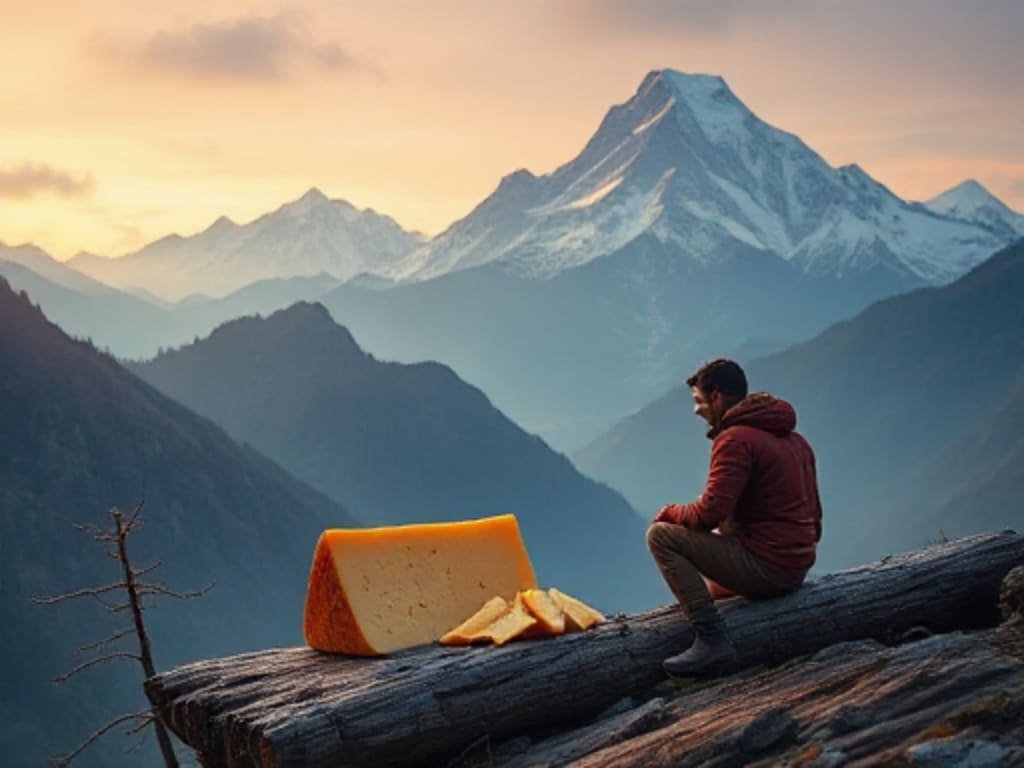
In the misty, soaring heights of the Himalayas, where the air is thin and the terrain unforgiving, a remarkable cheese has quietly existed for centuries. This is chhurpi, a food so exceptionally hard it has been called the world's hardest cheese. The notion that a cheese could last for up to 20 years might seem like something out of a fairy tale, but for the nomadic herders and mountain communities of Nepal, Bhutan, and other parts of the Himalayan region, it is a matter of practical survival. This isn't your average cheddar or gouda. Chhurpi is a protein-rich, smoky, and almost rock-like substance, an edible monument to a way of life defined by resourcefulness and deep-rooted tradition. Its incredible longevity and unique qualities stem from a fascinating process of creation, and its very existence tells a tale of human ingenuity in the face of nature’s immense power. It's an exploration of food as a foundation, a lifeline woven into the very fabric of a culture.
The story of chhurpi starts with the unique creatures of the high mountains: the yak, and the chauri, a hybrid of a yak and a cow. These resilient animals, adapted to the harsh climate, produce a rich, nutrient-dense milk that becomes the lifeblood of this ancient cheesemaking tradition. The process is a testament to the wisdom passed down through generations. First, the buttermilk is boiled, causing the solids to separate from the liquid. These curds are then collected, much like the Italian ricotta, and pressed to remove as much water as possible. This initial dehydration is a critical step, but it is the subsequent stage that truly gives chhurpi its mythical staying power. The cheese is cut into small, cuboidal pieces and then hung over a fire. This prolonged exposure to smoke and heat draws out every last bit of moisture, turning the soft curds into a hard, dense, and durable block. This low moisture content is the secret to its incredible shelf life, as it creates an environment where bacteria and mold simply cannot thrive. It is this fundamental principle of preservation—drying and smoking—that makes the cheese a staple in a world without modern refrigeration, a veritable food security system in a single, hard-as-a-rock package.
This extended drying and smoking process also imparts a distinct, smoky flavor to the cheese. It’s a flavor profile that speaks of mountain fires and a life lived close to the earth. The chhurpi is so hard, it's not meant to be bitten and swallowed like a piece of cheese from your local grocery store. Instead, it is treated like a kind of savory chewing gum. You place a small piece in your mouth, and through the action of moistening and chewing, it slowly softens over a period of hours. It’s a slow-burn snack, a marathon rather than a sprint. One small block can provide a satisfying, long-lasting chew, keeping the mouth busy and the body warm in the cold mountain air. This simple act of chewing chhurpi connects a person to a long chain of history and to the very land from which the cheese came. It's a meditative, deliberate way of eating, far removed from our fast-paced world.
The long-lasting nature of chhurpi has not only been vital for sustenance but has also become a cultural touchstone. A family's store of aged chhurpi, sometimes kept for years in special yak-skin bags, is a source of pride and a symbol of security. The older the cheese, the more it signifies foresight and prosperity, a link to the past and a promise for the future. The ability to preserve food for so long is a form of wealth, a buffer against the uncertainties of life in a remote and challenging environment. This cultural significance is profound. Chhurpi is more than just food; it is a repository of history and a testament to the resilience of the people who make it.
In recent years, this ancient Himalayan secret has found a surprising new market far from its mountainous home. Chhurpi, particularly the hard variety, has become a wildly popular all-natural dog chew. The very qualities that make it a long-lasting and satisfying snack for humans—its extreme hardness and durability—also make it a perfect treat for dogs. This has created an international market for chhurpi, with tons of the cheese being exported to places like the United States and Canada. This modern application is a fascinating twist in the cheese’s long and storied life. The ancient wisdom of Himalayan herders, honed over centuries, is now being used to provide a healthy and protein-rich snack for pets around the globe. It's a beautiful example of how a traditional food, born out of necessity, can transcend its original purpose and find a new audience in a completely different cultural context.
The science behind chhurpi's durability is a simple yet elegant one. The core principle of food preservation is the reduction of moisture. Microorganisms like bacteria, yeasts, and molds need water to survive and multiply. By removing virtually all the water from the cheese through a combination of pressing, drying, and smoking, the cheesemakers effectively create a hostile environment for these spoilage agents. The addition of a small amount of salt and lime juice also plays a part in the coagulation process, further enhancing the preservation. This process of dehydration is what gives hard cheeses in general their longer shelf life compared to their soft, high-moisture counterparts like brie or fresh goat cheese. But chhurpi takes this principle to an extreme, creating a product so dense and dry that it can withstand the passage of time in a way that other cheeses cannot. This is why a simple block of chhurpi can endure for up to two decades, an almost unbelievable feat in the world of dairy.
The journey of chhurpi, from the rich milk of a chauri to a hard, smoky block that can last for years, is a lyrical narrative. It's a story of survival, culture, and the unexpected connections that can form across continents and between species. It reminds us that some of the most profound innovations are not found in laboratories or boardrooms but are born from the simple, persistent needs of daily life. The hardiest of cheeses, it turns out, is a metaphor for the people who make it: strong, enduring, and capable of withstanding the passage of time with grace and fortitude. So the next time you see a piece of chhurpi—whether in a mountain village or a pet store—take a moment to appreciate the centuries of history and the breathtaking resilience contained within that little, unassuming block. It is a true marvel of food and human experience.
About the Creator
Karl Jackson
My name is Karl Jackson and I am a marketing professional. In my free time, I enjoy spending time doing something creative and fulfilling. I particularly enjoy painting and find it to be a great way to de-stress and express myself.
Reader insights
Nice work
Very well written. Keep up the good work!
Top insights
Compelling and original writing
Creative use of language & vocab
Easy to read and follow
Well-structured & engaging content
Excellent storytelling
Original narrative & well developed characters
Eye opening
Niche topic & fresh perspectives
Heartfelt and relatable
The story invoked strong personal emotions
Masterful proofreading
Zero grammar & spelling mistakes
On-point and relevant
Writing reflected the title & theme
Keep reading
More stories from Karl Jackson and writers in Humans and other communities.
The Forgiven Path
The path to redemption, for a character in the grand tapestry of narrative, is often a treacherous ascent, fraught with jagged emotional peaks and yawning chasms of regret. It is not merely a tale of saying "sorry" but rather a profound odyssey of self-reckoning, a testament to the enduring human capacity for growth, and ultimately, a beacon illuminating the potential for forgiveness, both given and received. This journey, when portrayed with authenticity and depth, resonates with readers on a visceral level, for who among us has not, at some juncture, yearned to mend a broken thread, to bridge a chasm of past error?
By Karl Jackson8 months ago in Humans
Thief In The Night
To the thief in the night that took and replicated what once was mine: Honestly, I feel kind of bad for you. It’s funny, because we hardly know each other. I only know of you through the magazines you’ve written and the broadcasts you have televised in the past — as well as through the public mentions of you from your show business connections there.
By Snarky Lisa7 days ago in Humans
Transitioning Realms: How 4D Serves as the Gateway to Higher Awareness.
The concept of dimensional consciousness has captivated spiritual seekers, quantum enthusiasts, and philosophers alike for decades. While much attention has been given to the shift from 3D to 5D reality—as discussed in various metaphysical teachings—the 4D consciousness often emerges as the crucial "bridge" in this evolutionary journey. But what exactly is 4D consciousness, and how does it function as a connector between the dense, material world of 3D and the unified, love-centered expanse of 5D? This exploration delves into the nature of 4D, its role as a transitional state, the signs of inhabiting it, and practical ways to navigate this bridge toward higher dimensions.
By Wilson Igbasi7 days ago in Humans


Comments (1)
You’ve got such a unique style—this was a great read! I’d be honored if you gave one of my stories a look too 🙏