
The West in Reverse Gear: The New Face of the War Against Women
In recent decades, feminism has achieved crucial victories, but today the West seems to be witnessing a dangerous reversal of trends. While gender equality is formally recognized in many constitutions and legislations, the increase in misogynistic violence, the spread of anti-feminist movements, and the normalization of the commodification of the female body point to an alarming regression.
Femicide: An Ignored Bloodbath
The numbers speak for themselves: violence against women not only does not decrease, but intensifies. According to the EURES 2023 report, 126 women were killed in Italy in 2022, of which 106 were murdered within the family or emotional sphere. In Western Europe, the average femicide rate is 0.4 victims per 100,000 women (Source: Eurostat 2023). Globally, according to the UN, five women are killed every hour due to gender-based violence. Yet, while women are being murdered, movements that deny the existence of patriarchal violence continue to multiply. The denial of gender-based violence has become a powerful weapon in the hands of neo-masculinist and conservative groups, who, distorting data and reality, seek to undermine laws that protect victims.
The Manosphere: A Digital Arsenal Against Women
The internet has given rise to a new front of war against women: the "manosphere," a galaxy of online groups ranging from Incels (involuntary celibates) to Men's Rights Activists (MRAs), to male supremacist forums. According to a report from the Center for Countering Digital Hate (CCDH), misogynistic content in the manosphere has increased by 58% from 2020 to 2023, with thousands of videos promoting violence against women and their subjugation. Social media has become a weapon in the hands of these groups. Women who speak publicly, from journalists to activists, face a barrage of death and rape threats, with the explicit intent of silencing them. This digital climate of terror risks eroding women's participation in public life, leaving space for a narrative dominated by those who want to limit women's freedoms.
The Commodification of the Female Body: A Patriarchy Disguised as Freedom
While misogynistic movements gain ground, another phenomenon is spreading under the guise of emancipation: the growing normalization of the exploitation of the female body. Platforms like OnlyFans or the giants of online pornography present themselves as tools of self-determination, but behind the marketing lies the perpetuation of a patriarchal system that reduces women to sexual objects. According to the European Parliament report of 2023, 80% of online pornographic content depicts forms of violence against women, normalizing it and turning it into a consumable product. Neoliberal faux feminism, which confuses freedom with submission to the male desire market, ends up reinforcing a mechanism of dominance where the "choice" to monetize one’s body becomes, in reality, the only option for many women in economic difficulty.
A War Against Women
We are facing a violent and systematic reaction against female emancipation. It is no longer just a matter of gaining new rights, but defending those already achieved. The risk of a social and cultural regression is more concrete than ever: is the West really going backward on women's rights? If we don’t act now, the answer to this question might tragically be affirmative.
For a New Radical Feminism
In the face of this reactionary offensive, feminism cannot settle for superficial reforms or compromises with patriarchal neoliberalism. What is needed is a return to radical feminism, one that does not hesitate to name patriarchy and attack it on every front. We must rebuild a collective consciousness of struggle, oppose the system that exploits and kills women, expose false allies, and reclaim public space without fear. There is no time for caution: it is time to fight.
The feminist debate has seen the emergence of theories and voices that have profoundly shaped the reflection on the female condition, both in the West and in other parts of the world. Various authors and theorists have contributed to redefining feminism, pushing beyond traditional conceptions of gender and identity.
In the West, Simone de Beauvoir is a fundamental figure, thanks to her work *The Second Sex*, which laid the foundations for a philosophical reflection on the condition of women. The famous phrase “One is not born, but rather becomes, a woman” embodies the critique of the social construction of femininity, arguing that gender identity is not a natural fate, but a condition imposed by society. Another crucial voice was that of Betty Friedan, with *The Feminine Mystique*, which denounced the frustration of American women in the 1950s, engaged in domestic life that did not correspond to their desires. Her words helped bring new awareness about the possibilities of freedom and choice for women, becoming a reference point for the second wave of feminism.
Alongside these Western voices, it is crucial to consider reflections from the Arab and Islamic world, which often challenge the idea that Islam is incompatible with female emancipation. Fatima Mernissi, a Moroccan sociologist, proposed a feminist reading of the Quran, criticizing the selective use of scriptures to justify patriarchal domination. However, despite progress, the path toward equality is never linear, and in many contexts, even in the West, women continue to suffer pressure from conservative political forces. The feminist debate, particularly in Italy, sometimes risks polarizing, with extreme ideological positions that struggle to address the real social and political needs of women. Concrete challenges, such as gender-based violence, wage inequality, and access to reproductive rights, are often overshadowed by discussions that fail to focus on practical solutions.
A particularly problematic aspect is the approach to intersectionality. By introducing the concept of intersectionality, Kimberlé Crenshaw invited us to recognize the multiple forms of oppression, based on factors such as race, class, sexual orientation, and disability. However, in some Western feminist environments, this concept has been misunderstood, turning it into a "competition to see who is more oppressed." This approach risks fragmenting the movement, rather than promoting solidarity that unites women in a common struggle for rights.
Globally, many Latin American feminists have developed a vision that intertwines gender issues with class and race issues. In Nicaragua, Cuba, and Venezuela, feminism has often embodied a struggle against social and economic inequalities, with a strong connection to the class struggle. In Nicaragua, women played a fundamental role in the Sandinista Revolution and continue to fight against social injustices. In Cuba, figures like Vilma Espín led the feminist movement within the revolutionary struggle, promoting women's rights in a political and social context marked by challenges and international criticism. In Venezuela, the *Mujeres del Barrio* represented a symbol of resistance against neoliberalism and imperialism, intertwining the fight for women's rights with the struggle against social injustices.
At the same time, Islamic feminism has produced thinkers and theologians who have challenged patriarchal interpretations of religion, proposing more inclusive and egalitarian readings of the Quran. Amina Wadud, for example, led a mixed prayer, challenging traditions and showing that an egalitarian reading of Islam is possible. Another important voice in Islamic feminism, Asma Lamrabet, proposed an interpretation of the Quran based on the concept of gender justice, reiterating that discrimination is not intrinsic to religion, but the result of patriarchal cultural readings.
These voices, coming from different traditions and contexts, offer a vision of global feminism that goes beyond individual claims, intertwining with the struggles for the social, political, and cultural emancipation of women. Feminism, in all its forms, continues to be a powerful force for change, capable of uniting women worldwide in a common struggle for equality and justice.
About the Creator
Keep reading
More stories from Maddalena Celano and writers in Humans and other communities.
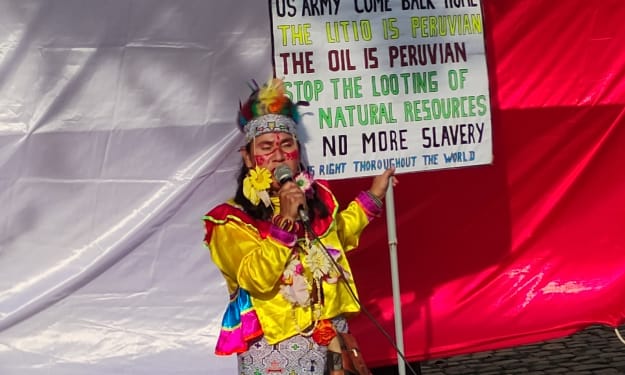
Demonstration of the Peruvian Community in Rome in Defense of Human Rights and the Sovereignty of Peru
Declaration in Defense of Peru Dear friends and comrades, Today, we are here to speak of our commitment to defending human rights and the sovereignty of our Latin American continent, a commitment that unites us against all forms of oppression and external interference. Let’s talk about Peru and the current government of Dina Boluarte, a government that has shown not only a lack of respect for the popular will but also an increasing inclination toward violence, authoritarianism, and a clear subordination to U.S. interests.
By Maddalena Celanoabout a year ago in Humans
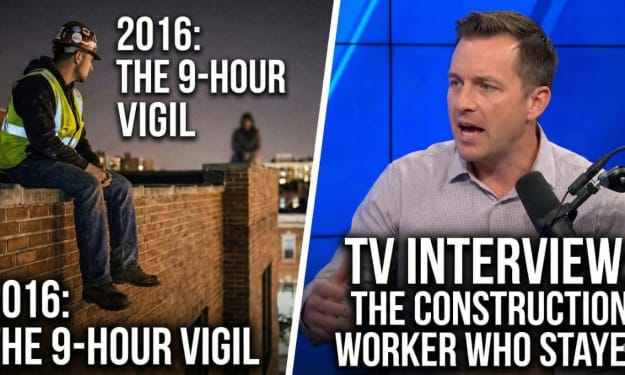
The Longest Night: The Construction Worker, The Ledge, and the Nine-Hour Vigil
The true story of Michael O'Rourke, a construction worker who spent nine hours on a Brooklyn rooftop talking a suicidal woman down from a ledge, proving the power of simple human presence.
By Frank Massey about 16 hours ago in Humans


Comments
There are no comments for this story
Be the first to respond and start the conversation.