
“The Weight of Unsent Letters”
Some words are too heavy for paper — and too fragile for silence.

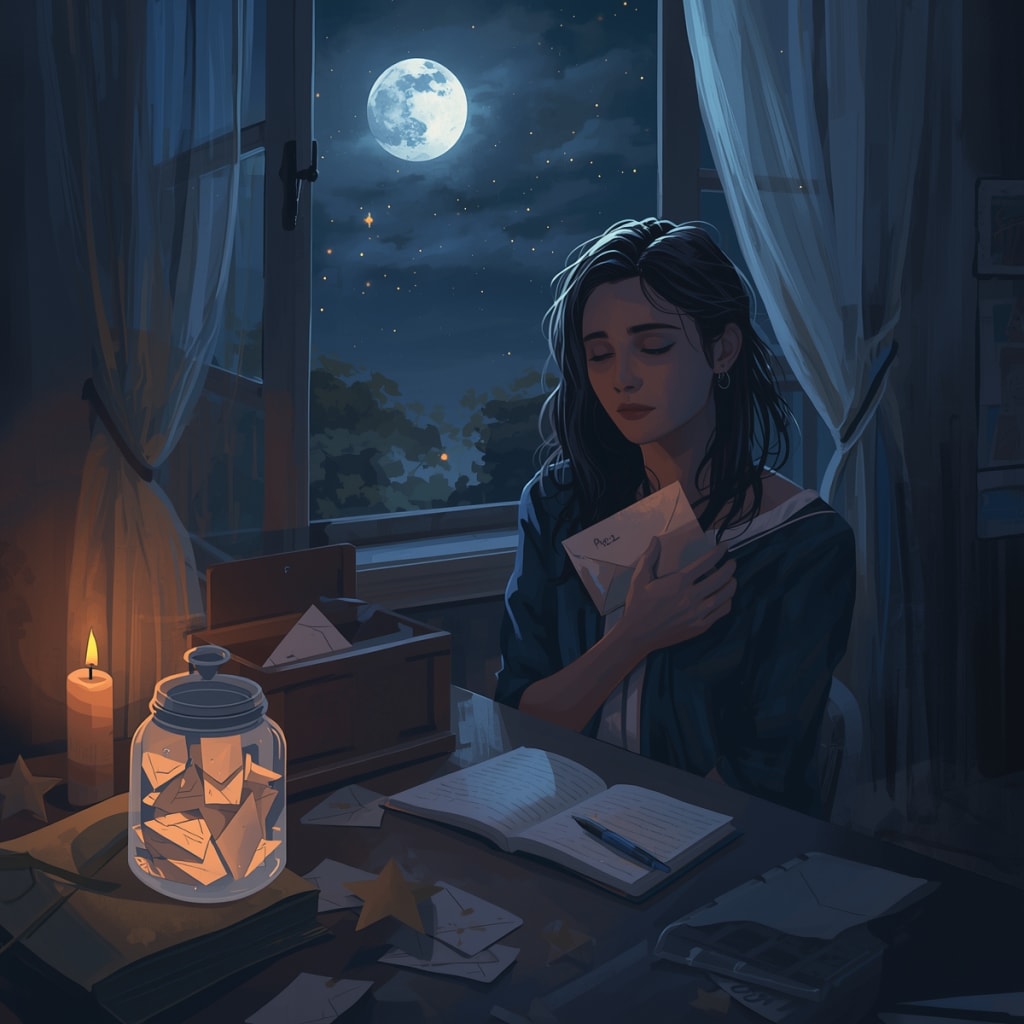
The Weight of Unsent Letters
By [Ali Rehman]
Mira kept her letters in a wooden box beneath her bed.
Not love letters, not confessions, not even drafts of things she meant to send — just words that had nowhere else to go.
Each envelope was a small universe of everything she couldn’t say. Some were addressed to people who had left, some to people who had stayed too long, and others to people who would never know her name.
Every night, she would sit by her desk, a cup of cold tea by her side, and write. The city outside her window murmured with passing cars and distant laughter — all the noise she could never quite join.
Her handwriting was careful, the kind that belonged to someone afraid of being misunderstood. And at the top of every page, before she began, she always wrote the same thing:
“If I could say this out loud…”
The first letter she ever wrote was to her father.
He had left when she was seven — not with anger, but with silence. There was no dramatic goodbye, no final fight, only an empty chair at the dinner table and the smell of rain that night he never came back.
Years later, when she found his old fountain pen, she wrote to him.
“Dear Dad,
I used to blame myself for your leaving. I thought maybe if I’d eaten my vegetables or scored higher on my spelling tests, you would have stayed.
But now I know — people don’t leave because of small things. They leave because they’re searching for something bigger. I hope you found it.
—Mira.”
She never mailed it. She folded it once, twice, three times, and placed it in her box.
The second letter was to her best friend, Aria — the one who stopped talking to her after the accident.
“Dear Aria,
I still replay that night sometimes. The headlights, the scream, the way the world broke in half. You said it wasn’t my fault. Then you stopped calling.
I wish I could’ve told you how sorry I was — not for what happened, but for what silence did to us.
—Mira.”
The letter was smudged by tears before the ink could dry.
Over the years, the box grew heavier.
Letters to teachers who believed in her, to strangers who had been kind, to the version of herself that used to laugh without thinking. Each one was sealed, dated, and placed in the box — like pressed flowers of emotions she was too afraid to expose.
She began to wonder if she was saving them, or if they were the ones saving her.
One rainy afternoon, her neighbor — an old man named Mr. Lowell — knocked on her door. He was in his seventies, with trembling hands and a voice like an old violin.
“I accidentally got your mail,” he said, holding out a few letters. “Didn’t mean to intrude.”
She thanked him and noticed the way his eyes lingered on her desk — the stacks of paper, the open notebook, the half-written sentences that seemed to float like ghosts in the air.
“You write?” he asked.
She hesitated. “Sometimes.”
He smiled faintly. “Then you’re braver than most. Writing is a way of staying alive, you know.”
After that day, they began talking more. He’d share stories about his late wife, about the letters he used to write her every week even after she passed. He kept them too — tucked inside an old shoebox that smelled of lavender and grief.
It was strange, Mira thought, how two people could live side by side and both carry boxes of words that never reached their destinations.
Months passed. The seasons turned.
And then, one evening, Mr. Lowell didn’t answer his door.
The neighbors said he had passed in his sleep — peacefully, like someone finally finishing a song. When the landlord cleaned out his apartment, he found the box of letters. Mira was asked to keep it until his son came to collect the belongings.
That night, she opened the lid.
Inside were hundreds of letters addressed to the same woman — “My Darling Anna.”
Each one began with something simple — “The roses bloomed today,” or “I saw your favorite bird in the garden again.” But together, they told a story — of a man who had lost everything yet refused to stop loving.
Mira wept. Not just for him, but for herself, for all the words she’d caged inside her own silence.
When morning came, she did something she’d never done before.
She gathered all her unsent letters and walked to the river behind her building. The air was cool, and the world smelled like forgiveness. One by one, she opened each envelope and read them aloud — to the water, to the wind, to anyone listening.
Her voice shook, but it didn’t matter. The words were free.
“Dear Dad…”
“Dear Aria…”
“Dear me…”
When she was done, she folded the empty envelopes and placed them into the current. They floated away like pale leaves, drifting toward somewhere beyond regret.
That night, her room felt lighter — as if her heart had finally learned to breathe.
Weeks later, she found a letter slipped under her door. The handwriting was elegant, careful.
“Dear Mira,
Mr. Lowell often spoke about you in his letters. He said you reminded him of Anna — brave, gentle, and full of words that could save the world if only you let them. Thank you for being his friend.
—Samuel Lowell.”
Mira smiled. For the first time in years, she reached for her pen — not to hide her words, but to share them.
She sat by her window, wrote a single line on a clean page, and sealed it in an envelope.
“Dear World,
I’m ready to be heard.”
This one, she mailed.
Moral:
Some words are too heavy to send — until we realize silence is heavier. Healing begins when we let our unsent letters find their way into the world, even if the world never writes back.
About the Creator
Ali Rehman
please read my articles and share.
Thank you
Keep reading
More stories from Ali Rehman and writers in Humans and other communities.
Sophie Turner
Introduction Sophie Turner is a famous English actress. She is best known for her role as Sansa Stark in the popular TV series Game of Thrones. Sophie became famous at a young age and grew up in front of the camera. Over the years, she has worked hard to improve her acting skills and build a strong career in film and television. She is admired not only for her talent but also for her honesty about personal struggles and mental health.
By Farhan Sayedabout 19 hours ago in Humans



Comments
There are no comments for this story
Be the first to respond and start the conversation.