
"The Voice in the Mirror"
When your reflection knows your future, can you escape your fate?

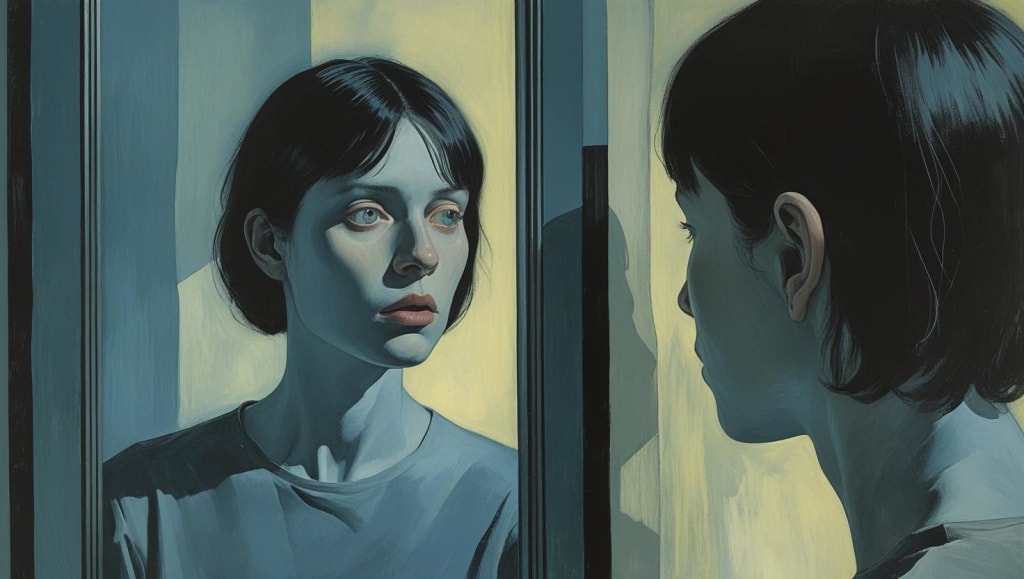
It began on an ordinary Thursday night. Ali, a 22-year-old university student in Karachi, stood brushing his teeth when something strange caught his eye. His reflection didn’t quite match his movements. At first, he blamed the flickering light and lack of sleep. But each night, the feeling of something being “off” grew stronger.
Then, one night, the reflection didn’t move at all. Ali blinked. The image blinked half a second later.
And then, it spoke.
“You have only three months left.”
Ali jumped back, knocking over the toothbrush holder. “What the—who are you?”
The reflection tilted its head and replied calmly, “I’m you. Ten years from now.”
Ali stared, heart racing. It looked like him—older, with tired eyes and a deeper voice. He tried to laugh it off, convinced it was a dream or some strange mental glitch.
But it wasn’t a dream. The next night, it spoke again.
“I know how this ends, Ali. And it’s not good.”
Ali began to talk to the mirror every night. The future version of himself gave warnings and advice—some vague, some specific.
“Don’t go to the party next Friday.”
“Say yes to the internship.”
“Your best friend is lying to you.”
Ali tested the advice. One day, he skipped the party—and read in the news that a fight had broken out, leaving someone seriously injured. Another time, he avoided a shady freelance job that could have cost him money and trust.
The mirror’s words started to guide his life. It felt like a gift.
But the warnings became darker.
“If you miss your father’s call tomorrow, you’ll regret it forever.”
“She’s not the one. Let her go.”
“Time is running out.”
Ali tried to keep calm, but the countdown continued.
“Two months left.”
“Six weeks.”
“Thirty days.”
He stopped sleeping. He avoided mirrors. But whenever he accidentally looked into one—at home, in bathrooms, or in his phone camera—the voice returned.
“You can’t outrun fate.”
Ali tried everything: therapy, sleep medication, even a religious scholar. No one believed him.
Then came the final warning.
“Tonight, you’ll face a choice. One path leads to your death. The other… leads to someone else’s.”
That evening, desperate to escape, Ali went for a walk by Clifton beach. He wanted to clear his mind. As he sat by the shore, watching the waves roll in, a young boy playing nearby lost his balance and fell into the water.
People screamed. Without thinking, Ali ran and jumped in. The waves were strong, but he reached the boy and dragged him to safety. The mother cried, thanking him.
But as Ali turned to get back to shore, a wave knocked him against the rocks.
Darkness.
He awoke in a hospital bed the next morning, head bandaged. Alive. Safe.
He looked at the mirror across the room.
No voice.
No future version.
Just him—bruised, but breathing.
For the first time in months, the mirror was still.
Ali smiled.
He realized something then. The voice hadn’t been a curse. It was a reflection of what could be—not what must be. The warnings were possibilities. Not fate. He had lived in fear for months, trying to avoid pain, failure, heartbreak.
But it was his selfless act—risking his life for someone else—that broke the pattern.
He’d made a choice based on courage, not fear.
Now, when he looked in the mirror, he saw only himself. No countdown. No shadowed version whispering warnings. Just a man who survived.
And this time, that was enough.
About the Creator
The Quiet Room
Mira never liked silence, but lately, it was the only sound that kept her company. She lived alone in a small apartment tucked behind a grocery store, where the faint hum of distant traffic used to bring her comfort. But now, even that noise felt like it belonged to another world — one she no longer participated in.
By Rizwan 9 months ago in Confessions
Thief In The Night
To the thief in the night that took and replicated what once was mine: Honestly, I feel kind of bad for you. It’s funny, because we hardly know each other. I only know of you through the magazines you’ve written and the broadcasts you have televised in the past — as well as through the public mentions of you from your show business connections there.
By Snarky Lisa8 days ago in Humans
How To Stay Emotionally Balanced While Searching For Long Term Love
Long-term love search is an experience that produces both positive and negative emotions such as hope, anxiety, frustration, and impatience. Having good and bad times in dating is usual, but the issues of uncontrolled feelings may result in burnout or an inability to make an appropriate choice.
By Robert Smitha day ago in Humans



Comments
There are no comments for this story
Be the first to respond and start the conversation.