

“Don’t feel obligated to keep this, Casey,” my cousin told me. “He left weird shit to a lot of people. Most of us are just throwing his junk away.”
She handed me a wooden box covered in years of travel stickers from various campgrounds. “Are these his national park pins?” I asked. I don’t know why I asked. I knew what I was holding.
“I guess,” she said, shrugging dismissively. “We don’t have the key to the lock, so I don’t know what you’re going to do with it. But he said we were supposed to give it to you. So, here it is. The rest is up to you. The lawyer said we need to meet with him next month, but don’t feel obligated to come. I don’t know why Dad asked that his will be read a month after he was dead. I don’t know what he had to put in a will. He never wanted anything; he never had anything.”
She walked away from me and climbed into her car and drove away. It was a nice car, one of the perks of marrying for the money. I wondered what her father had given her in his will and what she’d done with it. Thrown it away, most likely. It sounded like that’s what most of the family was doing.
I’d liked Uncle Bennet. He was a man who had done many things that no one seemed to want to talk about. He was my mom’s older brother. Well, half-brother. He was the oldest son from my grandfather’s first marriage, and he was already grown by the time Mom was born. My mom said Bennet had married too far above his station and that the girl had divorced him five years and three kids later when she realized he didn’t want to climb a corporate ladder. He preferred a simpler life and had hoped his family would, too. He had been wrong.
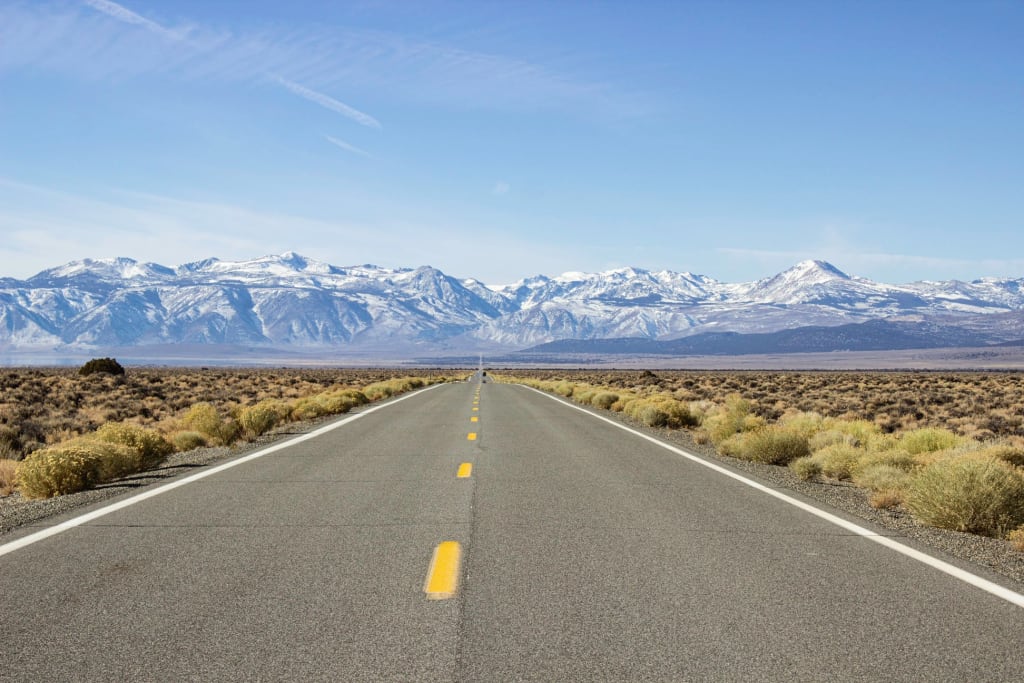
Everything Bennet did was on a shoestring. He’d travelled the country in a pickup truck with a tent in the back. When his wife left, he did too, my mom said. He became a vagabond, and he was rarely seen until his eyesight was gone and he could no longer travel alone. Then he moved to the shack I remembered. He kept sodas in the fridge for me, and I would sit as a child and listen to him talk about the valleys he’d seen from the mountain tops and the beaches he’d walked, and the campfires he’d pitched his tent next to.
Uncle Bennet had a collection of black notebooks, hardy, but battered, that he’d written his travel memories into. They were small enough to fit in his back pocket, and he showed me one day how he carried them, one always with him, and a pencil in his breast pocket. Every adventure had been recorded, and while he would make me lunch, deft fingers belying the lack of sight, he’d tell me, “Casey-girl, go get a notebook, and I’ll tell you where we’re going today.”
As if the notebooks weren’t enough, this wooden box sat on a shelf, and, as Uncle Bennet would tell me about the area he’d been traveling, I would dig through the box and find the national park he had been exploring in that notebook. He would fix the pin to my shirt and tell me to read part of a passage from his notebook. Then, when he knew exactly where he had been, he would tell me what it was like there in incredible detail, right down to the color of the alpenglow against snowy mountains on a crisp spring morning.
I couldn’t understand why no one else wanted to hear Uncle Bennet’s stories. His own daughter called them lies, but my mother told me that Bennet wouldn’t lie to me, that he loved having me sit in his shack to listen to his adventures. When she would come to pick me up and drop off dinner for him, she would chat with him about current events and family drama. But adventures were left for me.
As I grew older, I took the opportunity to travel, whether for my job or for schooling, and I would tell Uncle Bennet where I was going. He would say, “Get a day off, Casey. Go to this place. A mile down this path there will be a large boulder. That’s where I ran into that black bear.” I would follow his directions and find a place where my uncle had an adventure some fifty years earlier. I would go home and describe it to him just as it was on my visit so he could "see" it again.
Sometimes, though, I would find the place my uncle told me to visit only to discover that progress had wiped the details of my uncle’s memory so far out of existence that I couldn’t see what he had always described. I reported back to Uncle Bennet, and I never lied to him. He would accept the loss with a melancholy shrug and would ask me to describe the houses that had gone in.
At the funeral, my mother, who had cared for her brother in the last stages of his life, told me to ignore the talk amongst the mourners that my uncle had led a miserable existence.
“He was never unhappy,” she told me. “He wished his wife and children had loved him more than their comfort, but he was not unhappy. He lived the simple life he wanted and he traveled the world. And he had you, Casey. He loved telling you his stories, and he loved that you’ve been to a few of the places he visited. Don’t ever think he was unhappy.”
I watched my cousin drive away after she gave me that humble wooden box, and then walked into my apartment and retrieved the keys to the lock from my desk. Uncle Bennet had given them to me a few years earlier but hadn't told me what they were for. He’d only said that I’d know when I needed them. I’d almost forgotten about them until my cousin handed me the box. There’d never been a lock on it in all my childhood.
I unlocked the box and opened it, and it was, as I knew it would be, full of Uncle Bennet’s national park pins. And there was an envelope wth my name on it. That was new. I opened the envelope and found a key as well as a folded sheet of paper with a number, the name and branch of a bank, and the words Take a backpack, all in my mother’s handwriting.
Okay.
I dug a backpack out of my closet and threw my wallet and jacket into it. I put the key and piece of paper into my pocket and then I grabbed they keys to my car. The bank was just up the road where it had been easy for mom to take care Uncle Bennet’s business for him.
I found, at the bank, that they key belonged to a safe deposit box. I was taken to a private room and, using the key I had as well as the key she had, the banker pulled out a long metal box and set it on the table. When she left the room, I opened the box and sat stunned.
It was full of money. A lot of money. I determined the denominations and counted the stacks. When I was done, $20,000 sat on the table. It was only then that I realized there was something else in the box.
There was a U.S. map and a black notebook, just like those my uncle had used, but this one was new. I opened it up and there, inside the cover, in my mother’s handwriting again, were the words Uncle Bennet said this notebook could use a story. I looked down at the money and at the backpack my mother had told me in the note at home to bring along. I put all the money into the backpack, slipped the black book into my back pocket, and I left the bank.
When I got home, and threw together a to-go bag — my hiking boots, jeans, t-shirts and sweatshirts, my camera and plenty of pencils. As I packed, I called my mother.
“Oh, good, you got the box,” she said. “You’re between jobs, so just take your time. That’s what Uncle Bennet wanted.”
“Where did this money come from?” I asked. “What did he do? Rob a bank?”
“A blind man?” my mother laughed. “Of course, not. He made some very wise investments over the years and was smart enough to mention it to only a few of us. He had me set this all up for you a few years ago when the cancer was diagnosed. That's he put the lock on that old wooden box. Go! Explore! Have fun! Be a vagabond like Bennet was. But don’t forget to be back in a month to meet at the lawyer’s office.”
“For the reading of the will?” I asked. “Why?”
“To see the look on everyone’s faces,” she said, “when you get the rest of Uncle Bennet’s money.”
About the Creator
Kelli Heitstuman-Tomko
Kelli Heitstuman-Tomko is a journalist and author. She has written for several newspaper publication and writes a police procedural series The Johnny Lister Mysteries. She currently lives in Nevada.
Keep reading
More stories from Kelli Heitstuman-Tomko and writers in Humans and other communities.
Escape
When I looked out the door, I could see the buzzards were still eating Jasper, pulling strips of flesh off his body and fighting over his innards. I could hear them squabbling in the waning light, but Jasper had been a big man, and there was enough for all of them.
By Kelli Heitstuman-Tomko5 years ago in Horror



Comments
There are no comments for this story
Be the first to respond and start the conversation.