

When I looked out the door, I could see the buzzards were still eating Jasper, pulling strips of flesh off his body and fighting over his innards. I could hear them squabbling in the waning light, but Jasper had been a big man, and there was enough for all of them.
I closed the door and looked around the shack. How had I come to this place? I couldn’t even remember that life I lived, me and my husband William and baby Tom. Kansas and the endless grasslands of plenty were far away in another world where we had been happy and healthy.
I picked up a burlap bag from the corner of the kitchen. Jasper had just come home with supplies two days ago, leaving me tied to the bed so I wouldn’t run away, though I had no idea, really, where I was or where I would go.
As I packed food items into the sack, I thought back to William teaching me to saddle his horse. You never know, he’d said, when it might save my life. Not that there was much left worth saving.
We had been excited about the trip to the goldfields. William was a cleric, not a man born for grueling work, but he hadn’t planned to mine. Where there were miners and mines there was a need for supplies. William would open a dry goods store and I would bake. There had been so much hope then, so much expectation. California was the land of opportunity, a place for a young couple to break the family bonds tying them to a burnt a broken land and to start anew.
I put my hand on the door and opened it again. How long had it been since I’d stepped outside? How long since I didn’t fear crossing the imaginary line Jasper had indicated on the floor, tattooing my infractions on my naked back with a length of knotted rope, breaking me down with beatings and rape until, even now, when I knew he wasn’t coming back, I was afraid to step out.
Maybe just to the porch, I thought. Maybe I could just get to the porch today. I braced myself and prepared to move, but when I looked up, the owl was there, and I froze where I stood.
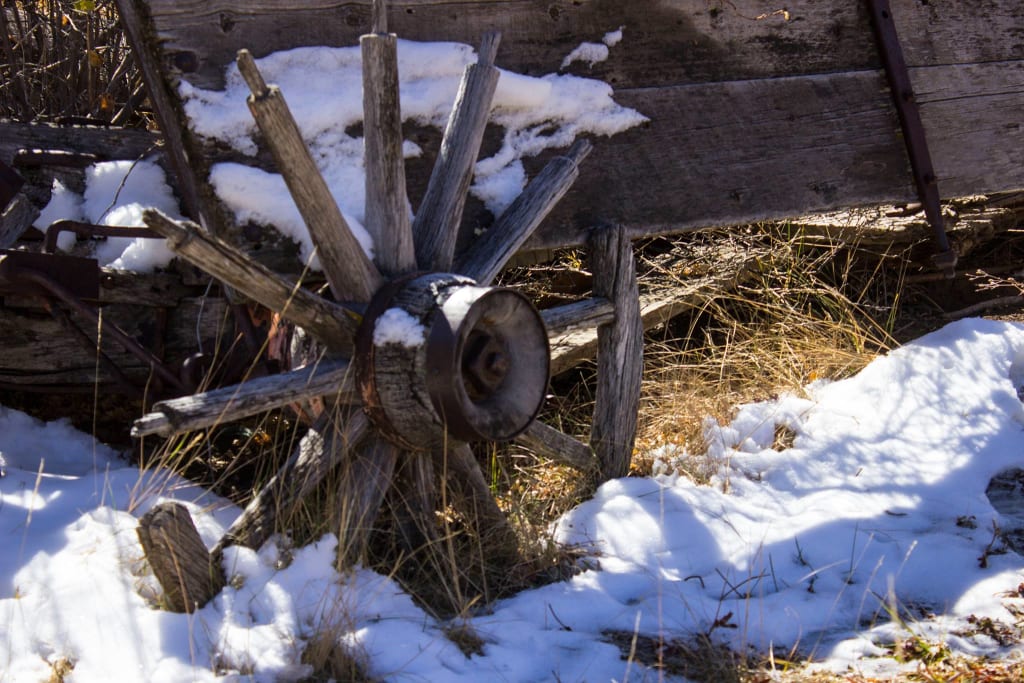
It was just a barn owl, and, a long time ago, it wouldn’t have bothered me. Now, it was resting just inside the tattered canvas of mine and William’s Conestoga wagon that sat in the shadow of Jasper’s barn.
I backed up into the house and closed the door, breathing hard. I was a Christian woman, and I was not superstitious, but I’d heard that the Indians on the other side of the mountains, the Mewuk, William had called them, believed that when an honorable man died, he became a Great Horned Owl, but when an evil man died, he became a barn owl.
Jasper was an evil man.
He had first shown up on the trail. Indians had killed his saddle partner, he said, had stolen their horses. So, the trail master had taken Jasper in and allowed him to stay with the train as long as he helped out. Jasper promised, and that night, William pulled me aside.
“Do not have anything to do with that man,” he said. “I don’t believe his story. He was alone in Missouri, and he watched us all leave. Johnson, the scout, thinks we’ve been followed by a white man, and I think it’s Jasper.”
The women of the train took turns feeding Jasper, but William never allowed me to deliver the food. He, William, took the food to Jasper. And Jasper always looked past William toward me and winked and gave me an oily grin.
I tried not to think of the big man and the feeling of unease he brought to the train. Then little Tom became ill, unable to keep food down, his tiny body burning with fever. On the night the baby died I looked up, and Jacob was standing ten feet from our wagon, watching and smiling like he knew something.
It wasn’t a week past the baby’s death that the Indians hit us, if they were Indians. William made me lie in the back of the wagon, and, as I got down onto the blankets on the floorboard of the wagon I saw Jasper shoot William through the chest with a rifle. Then he was on our wagon, hitting me in the side of the head with his fist.
The next several days were a horror of rapes and whippings and being tied in the wagon so I didn’t run off, each night in a separate camp, separated from the rest of the train. When Jasper finally brought me to the shack, he took me to his bed. When he was done with me, he sat on the edge of the bed, pulling on his pants, laughing to himself. “I finally caught me a wife,” he said.
Life became hell, each day the same as the one before. I wondered how long I could endure, how long I had even been his captive. I saw the change of a season and knew as the days got shorter that I was with child again. But I lost the child after a bad beating for accidentally burning a chunk of meat.
Our families had warned us not to go west, but William and I had dreams. Now, that dream was gone, my son and husband dead. No one knew I ended up in this miserable desert with a man who was not my husband but a monster. How long until I could just laid down and die?
I went through the cupboards and tried to ignore the owl. Of course, it wasn’t Jasper. Jasper was down near the river, birds and vermin and wild animals eating his body, lying exposed to the elements just as he’d left my William. Had anyone in the train been left alive to bury the dead? Or was poor William picked clean the way it was happening with Jasper now.
The sun was low, and I knew I wasn’t going anywhere tonight. I made myself some biscuits to eat with fried bacon and the grease. And then I slept, but not in the bed. I sat in the rocking chair the big man would never let me near and covered myself with the bear rug on the floor. I would let the fire go out tonight. I would leave in the morning. I was almost asleep when the owl flew past the window and into the night.
*****
In the morning, I bathed, a luxury Jasper rarely gave me. I pulled my hair back and tied it. When I looked into the piece of mirror Jasper used for shaving, I could only see an unrecognizable face of mottled bruises, one eye swollen where Jasper’s fist had landed yesterday morning.
I opened the door and peered toward the river. There were still vultures, but they were fewer. I looked down at the stoop. Had I not slept in the forbidden rocking chair, eaten food of my own free will and let the fire go out? I put out a bare foot, my shoes have been thrown out the first night Jasper had taken me, and I stepped onto the porch. I waited, but nothing happened, so I made another step, and then another. I opened my mouth and breathed free air.
Carefully, I made my way to the wagon where my trunk of clothing had been sitting for months. I didn’t have the strength to drag it, so I opened it on the tailgate of the wagon and pulled out clean clothes and carried them inside.
I felt exhausted and, yet, somehow, invigorated. I relit the fire and made coffee to have with the rest of the biscuits and a tin of peaches. I started to clean up but stopped. Why? This was not my home.
I left the fire to burn down and changed into clean clothes. The shoes hurt my feet, so I would have to go barefoot until I could find something better to wear.
When I was standing at the tailgate of the wagon again, I looked back toward the river and saw that the Indian women had returned with the child. They had been digging near the river yesterday when Jasper had gone to chase them away. In his anger, he had kicked the child, and one of the women had stabbed him with her knife. I had seen Jasper stagger toward the house, teeter, and fall. In less than an hour, the vultures were there.
I took the rest of my clothing inside, not because I thought I could escape with them, but because William had counted on any bandits seeing only clothing. Jasper had taken the strong box, and when I found it, the money was almost gone, but I had expected that. I knew, though, that there was paper money sewn into pockets in each of my dresses. I found them all and moved them to a valise that would carry a change of clothing and toiletries.
I knew that at least one of the oxen that had pulled the wagon had been butchered, and I had no idea where the other one was. But William’s horse was in the barn, and he would remember me.
I had the valise packed, and a burlap bag full of food. I took them out with me and set them on the tailgate of the wagon and then walked, carefully, to the barn. The land was full of thorns and stickers, and I had no shoes.
“Shadow,” I called into the barn, and the horse heard my voice, and nickered. I pushed the door of the barn open to let in more light, and I found Shadow in the first stall with plenty of hay and water. Williams’ saddle and saddlebags were draped over the gate of an empty stall.
I walked to Shadow and put out my hand, and he bumped my hand with his nose. I pet him a moment, and then I was overwhelmed by familiarity. William’s horse…William, who I would never see again…my William.
“Oh, William, I need you!” I wept. I wrapped my arms around Shadow, and he stood patiently while I broke down. But no. I couldn’t let myself fall apart. William was gone, and I was no longer the girl he married. I didn’t know who I was now, but I knew that I had to flee.
I moved the food to the saddlebags ¬— hardtack, tins of peaches, a little bacon and coffee, and a small pan, fork and knife, and coffeepot. I saddled Shadow the way William had shown me and then fastened the saddle bags and the valise behind the saddle. Finally, I went back into the house for the rifle that had killed my husband and for a box of ammunition. I didn’t know what might lie ahead, but I intended to be ready for it, more ready than I had been to lose my husband and son.
It was time to go. I would be following the river, and I would fill a canteen there before going on. Perhaps I would find help in Gold Hill or Virginia City. There had to be someone decent there who would help a widow of the California Trail.
I fit Shadow’s halter on him, making sure the bit sat well in his mouth. Then I pulled myself into the saddle, agonizingly slowly, and sat astride the saddle like a man. I checked the rifle in the boot and then looked west toward the Sierra Nevadas and California.
Shadow started down the path Jasper always took him. I turned, one last time, and looked back at my prison. The barn owl sat on the tailgate of the wagon. It blinked, then watched me go.
About the Creator
Kelli Heitstuman-Tomko
Kelli Heitstuman-Tomko is a journalist and author. She has written for several newspaper publication and writes a police procedural series The Johnny Lister Mysteries. She currently lives in Nevada.
Keep reading
More stories from Kelli Heitstuman-Tomko and writers in Horror and other communities.


Comments
There are no comments for this story
Be the first to respond and start the conversation.