
The Unseen Impact: How Social Media May Revert Our Minds to Immaturity
Exploring the Impact of Social Media on Cognitive and Emotional Maturity

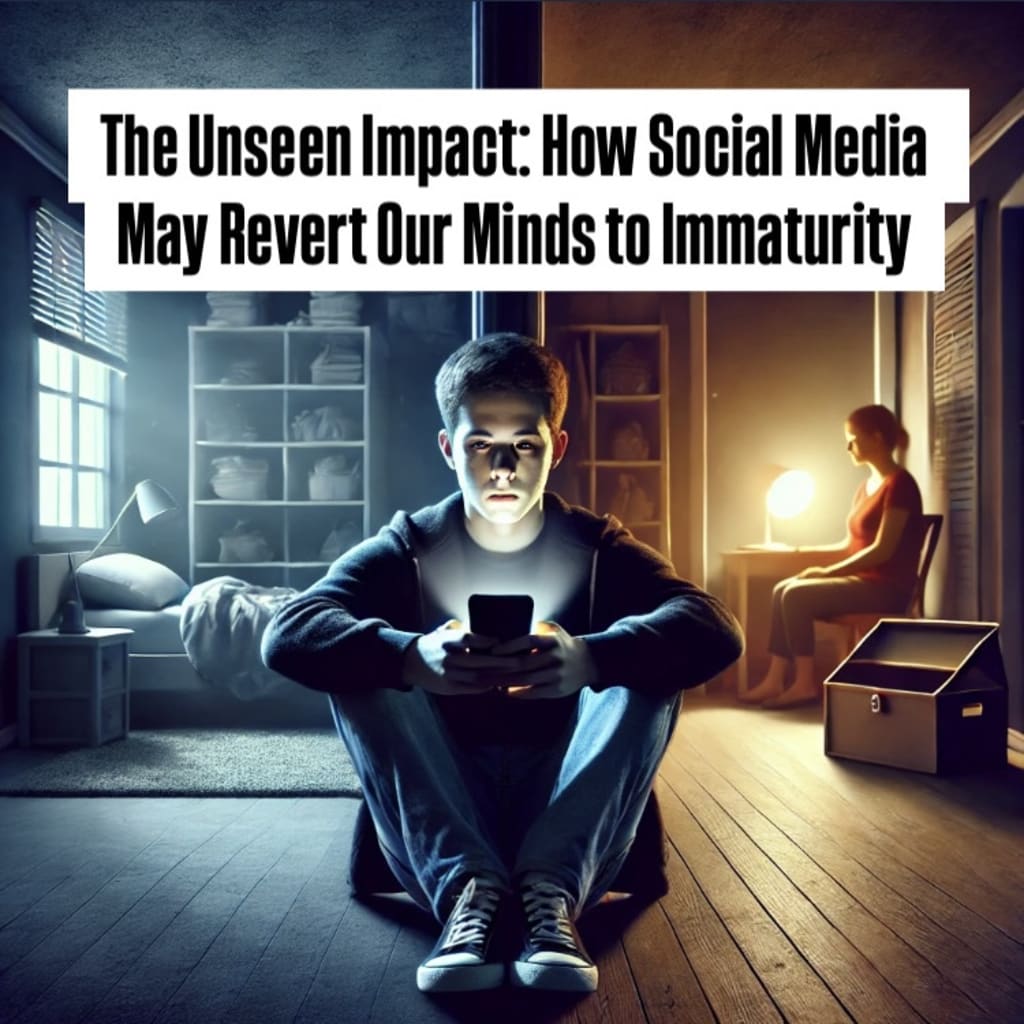
I want to discuss how increased social media use may relate to mental regression. This means that engaging frequently with social media could lead your mind to revert to a more immature state. I am not suggesting that you physically become younger, but rather that your thinking may resemble childlike behaviors. This could include increased black-and-white thinking, loss of impulse control, and emotional outbursts. Such behaviors can seriously affect one’s well-being and could present significant issues for society.
Imagine shifting from a society of healthy adults to one where everyone thinks like children. This situation would lead to all-or-nothing statements and rash emotional reactions, benefiting no one. If social media is affecting your life, what can we do about it?
Before discussing this theory, I want to make two points. First, this isn’t an attack on social media. It offers potential educational and entertaining value when used wisely. However, excessive use can lead to negative effects on our brain function. Second, psychology is not a perfect science. The impact of social media is still being researched, and this idea of mental regression requires further study.
Numerous studies suggest that social media use is linked to anxiety and depression for both teens and adults. However, can it really lead to mental regression? First, we should define mental immaturity and regression. This occurs when someone engages in behaviors that seem inappropriate for their age. I refer to it as displaying increasingly immature cognitive and emotional behaviors.
Characteristics of mental immaturity include increased black-and-white thinking, which hinders recognizing life's complexities. Children often view situations in absolutes, swinging between seeing someone as wholly good or bad. There’s also a lack of impulse control. Children develop the ability to delay gratification as they grow, but mentally immature individuals may struggle with this.
Furthermore, a constant need for attention stems from our early survival instincts. This requires learning to care for ourselves as we age. Other signs include difficulty taking responsibility for actions, catastrophic thinking, and regular emotional escalations. These traits characterize emotional and cognitive immaturity.
It is evident that our brains can become stuck in these immature patterns. But is it possible for someone to revert to these behaviors later in life? Case studies show that anyone can regress mentally, often influenced by illness or an unsupportive environment. Research into epigenetics suggests our brains are adaptable. They can change based on our experiences, even as adults.
If you find yourself in an environment that promotes immature behaviors, this could lead you to adopt those patterns. It’s like the saying: you are the sum of the ten people you spend the most time with. If surrounded by immature individuals, you may become more immature yourself.
But are social media platforms such as TikTok and Instagram contributing to this regressive behavior? Research indicates these environments often reward immature behavior. Here are five reasons why:
1. **Interaction with Younger Individuals**: Social media is filled with content from teenagers. Many young users are online daily, and their content often appears on your feed. This could expose you to child-like perspectives.
2. **Rewarding Polarizing Content**: Social media algorithms promote emotionally charged, black-and-white statements. These posts attract attention and drive more engagement, leading to a rise in polarizing discourse.
3. **Encouragement of Impulse Control Issues**: Social media can disrupt dopamine regulation. The instant gratification from likes and shares can lead to a craving for more, potentially causing impulsivity and lack of focus.
4. **Fostering Feelings of Inadequacy**: Social media often fuels insecurity and feelings of unworthiness. Users typically showcase only their best moments, leading others to feel abnormal for experiencing challenges.
5. **Misinformation for Profit**: False news spreads faster and reaches a broader audience than fact-based stories. Emotionally driven content gets more shares and likes, which benefits companies financially.
Given these examples, social media may indeed have harmful effects on mental health if not managed properly. Increasing exposure could change our thought processes and behaviors negatively.
The study of social media’s impact on well-being is still in its early stages. We should explore topics related to potential mental regression. If these issues are prevalent, we can address them before causing further harm. If you are studying social media’s psychological effects, I encourage you to investigate this idea. Please share your findings and let me know how social media affects you and society as a whole. Is the impact positive or negative?
About the Creator
Ahmed mohsin
As a passionate history enthusiast, I weave captivating tales inspired by real events, with a love for movies, dramas, manga, and anime, where every story carries the echoes of history with the excitement of the fictional worlds I adore.
Keep reading
More stories from Ahmed mohsin and writers in Humans and other communities.
Beckschinsky: Dreams, Nightmares, and the Birth of Modern Polish Art
Over a 50-year career, Beckschinsky expressed dreams and nightmares on canvas and film. He brought global attention to Polish art and defined modern heavy-metal aesthetics. Born in 1929, he grew up in Sanok, a city with a significant Jewish population. Before World War II, around 30% of the city's residents were Jewish. In 1940, the nearby Zoo Slav concentration camp was established and operated for three years.
By Ahmed mohsinabout a year ago in Art
Minnesota and Illinois Invoke the 10th Amendment in Lawsuits to Block Federal Agents in Their Cities — Here’s Why That Matters
States Push Back Against Federal Enforcement Minnesota and Illinois have launched high-profile lawsuits invoking the 10th Amendment of the US Constitution in an effort to block or limit the actions of federal agents—particularly immigration enforcement officers—operating within their cities. The legal challenges mark a significant escalation in the long-running conflict between state governments and Washington over who has the authority to enforce immigration laws and how far federal power can reach.
By Aarif Lashari4 days ago in Humans


Comments
There are no comments for this story
Be the first to respond and start the conversation.