
The Unbelievable Story of Roy Cleveland Sullivan: The Human Lightning Rod
Surviving thunder strike
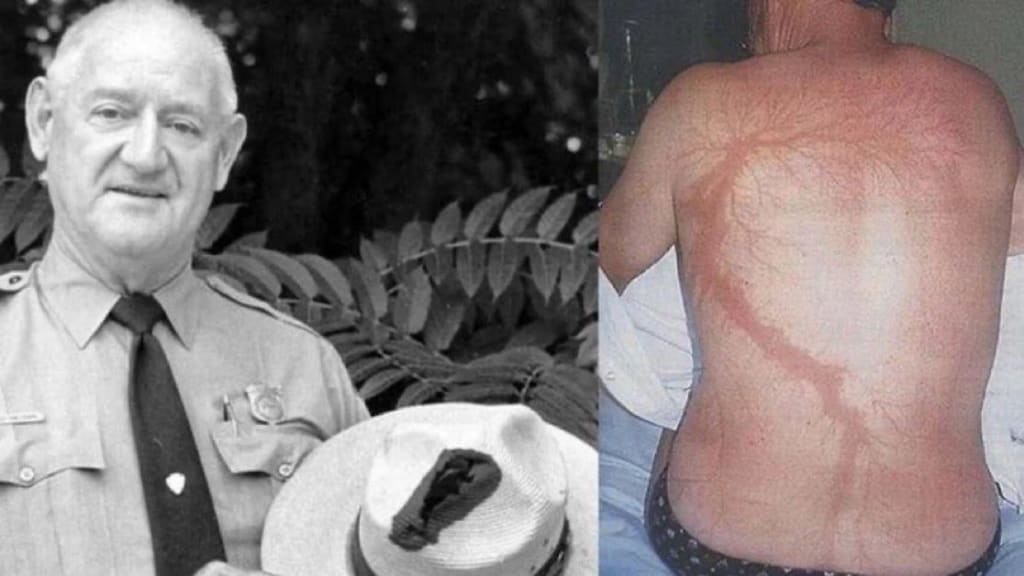
Roy Cleveland Sullivan, an American park ranger in Shenandoah National Park in Virginia, holds a unique and astounding record. Between 1942 and 1977, Sullivan survived being struck by lightning on seven different occasions, earning him the nicknames "Human Lightning Conductor" and "Human Lightning Rod." His incredible and somewhat terrifying experiences have been recognized by the Guinness World Records, making him the person struck by lightning more recorded times than any other human being.
Early Life and Career
Roy Sullivan was born on February 7, 1912, in Greene County, Virginia. He joined the National Park Service as a park ranger in Shenandoah National Park, a role that would bring him closer to nature—and seemingly to lightning. Known for his dedication to preserving the natural beauty of the park, Sullivan was a respected figure in his community. However, his career took a strange and dangerous turn when he became a literal magnet for lightning.
The First Strike: 1942
The first documented lightning strike occurred in 1942. Sullivan was in a lookout tower, which was newly built and had not yet been equipped with a lightning rod. During a storm, lightning struck the tower multiple times before finally hitting Sullivan. The bolt caused severe burns on his leg and left a hole in his shoe, but remarkably, he survived.
The Second Strike: 1969
After nearly three decades of relative peace, lightning found Sullivan again in 1969. This time, he was driving a truck through the mountains when a bolt struck two trees on either side of the road and jumped to his vehicle. The strike knocked Sullivan unconscious and burned off his eyebrows and eyelashes. Despite the intense shock, Sullivan managed to regain consciousness and control of the truck, narrowly avoiding a crash.
The Third Strike: 1970
Just a year later, in 1970, lightning struck Sullivan for the third time while he was in his front yard. The bolt hit a nearby power transformer and then jumped to his shoulder, searing it. Once again, Sullivan survived, but the pattern of repeated lightning strikes was becoming both puzzling and alarming.
The Fourth Strike: 1972
In 1972, Sullivan was working inside a ranger station when lightning struck him yet again. This fourth strike set his hair on fire. In a desperate attempt to extinguish the flames, Sullivan rushed to the bathroom and doused his head with water. This incident left him with burns but, incredibly, no serious injuries.
The Fifth Strike: 1973
The fifth encounter occurred in 1973 while Sullivan was patrolling the park. He saw a storm cloud forming and tried to drive away from it, but the cloud seemed to follow him. When he finally thought he had outrun it and got out of his truck, lightning struck him, causing burns to his legs and knocking his left shoe off. Despite the injuries, Sullivan once again managed to survive.
The Sixth Strike: 1976
By this time, Sullivan's reputation as the "Human Lightning Rod" had become well-known. In 1976, he was struck for the sixth time while he was walking along a trail in the park. The lightning burned his ankle and injured his leg. Still, Sullivan survived, albeit with increased wariness of thunderstorms.
The Seventh and Final Strike: 1977
The seventh and final documented lightning strike occurred on June 25, 1977. Sullivan was fishing in a freshwater pool when lightning struck him on the top of his head, traveling down and burning his chest and stomach. Despite being severely injured, he managed to reach his car and drive to get help. This final strike confirmed Sullivan's place in the Guinness World Records.
Legacy and Recognition
Roy Sullivan's incredible survival story has fascinated people for decades. His experiences have been studied by meteorologists and medical professionals alike, seeking to understand how one person could survive so many lightning strikes. While some have speculated that Sullivan might have had a unique physical or genetic trait that attracted lightning, others attribute his repeated encounters to sheer bad luck and the nature of his outdoor job.
Sullivan's story is not just about surviving lightning strikes; it's also about resilience and the human spirit's capacity to endure extraordinary circumstances. Despite the repeated trauma, Sullivan continued his work as a park ranger until his retirement.
Personal Life and Tragic End
Roy Sullivan's personal life was as tumultuous as his career. Known for his rugged demeanor and dedication to his job, Sullivan was also deeply affected by his lightning experiences. Tragically, on September 28, 1983, he took his own life at the age of 71. His death was a stark reminder of the mental and emotional toll that such repeated trauma can take on an individual.
Conclusion
Roy Cleveland Sullivan's life story remains one of the most extraordinary tales of survival against nature's most powerful forces. His seven encounters with lightning and his ability to survive them have cemented his place in history and continue to inspire awe and curiosity. While his life ended tragically, his legacy as the "Human Lightning Rod" endures, a testament to the unpredictability of nature and the resilience of the human spirit.
About the Creator
Keep reading
More stories from Deji Akomolafe and writers in Humans and other communities.
The Untold Tragedy of North Sentinel Island: The Fate of Sunder Raj and Pandit Tiwari
In January 2006, a tragic and violent encounter occurred on North Sentinel Island, a remote and isolated island in the Bay of Bengal, which resulted in the deaths of two Indian fishermen, Sunder Raj and Pandit Tiwari. Their story brings to light the complex and often perilous relationship between the modern world and one of the last uncontacted tribes on earth, the Sentinelese.
By Deji Akomolafe2 years ago in Humans
Life Is Short
Life felt endless to Daniel when he was young. Days stretched wide like open roads, and tomorrow always waited patiently for him. He believed, as many do, that time was something you could spend later. Dreams could be delayed. Apologies could wait. Love could be expressed “one day.” Daniel grew up in a small town where everyone knew each other’s names but rarely knew each other’s hearts. His father worked long hours at a factory, coming home tired and quiet. His mother filled the house with warmth, stories, and the smell of evening tea. As a child, Daniel promised himself he would live boldly—travel the world, write books, make people remember his name. But as years passed, bold dreams slowly turned into practical choices. He studied, found a decent job, and moved to the city. “I’ll chase my passion later,” he told himself. “Right now, I need stability.” Days became routines. Wake up. Work. Scroll through life on a screen. Sleep. Weeks disappeared quietly, without announcing their departure. Daniel often thought about calling his parents, but there was always a reason not to. He was tired. Busy. Distracted. “I’ll call this weekend,” he said, every week. When his mother sent messages—simple things like Did you eat? or Take care of yourself—he replied with short words and long delays. One afternoon, while walking through a crowded street, Daniel noticed an old man sitting on a bench, feeding pigeons. The man looked peaceful, almost glowing in the chaos around him. Daniel passed by, then stopped. Something about the calmness felt rare. “You look like someone running from something,” the old man said suddenly, without looking up. Daniel was surprised. “Excuse me?” The man smiled gently. “Most people are. Running from time, from feelings, from truth.” Daniel laughed awkwardly and sat beside him, not sure why. “And what are you doing?” he asked. “I’m sitting with time,” the man replied. “Not ahead of it. Not behind it. Just with it.” They talked for a while. The man shared that he was once a businessman, always chasing money and status. He lost friends, moments, and years he could never get back. When he retired, his wife fell ill, and soon after, she passed away. “She used to ask me to sit with her,” he said softly. “I was always busy. Now I sit with memories.” Those words stayed with Daniel longer than he expected. That evening, Daniel called his mother. They talked for nearly an hour. She laughed, told old stories, and asked questions she already knew the answers to—just to hear his voice. When the call ended, Daniel felt something strange: peace mixed with regret. Weeks later, life struck without warning. His father had a heart attack. Daniel rushed back home, his mind racing faster than his body. Sitting in the hospital, watching his strong father lie silent and weak, Daniel felt time collapse. All the “laters” suddenly felt foolish. His father survived, but something changed in Daniel forever. He began to notice how fragile moments were. How laughter faded too quickly. How sunsets didn’t wait for busy people. He realized that life wasn’t short because of how many years we get—but because of how many we waste. Daniel made small changes first. He walked more. Listened more. He visited his parents often, sitting with his father in quiet understanding. He apologized to old friends. Some replied. Some didn’t. He learned that closure isn’t always mutual, but honesty still matters. He quit his job—not dramatically, but deliberately. He took a simpler role that paid less but gave him time. Time to write. Time to breathe. Time to live. Years passed, but this time, Daniel noticed them. He fell in love—not with perfection, but with presence. He learned that love isn’t proven in grand gestures, but in showing up when it’s inconvenient. One day, while walking through the same street, he searched for the old man on the bench. The pigeons were there, but the man was gone. Daniel sat down anyway. Life moved around him—fast, loud, impatient. But Daniel stayed still. He finally understood the truth the old man had shared without preaching: Life is short, not because it ends, but because we forget to live it while it’s happening. In the end, Daniel didn’t become famous. He didn’t conquer the world. But he became something rarer—fully alive. And when people remembered him, they didn’t speak of his success. They spoke of his presence. Of how he listened. Of how he made moments feel important. Because when life is short, the only thing that truly lasts is how deeply we live it. Life.Life is always concerned for the poor father taught him how to live and learn how to live and how to live and learn to be questioned and not a warrior named Paragus saw opportunity in the evenings and then did something to say that he was known as a child who was a modest shop and 2 of the world is more
By The best writer about an hour ago in Humans


Comments (1)
Fascinating and well-written, Roy Cleveland Sullivan's incredible story of survival against lightning strikes showcases the resilience of the human spirit and the unpredictability of nature.