
"The Swift Symphony: Unraveling the Astonishing Speed of the Cheetah".
The fact is that The fastest land animal on the planet is a cheetah. It can reach speeds of up to 75 mph (120 kaph).
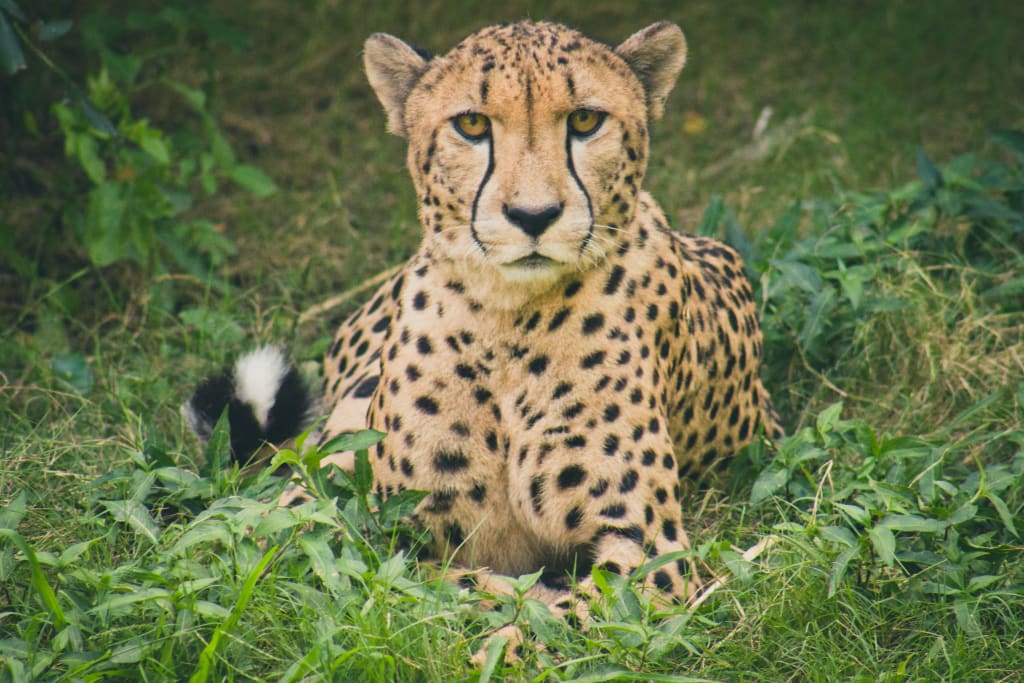
Introduction: Racing at Nature's Pace - The Cheetah's Unrivaled Velocity
In the sun-drenched savannas of Africa, a sleek and agile predator reigns supreme as the undisputed champion of speed – the cheetah (Acinonyx jubatus). Renowned as the fastest land animal on the planet, the cheetah's incredible ability to reach speeds of up to 75 mph (120 kaph) is a testament to the evolutionary marvels that have shaped its form and function. In this exploration, we embark on a journey into the world of the cheetah, unraveling the physiological intricacies, behavioral adaptations, and ecological significance of its unparalleled velocity.
Chapter 1: Born to Sprint - The Anatomy of Speed
At the heart of the cheetah's prowess lies a physique finely tuned for acceleration and speed. The cheetah's slender, aerodynamic body, elongated limbs, and specialized musculature contribute to its remarkable agility and rapid acceleration. Unlike other big cats, the cheetah's adaptations for speed include non-retractable claws, acting like cleats, providing traction as it tears through the African grasslands.
One of the defining features of the cheetah's anatomy is its lightweight build, emphasizing the importance of minimizing mass to maximize speed. Its incredibly flexible spine allows for elongated strides and powerful stretches during each bound. The combination of these anatomical adaptations creates a sprinting machine tailored for the chase.
Chapter 2: Sprinting in Style - The Cheetah's Unique Gait
Cheetahs employ a distinctive running style characterized by an airborne phase during each stride, known as the "double suspension gallop." This gait involves both the forelimbs and hindlimbs being airborne simultaneously, creating a fleeting moment of suspension where the cheetah is essentially flying over the ground.
The doubledouble-suspensionp is a biomechanical masterpiece that minimizes ground contact time, reducing the risk of muscle fatigue and overheating during high-speed pursuits. The cheetah's spine acts as a coiled spring, storing and releasing energy with each stride, propelling it forward with extraordinary efficiency.
Chapter 3: Sprinters, Not Marathoners - The Short-Lived Burst of Energy
While the cheetah's sprinting abilities are unparalleled, it is important to note that they are sprinters rather than endurance runners. Cheetahs can maintain their top speed for only short distances, typically covering around 500 meters during a chase. The rapid depletion of energy reserves and the risk of overheating necessitate brief, intense bursts of activity.
This specialization as sprinters aligns with the cheetah's hunting strategy. Rather than engaging in prolonged pursuits, cheetahs rely on stealth, camouflage, and a burst of incredible speed to catch their prey off guard. This energy-efficient hunting approach reflects the evolutionary adaptations that prioritize speed over endurance.
Chapter 4: Eyes on the Prize - Hunting Strategies of the Cheetah
The cheetah's exceptional speed is a crucial component of its hunting strategy, allowing it to rapidly close the gap between itself and its prey. Cheetahs primarily target small to medium-sized ungulates, such as gazelles and impalas, leveraging their speed to outpace and catch these agile herbivores.
Cheetahs are adept at utilizing cover and terrain to approach their prey unnoticed. Once within striking distance, they unleash their explosive speed in a burst of acceleration, closing the gap between predator and prey within seconds. This high-speed pursuit culminates in a swift takedown, as the cheetah employs its powerful jaws and retractable claws to secure its meal.
Chapter 5: The Need for Speed - Evolutionary Imperatives
The evolution of the cheetah's speed is intricately linked to its ecological niche and evolutionary imperatives. In the competitive landscape of the African savanna, cheetahs have evolved to be specialized hunters, relying on speed and agility rather than sheer strength.
The ability to swiftly capture prey enhances the cheetah's chances of survival and successful reproduction. In the wild, cheetah mothers often raise cubs independently, and the ability to secure quick and efficient kills is vital for sustaining the mother and her offspring.
Chapter 6: Conservation Challenges - Preserving the Fastest
While the cheetah's speed is a marvel of nature, it also underscores the challenges these magnificent predators face in the modern world. Cheetah populations have declined significantly due to habitat loss, human-wildlife conflict, and poaching. The expansive territories cheetahs require for hunting are increasingly fragmented, posing threats to their survival.
Conservation efforts are essential to safeguard the future of cheetahs. Initiatives focusing on habitat preservation, mitigating human-wildlife conflict, and addressing illegal wildlife trade are crucial for ensuring that these remarkable sprinters continue to grace the savannas of Africa.
Conclusion: Racing into the Future - The Enduring Legacy of the Cheetah's Speed
In the rhythmic heartbeat of the African plains, the cheetah stands as a living embodiment of speed and grace. Its ability to reach speeds of up to 75 mph is not merely a biological marvel; it is a testament to the intricate dance of evolution and adaptation that has unfolded over millennia. As we marvel at the cheetah's swift symphony, we are invited to appreciate the ecological significance of this unparalleled velocity and join hands in the collective endeavor to ensure the enduring legacy of the world's fastest land animal.
About the Creator
Keep reading
More stories from fatima zahra ajankar and writers in Humans and other communities.
"The Tongue of Titans: Unveiling the Astonishing Anatomy of the Blue Whale".
Introduction: Giants of the Ocean - Blue Whales and the Weighty Wonder of their Tongues In the vast expanse of the world's oceans, the blue whale reigns supreme as the largest creature on Earth. Beyond its sheer size, the blue whale harbors a marvel of anatomy that astonishes researchers and marine enthusiasts alike – its colossal tongue. Surpassing the weight of a car or even a small adult elephant, the blue whale's tongue is a testament to the extraordinary adaptations that enable these oceanic titans to navigate their vast habitats. In this exploration, we dive into the depths of the blue whale's anatomy, unraveling the mysteries behind the weighty wonder of its colossal tongue.
By fatima zahra ajankar2 years ago in Humans
Whiskey At Dusk
Guess the whiskey was more important to you in the end, wasn’t it? It was more than the well-being of your friends; more vital than showing up to the places you promised you would and could come to; more critical of a matter than fulfilling your damn responsibilities and getting the press off your back.
By Snarky Lisa2 days ago in Humans
The Monkey and the Soldier
Shahab was a kind-hearted and compassionate soldier. One day, he was returning to his village to spend his leave. On his way, he had to pass through a dense forest. As he rode through, he noticed a thorny bush shaking violently. Curious and cautious, he dismounted his horse, drew his sword, and called out: “Who’s there? Come forward, or I will cut you into pieces!”
By Sudais Zakwan5 days ago in Humans


Comments
There are no comments for this story
Be the first to respond and start the conversation.