
The Stranger on the Train
Sometimes the people we ignore have the most to teach us.

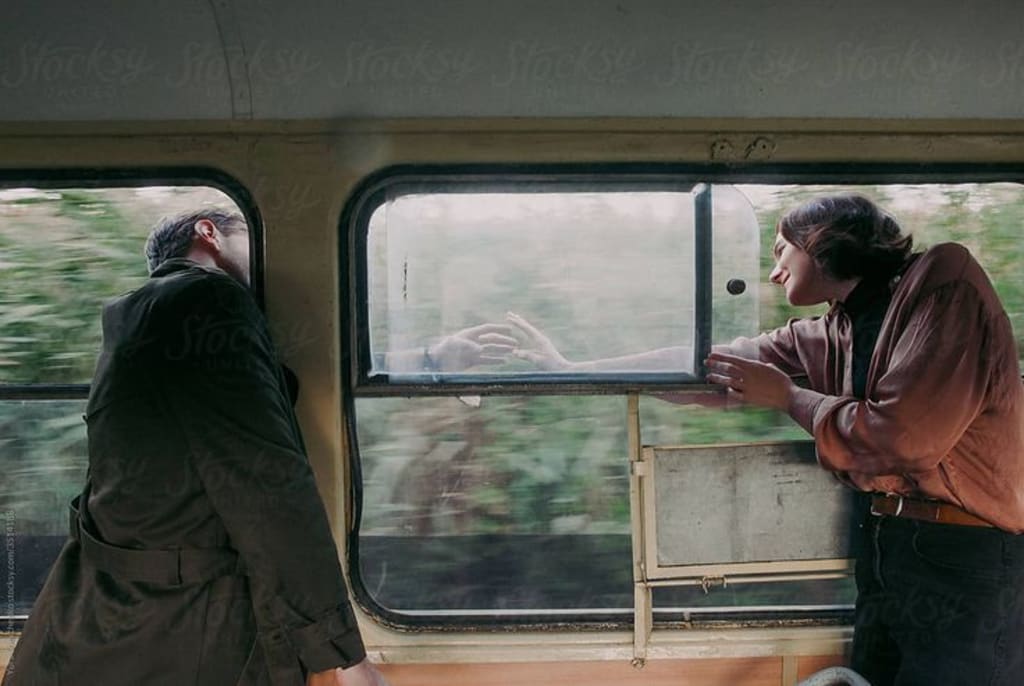
Sami took the same train every morning, the 7:15 from the outskirts to the city center. He liked the routine, the predictability, the way the rhythmic clatter of wheels against rails seemed to organize his scattered thoughts. He usually sat in the same seat, by the window, earbuds in, pretending not to notice the other passengers. People came and went, faces blurred into the background, lives crossing his without consequence. Life, he believed, was to be observed quietly, not participated in.
One rainy morning, the train was unusually crowded. Sami had to give up his window seat. He slumped into a corner across from an elderly man holding a small, worn briefcase. The man smelled faintly of tobacco and old paper. He looked at Sami, and for a moment their eyes met—not in recognition, but in acknowledgment of shared space. Sami turned away quickly, sinking into his music, telling himself it wasn’t important.
Minutes later, the man spoke. “Excuse me, young man. Could you help me with this?” He gestured to the briefcase, which seemed heavier than its size suggested. Sami hesitated. In his city, people often asked for help as a pretext for something else. But something about the man’s tone, calm and unassuming, made refusal feel rude. He nodded and lifted the case with him, adjusting it on his lap.
“Thank you,” the man said. His voice wasn’t loud, but it carried a warmth that surprised Sami. “I’ve been traveling this route for decades, yet every day it surprises me who notices and who doesn’t.” He smiled faintly, as if sharing a secret.
Curiosity broke Sami’s usual reserve. “Decades?” he asked, glancing at the man’s lined face.
“Yes,” the man said, eyes following the rain streaking down the window. “And I’ve learned something important. Most people live beside others without ever truly seeing them. They see bodies, shadows, shapes—but not people. Not really.” He paused, then added softly, “And yet, connection can appear anywhere, in a brief moment, if we allow it.”
Sami listened, intrigued despite himself. He had spent years moving through life as a quiet observer, too cautious to risk engagement. And yet, here he was, talking to a stranger who didn’t expect anything from him beyond a simple act of help. For the first time, Sami realized how lonely his distance had made him, how limited his understanding of human life had become.
The train rattled onward, the city drawing closer. Sami and the man talked, at first about trivial things—weather, the crowds, the trains themselves—but gradually the conversation deepened. The man shared stories of people he had met, acts of kindness witnessed and given, moments where small gestures had changed the course of someone’s day, even their life. Sami felt a subtle shift inside him, a recognition that life’s significance often hides in ordinary moments, waiting for someone to notice.
When the train reached the city station, the man rose slowly, briefcase in hand. “Take care, young man,” he said. “Remember, the world is full of people waiting to be seen. Don’t let routine blind you.” He offered a brief nod and stepped onto the platform, disappearing into the crowd.
Sami watched him go, feeling an unexpected emptiness. But it was not sadness—it was awareness. The encounter had been fleeting, yet it had cracked open something inside him: the ability to notice, to participate, to connect.
That evening, Sami sat at home reflecting. He realized that humans, no matter how ordinary they seem, carry histories, struggles, and wisdom worth acknowledging. To ignore them was to ignore part of life itself. He resolved to notice more, to engage more, and to allow his own life to intersect with others without fear or assumption.
The next morning, Sami boarded the train again. He looked around, observing faces that would normally have gone unnoticed. Some smiled. Some looked weary. Some looked like strangers who might hold a lesson. He didn’t know which ones would, but he was ready to see.
Because sometimes, the people we ignore have the most to teach us—if we stop, pay attention, and open ourselves to connection.
About the Creator
Sudais Zakwan
Sudais Zakwan – Storyteller of Emotions
Sudais Zakwan is a passionate story writer known for crafting emotionally rich and thought-provoking stories that resonate with readers of all ages. With a unique voice and creative flair.
Keep reading
More stories from Sudais Zakwan and writers in Humans and other communities.
The Silence Between Us
Naveed had mastered the art of appearing fine. At work, he smiled on cue, delivered reports on time, and laughed at jokes that didn’t amuse him. At home, he ate quietly, watched television he barely followed, and slept early to avoid thinking. If anyone asked how he was doing, the answer came automatically: “All good.” It sounded convincing because he had practiced it for years.
By Sudais Zakwan3 days ago in Humans
The Angry Man in Your House
"If you grow up with an angry man in your house, there will always be an angry man in your house" This statement has caused plenty of controversy online, people say its a statement that blames victims while also undermining those who break traumatic cycles to form health relationships... but if I'm honest now that I'm in my 30s it makes more sense to me than ever, and I'd argue that its not just about fathers and uncles.
By S. A. Crawford5 days ago in Humans
The Gentle Truth: What Your Kid's "Gentle Parenting" Actually Looks Like in My Classroom
As a teacher for the past ten years, I've witnessed a profound shift in the parenting styles of the families I work with. The rise of “gentle parenting” – with its emphasis on empathy, communication, and understanding – has undoubtedly brought positive changes to many homes and children. However, as someone who sees these children in a structured, collaborative environment, I feel compelled to share a candid perspective on what gentle parenting *actually* looks like in the classroom, and the potential challenges it can present when translating from home to school.
By Wilson Igbasiabout 3 hours ago in Humans
📢 Raise Your Voice Thread: 02/05/2026
Our “Raise Your Voice Threads” are hosted most alternating Thursdays at 12PM ET to offer creators more avenues to uncover exceptional stories on Vocal. As we are continuously searching for fresh creators and inspiring stories, this thread provides an opportunity to exchange and discuss the stories that have moved and motivated us on Vocal.
By Raise Your Voice by Vocal7 days ago in Resources




Comments
There are no comments for this story
Be the first to respond and start the conversation.