
The Sound of an Empty Room
When silence remembers what people forget
Author’s Note:
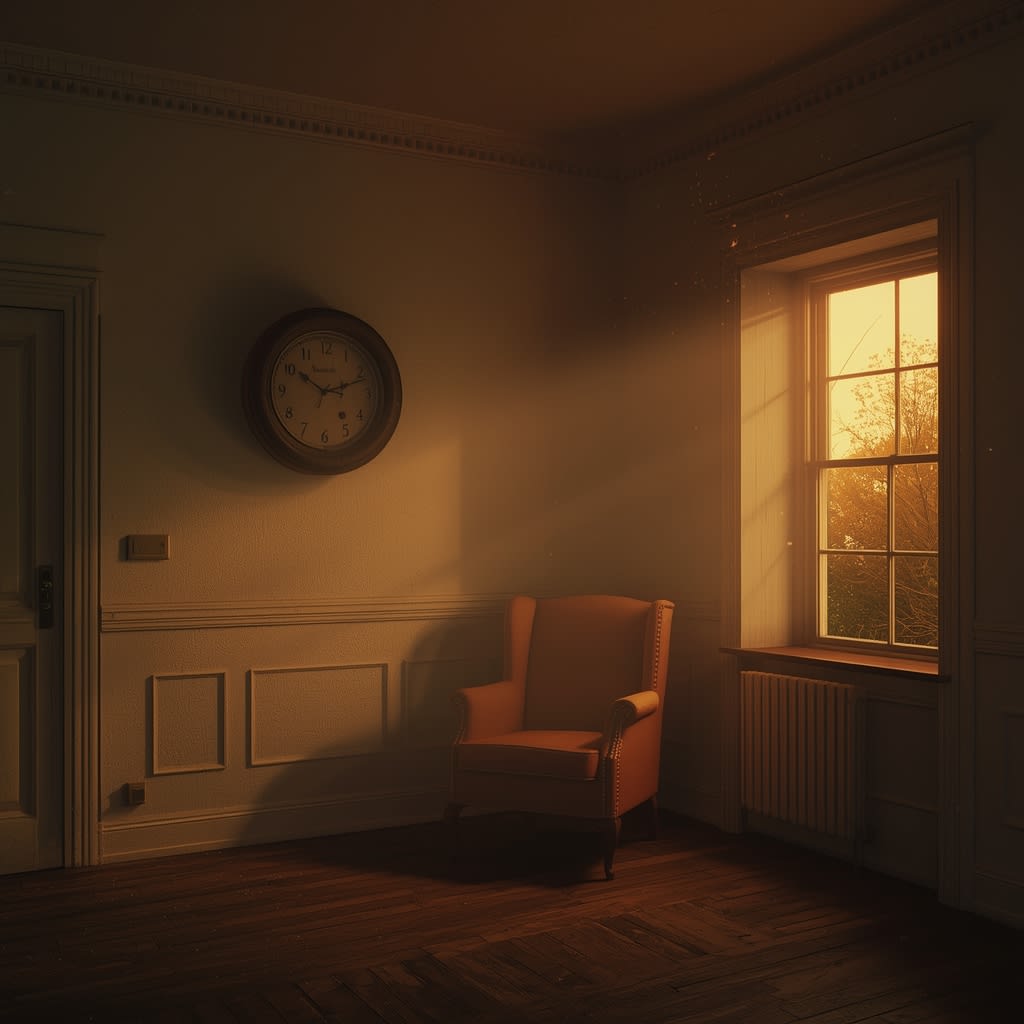
After the death of a very important person to me, I wrote this story. Grief alters how you perceive the world and teaches you that silence is not empty; rather, it is full of echoes of things we once cherished. This story is a quiet conversation between memory and the heart, where loss becomes a form of love. Description After his grandmother’s passing, a young man moves into her old house where silence hums with memories, clocks whisper lost time, and grief slowly turns into quiet love. A tender reflection on how loss teaches us to listen beyond words. A week after my grandmother's death, I moved into her house. Her scent, a light combination of rose powder and aged wood, was still present in the air. The curtains barely moved, the clocks on the walls had all stopped at different hours, and the house felt like it was holding its breath.
She had lived here for over fifty years, and every corner whispered her presence. With a pale chip on the rim, her favorite teacup was still on the shelf. Her knitting basket waited beside the armchair. Even the hallway light flickered the same way it used to when she’d hum her evening prayers.
I told myself I came only to clean, to pack things, to make the place ready for selling. However, I knew that wasn't true. I wasn’t ready to let go — not yet.
I had trouble sleeping the first night. The silence was strange, not peaceful but full — as if the walls themselves remembered conversations, laughter, and sighs. Lying on the creaky bed, I thought I heard faint humming coming from the next room. It was her melody, a straightforward lullaby she used to sing to me when I was young. My heart raced as I sat up. The sound stopped. I waited, but the house returned to its stillness. “It’s just my mind,” I whispered. “Just memory playing tricks.”
But the next night, it happened again.
This time, I adhered to it. Through the kitchen and into the sitting room, the humming appeared to float. The dust moved like tiny spirits as the moonlight entered through the window. The sound grew softer, then faded completely.
Her previous music box, the one with the missing ballerina, was on the table. It hadn’t worked in years, but when I lifted the lid, the tune began to play on its own, fragile and uneven.
I found myself talking to her picture on the mantelpiece the next morning. “Did you know I got the job?” I asked, half-smiling. "Finally, beta, it's about time you stopped worrying so much," you'd say. The response was silence, but somehow it wasn't empty. Warm and almost listening, it was. Sitting in her chair and reading her favorite book, I started making tea in her old kettle. At that point, the house was less lonely. Every small sound — the kettle’s whistle, the chair’s creak, the rustle of the curtains — seemed alive, filled with echoes of her habits.
Each sound was a memory. Her absence was made clear with each silent pause. One afternoon, I opened the windows for the first time. The wind rushed in, stirring everything — papers fluttered, curtains swayed, and suddenly, one of her old letters fell from a book onto the floor.
It was written for me. The ink had faded, but the words were steady.
"Don't be sad, my dear child, if you ever come back to this house while I'm gone. You will be remembered by the walls. The floor will remember your footsteps. I hope you listen to the quiet — it will tell you that love never leaves, it just changes form.”
I pressed the letter to my chest and let the tears come.
That night, the humming returned — soft, steady, and clearer than before. This time, I didn’t follow it. I just sat there and listened.
It wasn’t haunting anymore. It was comforting, like being wrapped in memory. The air seemed to breathe with me. The ticking clocks that had once stopped began to click faintly, one by one, as if the house itself had woken from sleep.
I didn't feel alone for the first time since the funeral. The following days were quieter but not empty. I learned that grief isn’t just sadness — it’s a language, one that speaks in echoes and pauses. It can be heard in the familiar creak of a floorboard, in the faint aroma of tea leaves, and in the song that continues to play even when no one is singing. When people die, we think they leave us behind. But maybe, it’s the other way around — maybe they stay, and it’s we who wander away.
That house, which once felt like a grave of memories, became a place of gentle reminders. Her blessing came with every morning light that came through the window. Every hush between sounds carried her voice.
Weeks later, when I finally packed my bags, I didn’t feel heavy. I turned off the lights, closed the door, and stood for a moment outside. The air was still and soft.
Then I heard it the faintest hum, drifting through the window. Her tune.
I smiled.
“I hear you, Nani,” I whispered. "I'm thankful." And as I walked away, I realized something beautiful silence isn’t the absence of sound; it’s the presence of everything worth remembering.
About the Creator
Keep reading
More stories from Noor Ul wahab and writers in Humans and other communities.
The Night When I Lost Everything
Note to the Author: This is a story I wrote from a place of deep healing and pain. It’s not just about loss — it’s about finding light after the darkest night. Some of it is based on my own journey, while others are based on the struggles we all face in silence. I hope these words help you feel a little less alone if you've ever lost someone. The night was colder than usual. While the city outside my window shone like a million broken stars, there was only darkness inside my heart. The night I lost everything I loved was the night I will never forget. As if the world was aware that something terrible was about to occur, the air was still and almost too quiet. I can recall waiting for a call while sitting by the window. My hands trembled as I held the phone, refreshing the screen again and again, praying for one more message, one more chance.
By Noor Ul wahab3 months ago in Humans
How Astrology Affects Twin Flame Attraction and Separation Cycles.
Twin flame attraction feels instant and consuming. Separation feels confusing and painful. Astrology explains why these cycles repeat. Planetary movements influence timing, emotional intensity, and personal growth. You experience pull and distance through energetic patterns reflected in birth charts and transits.
By Wilson Igbasia day ago in Humans



Comments
There are no comments for this story
Be the first to respond and start the conversation.