
The Secret You Didn’t Know About How Humans See Color
The Hidden Truth Behind How Humans See Color That Will Surprise You

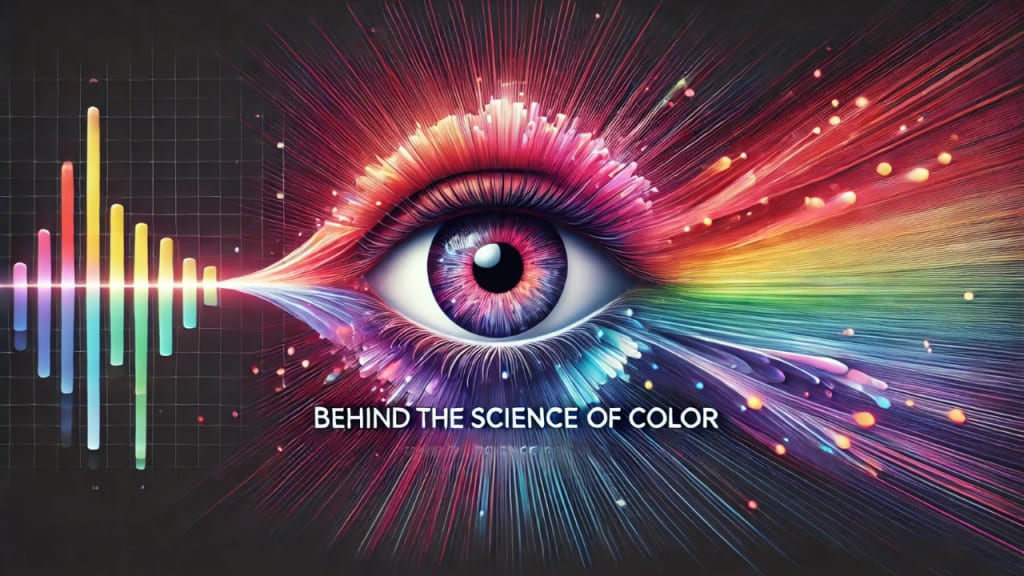
Color. It’s something we see every day, and we assume we understand it. After all, blue is blue, right? Red is red, right? Wrong! The way humans see color is far more complex—and far more fascinating—than we realize. In fact, there’s a whole hidden world of secrets about how we perceive color that you probably didn’t know.
Ready to have your mind blown by the science behind it? Grab your favorite shade of blue and let’s dive in.
1. It’s Not About Color—It’s About Light
Okay, we’ve all learned in school that colors come from light, right? But the truth is even weirder than that! Colors don’t exist as "things" in the way we perceive them. What we’re actually seeing is the result of light waves bouncing off objects and entering our eyes.
Here’s the kicker: the color we see is actually the light that is reflected. For example, when you look at a red apple, it’s not that the apple is inherently red. It’s reflecting red wavelengths of light and absorbing the rest. The apple itself is just a surface, while the light does all the magic.
Why It’s Cool: So, next time you’re holding a red apple, remember—you’re not seeing red; you’re seeing light’s beautiful dance with your eyes. The apple is just there, playing its part!
2. The Mystery of Cones: How Our Eyes Actually “See” Color
Okay, so now you know light’s doing all the heavy lifting. But what exactly happens when light hits our eyes? Well, that’s where things get really cool. Inside your eyes, you have cells called “cones” that are responsible for color vision. These cones are like little color detectors, and they come in three varieties: red, green, and blue.
When light hits your retina, these cones are activated, and they send signals to your brain. But here’s the plot twist: humans aren’t equally sensitive to all colors. Our eyes are much more sensitive to green light than, say, blue or red.
Why It’s Cool: Our brains are doing a ton of work behind the scenes to make sense of the colors we see—and it turns out, our eyes are wired to prefer certain wavelengths of light. So next time you look at a sunset, thank your cones for making those colors pop.
3. Color Blindness: The Color You Can’t See
Color blindness is a condition that affects millions of people around the world. But did you know that there are different types of color blindness? Most people think of it as just "seeing the world in shades of gray," but in reality, it’s much more complicated. People with color blindness have trouble distinguishing certain colors, especially red and green.
This happens because one or more of their cones don’t work properly. For example, if someone is missing the cone that detects red light, they might have difficulty seeing red and green in the same way that those with typical vision do.
Why It’s Cool: Color blindness isn’t just a quirky difference in perception—it’s a reminder that what you see isn’t necessarily what everyone else sees. It’s a fascinating look at the diversity of the human experience and how our biology shapes our perception of the world.
4. The Science of Optical Illusions: Color Perception at Play
Now, let’s talk about something that’s just downright fun: optical illusions. Ever looked at a picture and thought you saw one color, only to be told it’s actually a completely different shade? That’s the magic of color perception—and it’s not just a trick of the light.
Take the famous "dress" debate from a few years ago. Was it white and gold or blue and black? The color you perceived depended on how your brain interpreted the lighting and contrast in the image. Your brain was filling in the gaps based on previous experiences and expectations. So, in reality, there was no single "correct" answer.
Why It’s Cool: Optical illusions show us that our brains are constantly trying to make sense of the world, and sometimes, they get creative with how they do it. Color perception isn’t just about science—it’s about how our brains process information and decide what we "see."
How Do We Actually See Color?
5. The Role of Culture in Color Perception
Here’s a fun fact: your culture can actually influence how you see color! That’s right. In some cultures, certain colors have symbolic meanings, while others might have a whole different set of associations. In fact, some languages don’t even have words for certain colors. Ever heard of "diano" or "midi"? These are color terms from different cultures that don’t exactly match what we call colors like red or green.
Researchers have found that people from different cultures can perceive color in unique ways, based on their language, environment, and cultural practices. For example, in some Indigenous cultures, colors are categorized differently than in Western societies, leading to subtle variations in perception.
Why It’s Cool: It’s a reminder that color isn’t just a biological process—it’s also a deeply cultural one. Color perception is shaped by where we live, how we communicate, and the symbols that are important to us.
6. The Impact of Aging on Color Vision
Here’s a plot twist you didn’t see coming: as you age, your color vision changes. Thanks to the natural aging process, your lenses become more yellowed and cloudy, which can affect how you perceive colors. As a result, older adults might have trouble seeing blues and greens as clearly as younger folks.
Additionally, some research suggests that older adults are more likely to experience a phenomenon called "color desaturation," where colors appear duller or faded.
Why It’s Cool: It’s kind of like your eyes get a natural pair of sunglasses over time. While it might be frustrating to lose some of that vibrant color perception, it’s also just another reminder of how complex our senses really are.
7. Can Animals See Color the Same Way Humans Do?
It turns out humans aren’t the only ones with color vision. But do animals see the world the same way we do? Not at all! Some animals, like dogs, have limited color vision and mainly see the world in shades of blue and yellow. Others, like bees, see ultraviolet light, which is completely invisible to us.
The differences in color perception among animals highlight just how unique our experience of the world really is. Your dog might be staring at the same red ball you are, but they’re not seeing the same thing!
Why It’s Cool: Color is just one way that we interpret the world around us—and animals, with their different sensory systems, see things in ways we can’t even imagine. It’s like a whole new layer to the mystery of the universe!
Conclusion: The Colorful World Around Us
Color is one of the most wondrous things about the human experience. But the next time you look at a rainbow or a flower, remember—what you’re seeing isn’t as straightforward as it seems. From the way our cones detect light to how our brains interpret that information, there’s a world of complexity behind the colors we take for granted.
So go ahead, look at the world through new eyes. The secret of how humans see color isn’t just fascinating—it’s a reminder that perception itself is a journey, and we’re all just along for the ride.
About the Creator
Keep reading
More stories from Marveline Merab and writers in Humans and other communities.
If a Man Uses These 8 Phrases in a Conversation, He Lacks Wisdom and Maturity
Conversations can reveal a lot about a person—especially their level of wisdom and maturity. While everyone might have an off day, consistently using certain phrases can be a red flag that someone hasn’t quite graduated from the school of life. Whether it’s dismissive comments, signs of insecurity, or a lack of self-awareness, the words we choose can either elevate us or expose our shortcomings.
By Marveline Merababout a year ago in Humans



Comments (1)
I see colors everywhere! Great work! Fantastic!