
"The Secret Life of Butterflies: Nature’s Winged Jewels and Their Role in Our World"
Few sights in nature can rival the beauty of butterflies — delicate wings painted in dazzling colors, dancing effortlessly in the air. Yet behind their fragile appearance lies an extraordinary story of transformation, survival, and purpose. This is not just a tale of beauty; it’s about why these creatures exist, how they shape ecosystems, and the surprising ways they benefit humankind.

Butterflies are among the most captivating insects on Earth. Their vivid patterns, graceful flight, and fascinating life cycle have inspired art, literature, and scientific curiosity for centuries. But beyond their beauty, butterflies play a vital role in maintaining the balance of nature.
The Life Cycle of a Butterfly
The journey of a butterfly begins in the most humble form — as a tiny egg, usually laid on the underside of leaves. From this egg hatches a caterpillar (larva), whose primary task is to eat and grow. Caterpillars can increase their body size several thousand times in just a few weeks.
After reaching full size, the caterpillar enters the pupa stage, forming a chrysalis. Inside, one of nature’s most remarkable transformations takes place: tissues break down and reorganize into wings, legs, and antennae. This process, known as metamorphosis, ends with the emergence of the adult butterfly — a symbol of renewal and change.
Why Butterflies Exist
Every creature in nature has a role, and butterflies are no exception. They are crucial pollinators, transferring pollen from flower to flower as they feed on nectar. This process helps plants produce fruits and seeds, sustaining countless species in the food chain — including humans.
Butterflies are also an important food source for birds, reptiles, and small mammals. In the delicate web of life, their presence ensures that energy flows from plants to higher predators. Without butterflies, many ecosystems would lose stability.
The Science Behind Their Colors
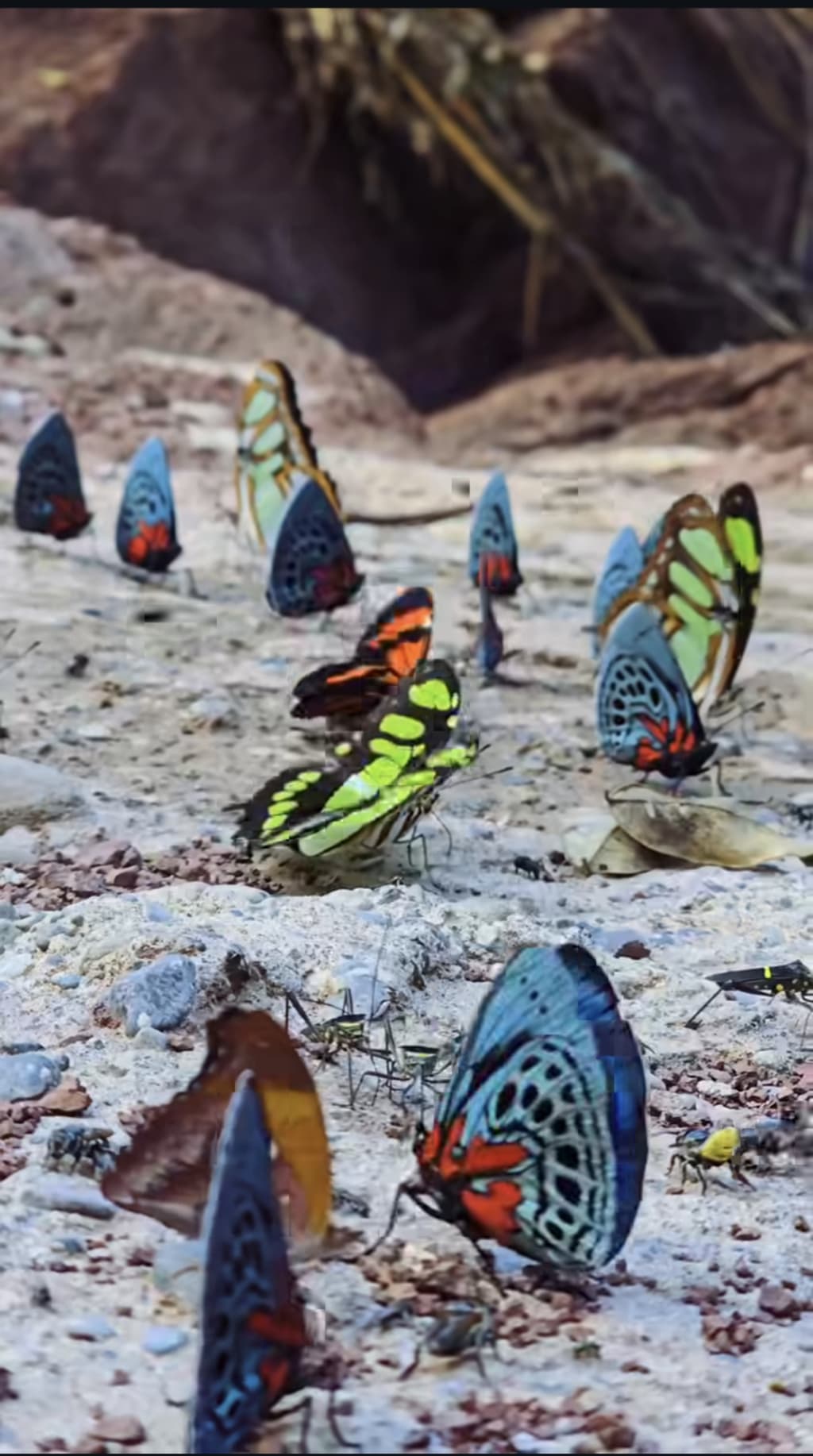
Butterfly wings are covered in tiny scales that reflect light in unique ways. Some colors come from pigments, while others result from microscopic structures that bend and scatter light, creating iridescent effects. These colors serve multiple purposes: attracting mates, warning predators, and even camouflaging from danger.The butterflies in the image above showcase this diversity — blues, greens, oranges, and yellows all serve as nature’s visual language.
The butterflies in the image above showcase this diversity — blues, greens, oranges, and yellows all serve as nature’s visual language.
How Butterflies Benefit Humans
While their role as pollinators directly aids agriculture and food production, butterflies also serve as environmental indicators. Because they are sensitive to temperature, pollution, and habitat changes, their presence (or absence) tells scientists about the health of an ecosystem.
Additionally, butterflies have inspired advances in technology. For example, research into the microscopic structure of butterfly wings has led to innovations in anti-counterfeiting technology, solar panels, and color production without dyes.
From a cultural perspective, butterflies symbolize hope, transformation, and resilience. Many communities see them as messengers or omens, connecting human emotion to the cycles of nature.
Why They Gather in Groups
In the image shown, the butterflies are not just randomly resting. Many species gather in groups for mud-puddling, a behavior where they extract minerals and salts from moist soil. These nutrients are essential for reproduction and are often passed from males to females during mating.Protecting the Future of Butterflies
Unfortunately, butterfly populations are declining due to habitat loss, pesticide use, and climate change. Planting native flowers, reducing chemical use, and preserving natural habitats are simple yet powerful ways to help these delicate creatures thrive.
Conclusion
Butterflies are more than just beautiful insects — they are vital threads in the fabric of life on Earth. From pollination to environmental monitoring, their presence enriches both the natural world and human life. By protecting them, we not only preserve beauty but also safeguard the health of our planet.
So, the next time you see a butterfly, remember: it’s not just a fleeting splash of color — it’s a living symbol of transformation, resilience, and the delicate balance of nature.
About the Creator
Deniz
Few sights in nature can rival the beauty of butterflies — delicate wings painted in dazzling colors, dancing effortlessly in the air. Yet behind their fragile appearance lies an extraordinary story of transformation, survival, and purpose.



Comments
There are no comments for this story
Be the first to respond and start the conversation.