
The Search for Life Beyond Earth: Investigating the Potential for Life on Mars
Uncovering the Latest Discoveries and Hypotheses on Mars' Habitability and the Possibility of Microbial Life

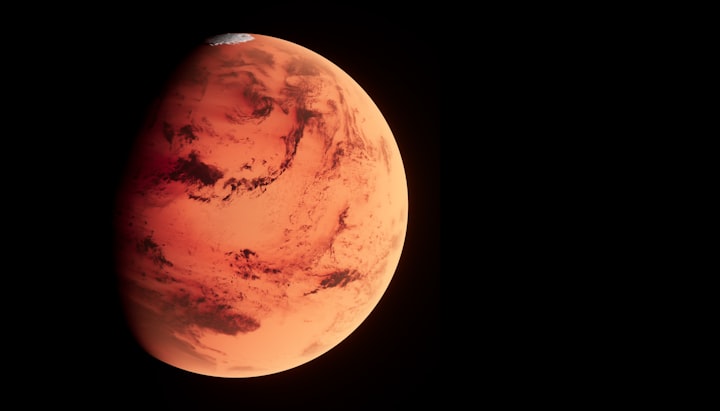
The Red Planet: Is There Life on Mars?
For centuries, Mars has been a subject of fascination for scientists and the public alike. The fourth planet from the sun, Mars has long been thought to have the potential for supporting life, with its relatively moderate temperatures, the presence of water, and the possibility of a protective magnetic field. In recent years, we have gathered a wealth of new information about Mars, raising exciting new questions about the possibility of life on the red planet.
One of the most compelling pieces of evidence for the possibility of life on Mars is the discovery of liquid water on its surface. In 2015, NASA's Mars Reconnaissance Orbiter confirmed the presence of liquid water flowing intermittently on the planet's surface. While the amount of water detected was small, the discovery was significant because water is one of the essential ingredients for life as we know it.
In addition to liquid water, there are other potential sources of energy and nutrients on Mars that could support life. For example, the planet's subsurface could contain pockets of liquid water that could serve as habitats for microbial life. There is also evidence that Mars may have once had a thicker atmosphere, which could have provided protection from harmful radiation and other hazards.
While there is still much that we do not know about Mars, recent studies have suggested that the planet's surface may be more habitable than previously thought. In 2018, scientists discovered that Mars has large reservoirs of brine, or salty water, just beneath its surface. These brine deposits could provide a source of nutrients and energy for microbes that could survive in extreme environments.
Another factor that could contribute to the possibility of life on Mars is the planet's geological activity. Mars has a history of volcanic activity, and recent studies suggest that there may still be active volcanoes on the planet. These volcanoes could provide geothermal energy that could support microbial life in subsurface habitats.
Despite these promising signs, it is important to note that the current evidence for life on Mars is limited, and much more research is needed to confirm or refute these hypotheses. Additionally, any life that does exist on Mars would likely be in the form of simple microorganisms, rather than complex organisms such as plants or animals.
Furthermore, the harsh conditions on Mars make it challenging for life to survive. The planet's temperature can range from -143 degrees Celsius at night to -20 degrees Celsius during the day, and its atmosphere is thin and contains high levels of radiation. In addition, the lack of a magnetic field means that the planet is vulnerable to solar winds and other hazards.
Despite these challenges, the possibility of life on Mars remains an exciting area of research. As we continue to explore and study the red planet, we may uncover new evidence that supports the existence of life, or we may find that Mars is indeed a barren and lifeless world.
In conclusion, the question of whether there is life on Mars is one of the most intriguing and important questions in modern science. While the current evidence for life on Mars is limited, recent discoveries and hypotheses suggest that there may be some potential for microbial life on its surface and subsurface habitats. The discovery of liquid water, the presence of brine deposits, the potential for geothermal energy, and the possibility of a thicker atmosphere all contribute to this possibility. However, much more research is needed to confirm these hypotheses, and any life that does exist on Mars would likely be in the form of simple microorganisms. As we continue to explore and study the red planet, we may uncover new insights into its potential for supporting life, and this knowledge could have significant implications for our understanding of the universe and our place within it.
About the Creator
Michael Cambridge
This writer brings characters and worlds to life with vivid descriptions and compelling narratives. They transport readers to different times and places, leaving them longing for more.
Keep reading
More stories from Michael Cambridge and writers in Humans and other communities.
The Moon's Potential for Life: Exploring the Possibilities
The Possibility of Life on the Moon: Exploring the Potential The moon has always been a subject of fascination for humanity, with countless explorations and missions dedicated to studying its features and potential. While the moon is often thought of as a barren and lifeless world, recent research suggests that there may be some potential for life on its surface.
By Michael Cambridge3 years ago in Humans
I am not alone.
Billu Bhai’s Realization Category: Human Interest / Life Lessons His real name was Bilal, but everyone in the village called him Billu Bhai. He was the eldest child in a large family, with parents, siblings, and relatives all living together. Growing up, Bilal had been quite weak, both physically and mentally. His childhood was marked by illness, which affected his ability to concentrate in school. Learning was a constant struggle, and he barely managed to complete his education up to the tenth grade. Now, at twenty-five, Bilal was hardworking, reliable, and always willing to help others. His father had given him a rickshaw, which became his source of daily income.
By Sudais Zakwan4 days ago in Humans



Comments
There are no comments for this story
Be the first to respond and start the conversation.