
The Science of Repressed Anger
Why “Good Girls” Explode In Silence

I think we all have lost count on the times we’ve heard:
“Don’t be too emotional.”
”Calm down, you don’t want to embarrass yourself.”
”Be the bigger person.”
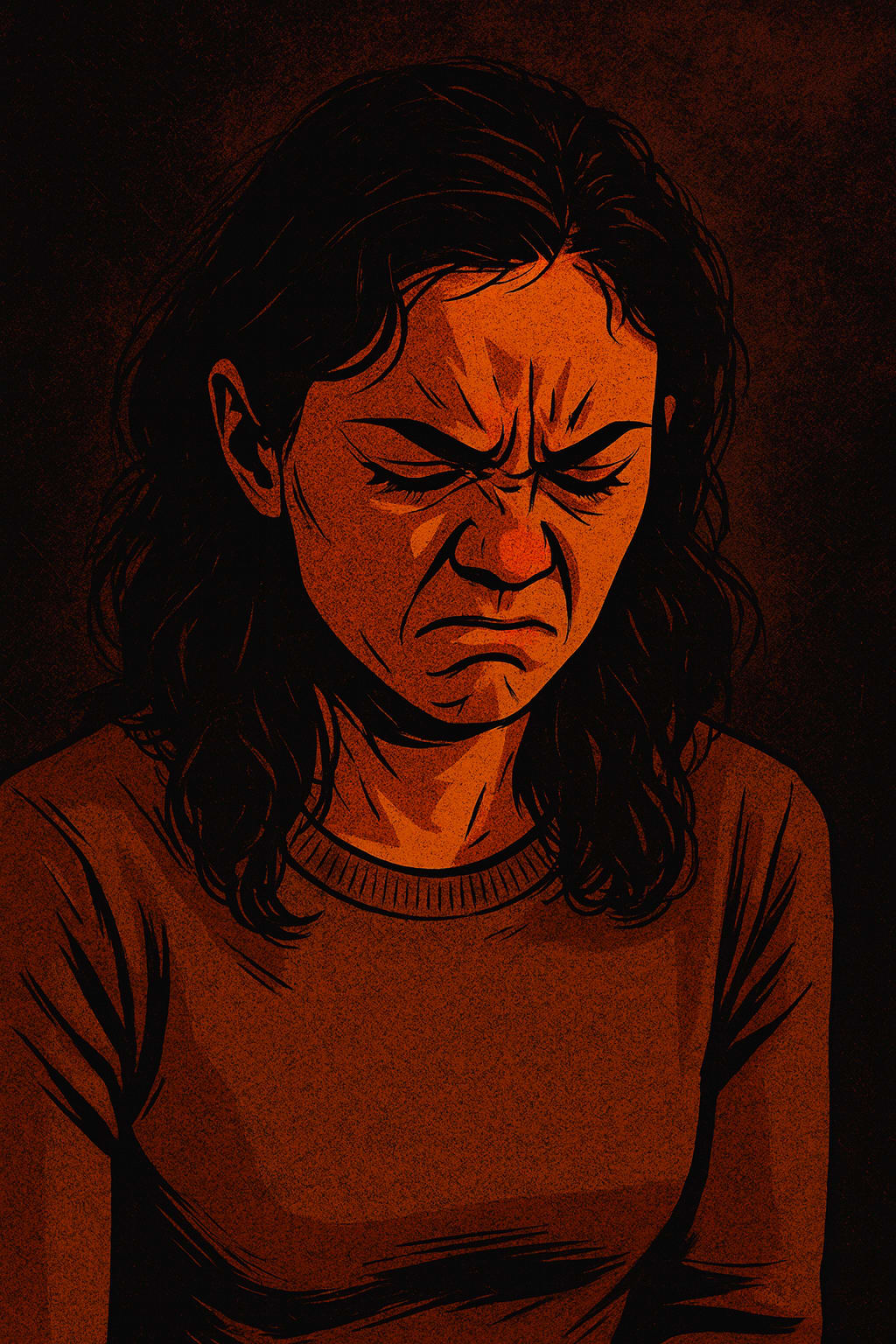
Women are trained to just swallow their rage before we can even put a name to it. We’re told to be agreeable, forgiving, and endlessly patient. But science (and lived through experience) tells a different story: repressed anger doesn’t disappear. It festers. It boils. It mutates.
And eventually…it explodes.
The Biology of Bottled Up Rage
When you hold in anger, your body doesn’t simply forget about it. Instead, it activates your stress response system. Cortisol (the stress hormone) floods your body. Your heart rate then begins to spike. Your blood pressure climbs. Over time, this chronic stress has been linked to:
Increased risk of heart disease
Weakened immune system
Higher rates of depression and anxiety
In other words, being the “good girl” comes at a cost. Unfortunately, that cost is your health.
A 2023 study in Psychology Science found that people who consistently suppress emotions experience fewer social connections and greater psychological distress. Suppression doesn’t just mute our anger—it silences our ability to connect authentically.
What Soft Rage Looks Like
Not all rage is loud. Soft rage is the silent storm that brews underneath:
Smiling through gritted teeth at work when a coworker takes credit for your idea.
Nodding in agreement when your partner dismisses your feelings.
Saying “it’s fine” when your body is screaming that it is not.
Soft rage won’t have you slamming doors or shouting at the rooftop. It slowly simmers, which is why it can be a dangerous thing. It won’t announce itself until it has already planted a root within you.
Why Women Carry It Differently
Men are often expected (even encouraged…but that’s for another time) to express anger. Women, on the other hand, are punished for it. Society labels us “dramatic”, “biter”, or just plain “angry” if we dare to raise our voices. We adjust, and we bury.
But here’s the truth that they won’t speak about: anger is data. It signals when our boundaries are crossed, when our needs are not being met, or when something is unjust. Ignoring those emotions is like ignoring an ongoing smoke alarm. The fire won’t go away just because you pretend it isn’t there.
Healing Without Silencing Yourself
So, how can you heal rage without erasing it?
Name It: Rather than saying, “I’m fine,” try “I feel overlooked and that makes me upset.”
Move It: Rage is energy. Try somatic release (shaking, running, dancing, or even screaming).
Write It: Journaling helps untangle the knots of suppressed emotion. Write unfiltered, then burn or shred the pages if needed. It isn’t necessary (sometimes I like to be able to look back at my progress from old entries).
Say It Small: You don’t have to be confrontational to be vocal. Practice micro-boundaries like “I need a moment to respond,” or “That didn’t sit right with me.”
Healing doesn’t mean be passive—It means transforming your rage into something purposeful, rather than being self-destructive.
Repressed anger isn’t weakness, either. It’s survival in a society that told us to stay small. But silence is a heavy price to pay for peace, wouldn’t you agree? Your rage is proof that you still care, and that your body refuses to be ignored. That you are alive.
Let’s talk:
What’s one way you’ve hidden your rage this week? Drop it in the comments, I promise you’re not alone. I’ve held in some rage myself.
Soft Rage Society isn’t just another newsletter or series of articles—it’s a space where women can be honest about their anger, healing, and power. I am building a community where we don’t have to shrink ourselves . This is about more than just words, it‘s about connection as well. Subscribe, share, and step into a growing circle of women who refuse to silence themselves.
About the Creator
Jassy La’Nae
A Voice That Just Won’t Stop Evolving…
I write about rage, healing, and the world that is constantly changing around us. I explore the emotions we bury, the culture that shapes us, and the healing that comes with living in truth.
Keep reading
More stories from Jassy La’Nae and writers in Humans and other communities.
Girlhood Was ROBBED from Us
What Happens When You Don’t Get A Childhood? Girlhood Vs. Reality Girlhood was not all about ribbons and sleepovers for me growing up. Girlhood was about being a girl…in the hood. A girl always in survival mode, learning to “code switch” around others I didn’t feel safe or comfortable near. I learned at a very young age that I had to figure things out for myself, but will be punished for making a mistake. I’ve watched others’ children for long periods of time while they went out and partied because I was more “mature”. I have experienced the high anxiety of walking into a corner store with twelve eyeballs staring me down and asking me for my name. Oh, and I have dealt with having to hold onto traumatic secrets to protect family members. I’m sure all of us can at least put one finger down for any of those things I have just mentioned.
By Jassy La’Nae 4 months ago in Humans
So You Decided To Become a Nurse Practitioner:
So you decided to become an "Advanced Practice" nurse. Congratulations!... is what I would say if this was a good idea. Grad school? In this economy? What were you thinking? Likely it was something along the lines of either 1) “I've seen these other chucklefucks do it— Why can't I?” or even 2) “I've got a nice career, I should shake it up. I miss feeling like I have no clue what I'm doing.”
By Sandor Szaboa day ago in Fiction




Comments
There are no comments for this story
Be the first to respond and start the conversation.