
The Rise of Women’s Sports Toward Excellence
The Rise of Women’s Sports: Beyond Equality

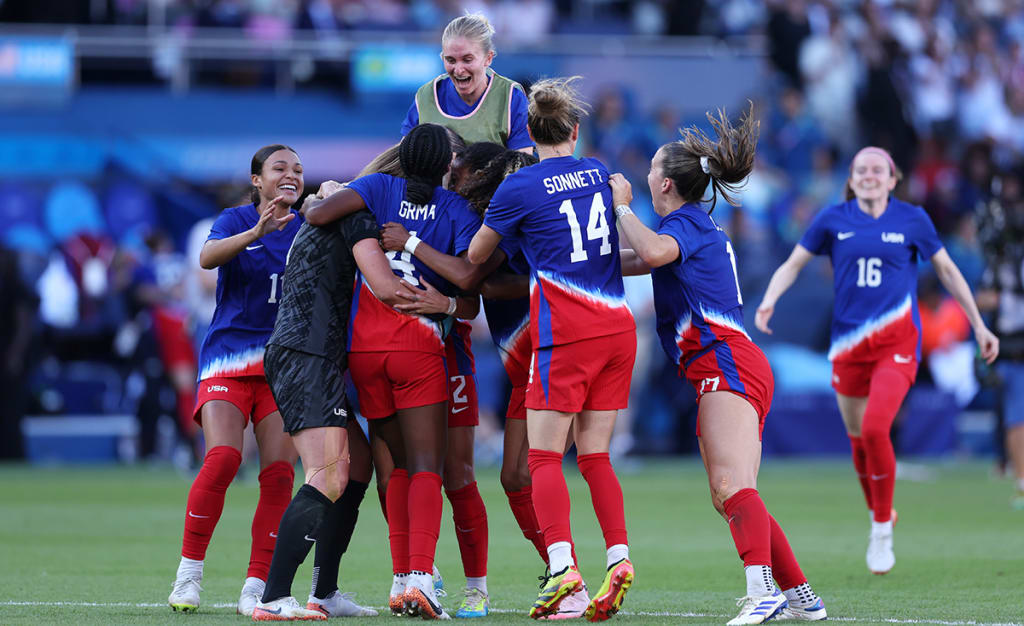
For decades, the story of women’s sports has been told through the lens of equality—access, pay, and recognition. But today, a new narrative is emerging. Women’s sports are not just catching up; they’re thriving, redefining competition, leadership, and athletic identity on their own terms. The rise of women’s sports is no longer only about fairness—it’s about excellence.
From Inclusion to Influence
For most of modern sports history, women had to fight simply for the right to play. The conversation began with access—equal opportunities, fair funding, and the removal of restrictions that limited participation. Laws like Title IX in the United States and international advocacy opened doors that had long been closed. Those early efforts were about inclusion, about proving that women belonged on the same courts, fields, and tracks as men.
But inclusion was only the first chapter. What’s happening now is transformation. Women’s sports have moved from existing within the margins to actively shaping the culture of global athletics. Athletes like Serena Williams, Simone Biles, and Megan Rapinoe don’t just compete—they influence. Their reach extends beyond their sports, affecting how society talks about health, equality, leadership, and resilience.
The shift from inclusion to influence means women are no longer asking for space; they’re defining it. Leagues, tournaments, and sponsorships are evolving in response to women’s growing presence and power. Broadcasting deals are expanding, and record-breaking attendance figures are challenging old assumptions about who drives sports markets.
This new era isn’t about proving worth—it’s about setting standards. Women athletes are not just participating in systems designed by others; they are rewriting the structure itself. Their influence reaches into coaching, management, and sports governance, creating models of leadership that prioritize collaboration, community, and integrity.
The rise of women’s sports marks a deeper change in how society understands success. It’s no longer about inclusion for the sake of equality—it’s about influence that reshapes the landscape. Women have moved from being guests in the arena to being architects of it, proving that the future of sports will not just include them—it will be built around their impact.
The Power of Representation
Representation in sports has always been about more than visibility—it’s about possibility. When young girls see women excelling in arenas once reserved for men, something shifts in how they imagine their own futures. Every televised game, championship celebration, or medal ceremony becomes proof that ambition and excellence are not limited by gender.
For generations, women athletes existed in the shadows of their male counterparts, often dismissed as novelties or exceptions. Today, they are redefining what athletic greatness looks like. Stars like Naomi Osaka, Alex Morgan, and Iga Świątek aren’t just admired for their skill—they represent entire movements of confidence, equality, and perseverance. Their presence tells young athletes everywhere: “This path is real, and it belongs to you too.”
Representation also changes how society values women’s work. It normalizes strength, competition, and ambition in female form. The more people see women commanding stadiums, signing sponsorship deals, and shaping sports culture, the harder it becomes to deny their legitimacy. Media coverage, once a barrier, is now becoming a bridge. Social platforms give women athletes direct access to their audiences, allowing them to tell their stories without filters or stereotypes.
But the power of representation extends beyond sports. It influences leadership, teamwork, and self-perception across all areas of life. Seeing women win on the global stage challenges outdated ideas about capability and authority. It inspires not only future athletes but also young women in classrooms, boardrooms, and creative fields.
True representation is not token inclusion—it’s normalcy. When women’s achievements in sports are seen as standard, not special, the culture changes. Representation empowers by showing what’s already possible, and in doing so, it plants the seeds for the next generation to go even further.
Economic and Structural Momentum
The rise of women’s sports is no longer just a cultural movement—it’s an economic force. What was once dismissed as a niche market is now a rapidly growing industry, backed by hard data and undeniable momentum. Attendance records are being broken, broadcasting deals are expanding, and global brands are investing in women’s leagues not as charity, but as smart business.
The Women’s World Cup, WNBA, and other major events have proven that the demand is real. Viewership numbers have surged, merchandise sales are climbing, and sponsorships are shifting from one-off campaigns to multi-year commitments. Investors are beginning to recognize what fans have known for years: women’s sports have commercial potential equal to their entertainment and emotional value.
Technology has accelerated this shift. Streaming services and social media have leveled the playing field, allowing women’s sports to reach audiences directly—without waiting for traditional broadcasters to grant them airtime. Athletes and teams now control their own narratives, building loyal fan bases through authenticity and consistent engagement. This direct connection with supporters has created a sense of community that’s often deeper than in men’s sports, where marketing can feel impersonal or corporate.
At the structural level, organizations are finally adapting. More equitable pay models, improved facilities, and professional management are becoming the norm rather than the exception. Grassroots programs are expanding, giving young girls real pathways to professional careers that didn’t exist a generation ago.
This economic and structural momentum marks a turning point. Women’s sports are no longer framed as “catching up”—they’re defining their own markets and audiences. The foundation being built today isn’t just for parity, but for sustainability. The numbers are clear, but the message is clearer: women’s sports aren’t a side story in the industry—they are its future growth engine.
Beyond Equality: The Pursuit of Mastery
The conversation around women’s sports once centered on fairness—equal pay, equal access, equal opportunity. Those battles were vital, but now a deeper story is unfolding. The focus is shifting from equality to mastery, from proving legitimacy to pursuing excellence on its own terms. Women’s sports are no longer defined by comparison to men’s—they are carving out their own distinct standards of skill, creativity, and competition.
In basketball, soccer, and tennis, mastery looks different but no less compelling. The women’s game often emphasizes strategy, teamwork, and precision over pure athletic dominance. These are not limitations—they’re refinements. Athletes like Breanna Stewart, Alexia Putellas, and Ashleigh Barty showcase forms of technical intelligence and mental resilience that elevate the sport itself. The artistry of their play reflects years of evolution, training, and innovation that stand apart from any need to “catch up.”
This pursuit of mastery also extends off the field. Women athletes are redefining professionalism—balancing sport with motherhood, activism, and education without losing focus or competitiveness. Their discipline is reshaping what it means to be elite, proving that mastery includes not just physical achievement, but emotional and intellectual depth.
As women’s sports mature, their benchmarks of greatness become self-sustaining. Young athletes grow up studying the legends who came before them, not using men’s statistics as the gold standard. This shift represents independence—the point at which a movement becomes a discipline of its own.
Beyond equality lies something far more powerful: the freedom to excel without explanation. Mastery is not about comparison but about potential, and women’s sports are showing the world that excellence doesn’t need permission—it just needs opportunity, vision, and time to grow into its full form.
The Cultural Shift: Redefining Greatness
The rise of women’s sports has done more than open doors—it has redefined what greatness looks like. For much of history, athletic greatness was measured in strength, dominance, and endurance—qualities often framed in traditionally masculine terms. But as women’s sports have flourished, a broader, more human picture of excellence has emerged—one that values skill, resilience, empathy, and leadership just as highly as raw power.
Greatness today is not just about medals or statistics. It’s about influence. Athletes like Serena Williams, Simone Biles, and Megan Rapinoe have expanded what it means to be a champion. They’ve shown that greatness can coexist with vulnerability, that taking a stand off the field can matter as much as winning on it. Their stories blend performance with purpose, rewriting the narrative that athletes should only be defined by competition.
This shift has ripple effects far beyond sports. As women lead through authenticity, they challenge the long-held belief that success must come at the expense of identity or emotion. Strength, once narrowly defined, now includes the courage to speak, rest, and advocate for others. Greatness has become multidimensional—measured not only by victory but by the character displayed in pursuit of it.
Culturally, this change matters because it humanizes excellence. It makes achievement accessible and aspirational in new ways. Young athletes now grow up understanding that greatness doesn’t mean fitting an old mold—it means shaping a new one.
By redefining greatness, women’s sports have changed the language of success. They’ve proven that true excellence isn’t confined to records or rankings—it’s about impact, integrity, and the ability to inspire. In that redefinition, they’ve expanded not just what sports can be, but what greatness itself can mean for everyone.
The Road Ahead
The rise of women’s sports has brought undeniable progress, but the journey is far from over. While visibility and investment have improved, deeper structural and cultural challenges remain. The road ahead is about turning momentum into permanence—building systems that sustain growth, fairness, and opportunity for generations to come.
Pay inequality, limited media coverage, and outdated perceptions still cast long shadows. In many parts of the world, girls lack access to proper training, facilities, or professional pathways. Even at elite levels, women’s teams often operate with smaller budgets and less infrastructure. Overcoming these barriers will require more than enthusiasm—it demands policy, funding, and cultural will.
Yet, optimism is justified. The foundation being laid today is stronger than ever. Corporate partnerships are evolving from symbolic gestures to long-term commitments. Governments and sports federations are starting to recognize women’s athletics not as a side project, but as a vital part of national identity and economic growth. More importantly, fans are showing up—filling stadiums, subscribing to streams, and building communities around teams they believe in.
The next phase of progress will focus on development and innovation. That means creating better pipelines for young athletes, ensuring career longevity through healthcare and maternity support, and expanding opportunities in coaching and leadership. Representation in these areas will define the sustainability of women’s sports as much as performance does.
The road ahead isn’t just about achieving equality—it’s about redefining excellence and ownership. Women’s sports have proven they can inspire, lead, and deliver. The task now is to make that success the standard, not the exception. The momentum is here; the question is whether the world will continue to invest in it—not out of obligation, but out of recognition that the future of sports depends on it.
Conclusion: From Equity to Excellence
The rise of women’s sports represents one of the most meaningful cultural shifts of our time. It’s about more than parity; it’s about redefining the limits of human performance. When women compete, lead, and succeed on their own terms, the entire world of sport grows richer.
We are moving beyond the fight for inclusion and into an era of excellence—where women athletes are not compared to men, but celebrated as the best at what they do. And in that evolution, we’re witnessing not just progress for sports, but a reimagining of what greatness itself looks like.
About the Creator
Gus Woltmann
Hi everyone, nice to meet you all! I am Gus Woltmann, sports journalist from Toronto.
Keep reading
More stories from Gus Woltmann and writers in Humans and other communities.
The Rise of Micro-Sponsorships in Amateur Sports
In recent years, micro-sponsorships have emerged as a powerful trend reshaping the landscape of amateur sports. Traditionally, sponsorships were reserved for elite athletes and major teams, but micro-sponsorships are democratizing access to funding, offering everyday athletes new ways to support their passions.
By Gus Woltmann6 months ago in Humans
Bradley Cooper and the Quiet Weight of a Career Earned Slowly
Bradley Cooper is often described as a movie star, but that label only tells part of the story. What makes him interesting is not just fame or talent, but how long it took for both to fully arrive. His career did not explode overnight. It grew through small roles, awkward risks, public missteps, and quiet persistence. Over time, Bradley Cooper became someone audiences trust to feel deeply on screen. He carries sadness, confusion, love, and regret in ways that feel familiar rather than polished. That honesty is why his work stays with people. To understand Bradley Cooper today, you have to look at the slow road behind him, not just the spotlight he stands in now.
By Muqadas khan7 days ago in Humans


Comments
There are no comments for this story
Be the first to respond and start the conversation.