
"The Rise of Intelligence: How AI Is Quietly Rewriting Our Future"
From humble code to life-changing innovation—how Artificial Intelligence is transforming our everyday lives faster than we realize.

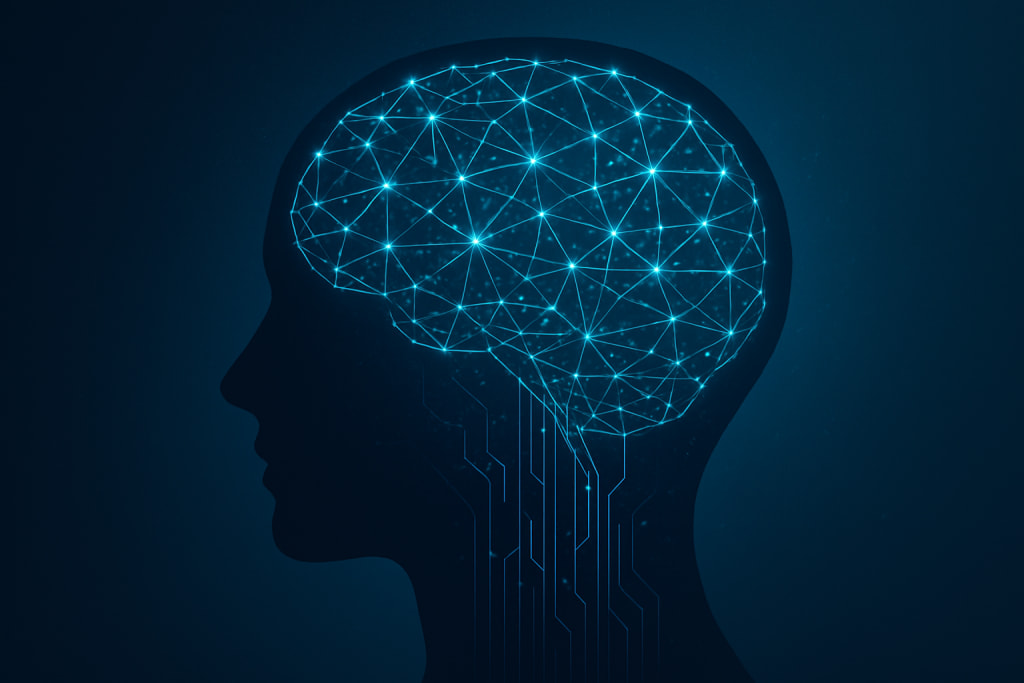
It started with a question.
Not a complex one—just a simple query typed into a search engine: “What is AI?” For most people, that was the beginning. But for the tech world, Artificial Intelligence was already in motion—quietly learning, adapting, and preparing to change everything.“Artificial Intelligence visualized through a neural brain network—where data meets design to shape the future.”
In 1956, a small group of scientists gathered at Dartmouth College for what would later be remembered as the birth of AI. Back then, it was a dream: machines that could "think" like humans. Fast forward nearly seven decades, and AI is no longer a sci-fi fantasy. It’s in your phone, your car, your home, your doctor’s clinic—even in your refrigerator.
But the real story of AI is not in the headlines about robots or self-driving cars. It’s in the subtle shifts happening in our everyday lives—shifts so seamless that many of us barely notice them.
---
The Invisible Assistant in Your Pocket
When Sarah, a freelance writer from London, struggled with her anxiety, she downloaded an AI-powered journaling app. She didn’t expect much. But the app not only tracked her moods—it gently guided her with personalized affirmations, daily reflections, and subtle nudges toward mindfulness. “It felt like talking to someone who really knew me,” she said.
This is the magic of AI. It doesn’t always wear a metallic suit or speak in a robotic voice. Sometimes, it whispers in algorithms—predicting your next move, offering suggestions before you ask, quietly learning who you are.
Even platforms like Spotify and Netflix use AI to analyze your behavior—your likes, skips, searches—and then curate content just for you. It’s personalization at a level human assistants could never achieve.
---
A Doctor That Never Sleeps
In the healthcare world, AI has become a silent hero. During the COVID-19 pandemic, AI models helped researchers predict outbreaks, design vaccines, and even detect infections from X-rays faster than doctors could.
One hospital in the Netherlands implemented an AI-based system that analyzed patient symptoms and prioritized emergency care. The result? A 22% drop in misdiagnosis and faster treatment for thousands of patients.
And it doesn't stop there. In India, AI is being used to detect diabetic retinopathy in remote villages where no eye specialists exist. In Africa, AI-powered chatbots provide mental health support in rural communities.
It wasn’t just smart—it was lifesaving.
---
But It’s Not All Sunshine and Silicon
While AI offers breathtaking potential, there’s a darker side. Facial recognition software has raised serious concerns about privacy and racial bias. AI-written news articles sometimes spread misinformation. And job automation is already impacting millions of workers around the globe.
In 2023 alone, nearly 300,000 jobs in the U.S. were reported to be affected by automation and AI tools. Blue-collar and administrative roles remain the most vulnerable.
Experts warn that if we don’t guide AI with clear ethics, empathy, and accountability, we could create tools we no longer control. Some even call for global regulations, similar to nuclear treaties, to ensure AI development remains human-centered.
But here’s the twist: AI doesn’t evolve on its own. We teach it. Every data point, every click, every line of code—we are the architects of its intelligence. And with that comes an extraordinary responsibility.
---
The Road Ahead: Coexistence, Not Replacement
Despite fears of AI replacing humans, the truth is more nuanced. AI is not here to take your job; it’s here to change how your job works.
A designer now uses AI to generate mockups in seconds. A teacher uses AI to tailor lessons for students with different learning styles. Even farmers use AI drones to monitor crops, identify diseases, and boost yields.
We’re not being replaced—we’re being augmented. And in this new world, those who adapt will not only survive—they’ll lead.
Companies that embrace AI are not just saving time—they’re unlocking creativity. AI takes over the repetitive work so humans can focus on strategy, storytelling, innovation, and empathy—qualities that no algorithm can fully replicate.
---
Final Thought: Intelligence Is Not Just Artificial—It’s Human, Too
AI is not just a technological shift; it’s a mirror. It reflects our curiosity, our fears, and our hopes. It learns from us—but it also teaches us. About speed. About precision. About possibility.
As we step into a future woven with algorithms and intelligence, one thing is certain: AI is not coming. It’s already here. And it’s not just changing the future—it’s changing you.
So next time you speak to Siri, use ChatGPT, or get a personalized Netflix recommendation—remember: You’re not just using AI.
You're shaping it.
---
About the Creator
Keep reading
More stories from Muhammad Adnan and writers in Humans and other communities.
Imran Khan: The Fearless and Honest Leader Pakistan Needed
In a world where political corruption and power-hungry leadership dominate the headlines, Imran Khan has stood as a rare example of integrity and courage. From being a world-class cricketer to becoming the 22nd Prime Minister of Pakistan, Imran Khan’s journey has been nothing short of legendary. What truly sets him apart, however, is not just his accomplishments—but his imandari (honesty) and bravery that have made him a symbol of hope for millions.
By Muhammad Adnan7 months ago in Humans
Home Wasn’t Safe, But It Was All I Had
Home Wasn’t Safe, But It Was All I Had Home is supposed to be where you exhale. Where your shoulders drop. Where your body knows it can rest. For me, home was never that place. Home was tension dressed up as normal. It wasn’t safe, but it was familiar. And for a long time, that had to be enough.
By Imran Ali Shah2 days ago in Humans



Comments
There are no comments for this story
Be the first to respond and start the conversation.