
The Rise and Fall of the Most Beautiful Ocean Liner Ever Built
How human ambition created a maritime masterpiece—and sealed its fate

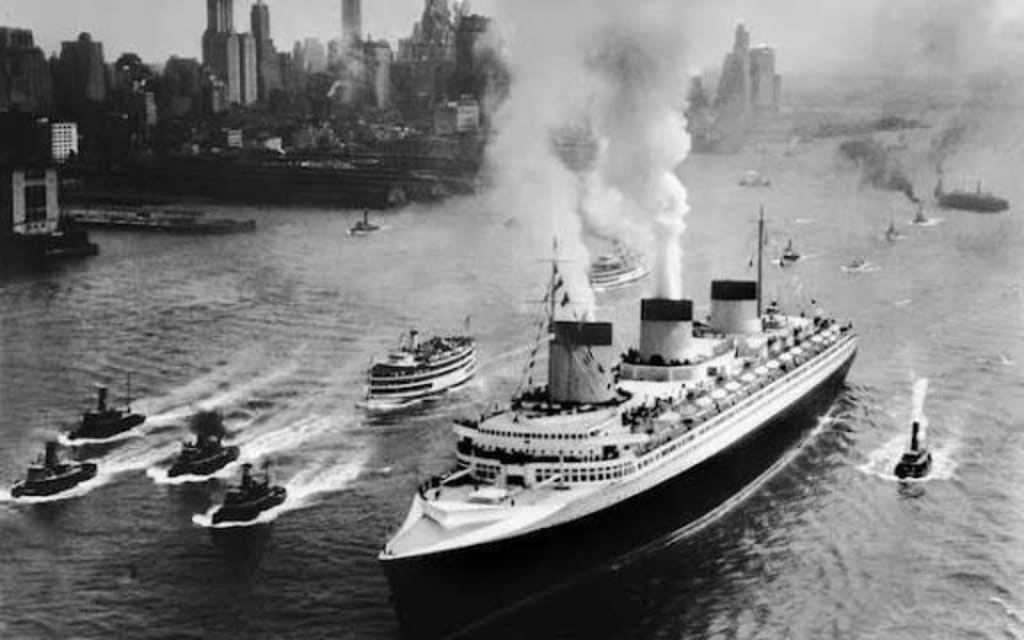
Few machines created by human hands have inspired awe quite like the great ocean liners of the early 20th century. Among them, one ship has often been remembered not just as a marvel of engineering, but as the most beautiful ocean liner ever built — a floating palace that symbolized ambition, elegance, and the romance of sea travel. Its story, however, is not only one of triumph but also of decline, reflecting how technology, war, and changing lifestyles reshaped the world.
A Floating Work of Art
At the height of the golden age of ocean liners, beauty mattered as much as speed. Shipbuilders competed fiercely to design vessels that would impress passengers from the moment they stepped on board. This legendary liner stood apart for its graceful silhouette, sleek hull, and meticulously designed interiors. Every curve was intentional, every detail carefully considered.
Inside, the ship felt more like a grand hotel than a means of transport. Marble staircases, crystal chandeliers, hand-carved wood panels, and lavish dining salons created an atmosphere of refinement. Cabins were spacious, elegant, and filled with natural light. Even the third-class accommodations were designed with comfort and dignity in mind, a rare consideration at the time.
This liner was not just built to cross oceans; it was designed to make the journey itself unforgettable.
Symbol of National Pride
Beyond beauty, the ship carried deep symbolic meaning. It represented national pride and technological progress at a time when countries showcased their power through engineering achievements. The liner’s launch was celebrated with fanfare, attended by dignitaries, press, and thousands of spectators.
For its home country, the vessel was proof that artistry and innovation could coexist. It demonstrated that ships could be both fast and visually stunning, functional yet luxurious. Newspapers praised it as the pinnacle of maritime design, and travel posters featured its image as a promise of glamour and adventure.
Life Onboard: Glamour and Routine
During its peak years, the ocean liner transported royalty, celebrities, business magnates, and hopeful immigrants alike. The decks buzzed with life — formal dinners, orchestras playing under starlit skies, and passengers strolling along promenades as the sea rolled gently beside them.
For many travelers, a voyage aboard this liner became a defining life experience. Stories of romance, inspiration, and even reinvention unfolded between its steel walls. Crew members, too, spoke of the pride they felt serving on such a magnificent ship, where service was elevated to an art form.
Yet beneath the glamour lay a complex operation. Thousands of crew worked tirelessly below deck, managing engines, kitchens, and maintenance systems to keep the floating city alive.
War and Changing Times
The ship’s decline began when global events reshaped priorities. War changed the purpose of ocean liners almost overnight. Luxury vessels were often repurposed as troopships or hospital ships, stripped of their elegance and exposed to danger.
Though this liner survived the turbulence of wartime, it emerged into a world that no longer valued ocean travel in the same way. The rise of commercial aviation transformed long-distance travel, offering speed that ships could not match. What once took days at sea could now be done in hours.
Passenger numbers dwindled, and maintaining such a grand vessel became increasingly expensive.
From Icon to Burden
As the years passed, the liner’s beauty remained, but its relevance faded. Modern travelers sought efficiency rather than experience. Shipping companies struggled to justify the costs of upkeep, crew, and fuel.
Despite attempts to modernize interiors and adjust services, the liner could not escape economic reality. Eventually, it was retired from active service, its once-busy decks falling silent. For many admirers, this marked the end of an era — not just of a ship, but of a way of life.
A Controversial End
The final chapter of the ship’s story remains deeply emotional. Though preservation efforts emerged, financial pressures often won. Like many historic liners, it faced scrapping rather than restoration. As dismantling began, photographs of its broken hull and stripped interiors sparked global sorrow.
People mourned not only the loss of steel and wood, but the loss of craftsmanship, imagination, and romance that modern engineering rarely replicates.
A Legacy That Endures
Even in destruction, the most beautiful ocean liner ever built left behind an enduring legacy. It continues to live on in books, documentaries, paintings, and the collective memory of maritime enthusiasts. Designers still study its proportions, historians analyze its cultural impact, and travelers dream of an age when the journey mattered as much as the destination.
Its rise and fall remind us that beauty, no matter how extraordinary, exists within the limits of time and change. Yet its story proves that true elegance never truly disappears — it simply sails into history, leaving ripples that last for generations.
About the Creator
Fiaz Ahmed Brohi
I am a passionate writer with a love for exploring and creating content on trending topics. Always curious, always sharing stories that engage and inspire.
Keep reading
More stories from Fiaz Ahmed Brohi and writers in Humans and other communities.
Breaking Barriers: One Woman's Fight to Empower Girls in Her Village
In many rural communities around the world, access to education for girls remains a significant challenge. A combination of traditional beliefs, economic hardships, and a lack of infrastructure often leads to the denial of basic education to young girls, despite the undeniable benefits of education in breaking the cycle of poverty. However, there are inspiring stories of women who have faced these barriers and, against all odds, have turned their own struggles into a driving force to change the lives of others. One such woman is [Name], a resident of a small village in [Country], who, despite being denied education as a child, has vowed to ensure that no girl in her village will have to face the same fate. A Childhood Denied Education Growing up in a conservative village, [Name] was just like any other young girl with dreams of learning. However, due to the prevalent gender norms in her community, her dreams were crushed before they could even begin to materialize. Her family, influenced by traditional customs, believed that education for girls was not a priority. It was far more important, they argued, for her to stay at home, take care of household chores, and learn the skills that were thought to be necessary for a future as a wife and mother. "I wasn’t allowed to study, but I will make sure no girl in this village hears those same words," [Name] says with a resolute tone. These words, born from the pain of lost opportunities in her own childhood, have since become the foundation for her life’s work. The Turning Point: Education Against All Odds Although she was initially denied an education, [Name] didn’t let this setback define her. Instead, she found ways to educate herself. She would sneak into the community's informal gatherings, where boys were allowed to learn basic reading and writing. She taught herself from books she borrowed from a local teacher and listened intently to the discussions around her. Her passion for learning grew stronger every day, and soon, the desire to make a difference for the next generation of girls in her village became a guiding light. “I would study in secret. I would ask the boys for help with difficult words, and sometimes, I’d just read books on my own. The more I learned, the more I realized how much I had missed out on,” [Name] recalls. “I made a promise to myself that I would change things for others.” Raising Awareness and Taking Action As [Name] grew older, she realized the immense value of education, not just for herself but for all girls. Armed with the knowledge she had gained on her own and a strong desire to help, she began speaking out against the traditional practices that held girls back in her community. She faced tremendous resistance from her family, elders, and other community members who believed that girls had no place in formal education. Yet, [Name] was undeterred. She began small by organizing informal literacy sessions for girls in her village, often holding these classes in the evenings after school. Initially, many parents were hesitant, but as they began to see the positive impact that education was having on their daughters—on their confidence, behavior, and future prospects—attitudes started to change. "At first, the parents were skeptical. They thought education would distract their daughters from household duties. But soon, they saw how the girls were transforming. Some started helping their younger siblings with homework, others began to take leadership roles in the community," she says with pride. "Education made them believe in themselves." Building the Future: Empowering Girls in the Village [Name] did not stop at teaching a few girls. She dreamt bigger, aiming to build a more sustainable educational structure for future generations. With the help of local and international non-governmental organizations (NGOs), she managed to secure funding to build a small community school for girls. This school is now a beacon of hope for girls who had previously been denied the chance to learn. "I want every girl in my village to know that they can achieve anything they set their minds to. They are not just destined to be wives and mothers—they have the potential to be doctors, teachers, engineers, and leaders," [Name] asserts. “It’s about changing the narrative and giving them the freedom to dream.” Today, [Name] works alongside other educators and advocates for girls' education in her community. Her efforts have inspired other women and young girls, some of whom now act as role models for their peers. In a village where education for girls was once viewed as unnecessary and unimportant, [Name]'s work has planted the seed for a revolution in the way girls are perceived and valued. The Wider Impact of [Name]'s Work [Name]'s story is just one example of how individual determination can catalyze significant change in communities. Her journey also speaks to the larger global movement toward ensuring that girls have access to education, especially in regions where gender-based inequality still prevails. With millions of girls around the world still denied an education, [Name]'s efforts are a powerful reminder of the importance of education in empowering women and creating more equitable societies. As [Name] continues her work, her message is clear: "Education is not just a right; it is the key to breaking cycles of poverty, to unlocking potential, and to building stronger communities." Conclusion [Name]'s life story is an inspiring example of resilience, determination, and the transformative power of education. From a girl who was denied the opportunity to study to a woman who now champions the cause of girls' education, she embodies the potential for change that exists in all of us. As her village, and eventually her country, begins to recognize the value of educating girls, [Name]'s dream of a brighter future for young women is slowly becoming a reality. Her work serves as a beacon of hope for countless others who are still fighting for their right to learn and for their voices to be heard. [Name] stands as a testament to the power of one woman’s determination to change the world, one girl at a time.
By Fiaz Ahmed Brohi16 days ago in Humans


Comments
There are no comments for this story
Be the first to respond and start the conversation.