
The Remarkable Transformation of Ireland's Economy: From Crisis to Prosperity
Transformation of Ireland's Economy
Introduction
In 2007, the bursting of the U.S. housing bubble triggered a global recession, and Ireland was one of the countries hit hardest by the ensuing economic downturn. The Irish housing market experienced one of the most significant collapses in the world, with a staggering 56 percent decline in housing prices and widespread defaults. The country's banking sector faced a crisis, leading to widespread layoffs and a contraction of the Irish economy by nearly 25 percent. Ireland's economic collapse seemed inevitable, but it managed to secure a bailout of $67 billion from the International Monetary Fund (IMF) to prevent a complete breakdown. However, even in 2013, Ireland was still struggling. Yet, in the past decade, an extraordinary turnaround has occurred, propelling Ireland from being one of the poorest nations to one of the wealthiest in the world.
From Crisis to Growth
Despite the dire situation following the global housing crisis in 2007, Ireland's economy began to grow rapidly in recent years, displaying a growth rate typically associated with developing countries. What is particularly remarkable is that Ireland lacks substantial oil reserves like Norway or the Middle Eastern countries, it does not have traditional wealth rebounding from historical circumstances like Switzerland, and it is not a small country with a tiny population like Luxembourg, which helps inflate per capita GDP. So, what factors contributed to Ireland's economic transformation?
Historical Economic Struggles
To understand Ireland's economic journey, we need to consider its historical struggles. Prior to gaining independence from Britain in 1922, Ireland experienced a series of devastating famines, notably the Great Famine in the mid-1840s, which resulted in a million deaths and mass emigration. After independence, Ireland found itself in dire economic straits. It relied heavily on agriculture and had limited trade opportunities, primarily with its former adversary, Britain.
The USSR Model and Protectionist Policies
Faced with limited options, Ireland decided to adopt an economic strategy inspired by the Soviet Union. In the aftermath of the global recession, the Irish government aimed to shield itself from the ups and downs of the global economy by implementing a strict protectionist policy. This policy included banning foreign investment and nationalizing large companies. However, these measures proved to be misguided. Unlike the USSR, Ireland lacked the resources and size to sustain such an independent approach. It did not possess the necessary agricultural capacity to be self-sufficient, nor did it have a sufficient domestic workforce to support the industries it needed. Independent economic policies tend to lead to disaster in the long run, regardless of a country's starting point.
Policy Reversal and Economic Growth
Realizing the need for change, Ireland embarked on comprehensive economic reforms in 1958. It privatized state-owned enterprises, opened up trade and foreign investment, and established the Shannon deregulation zone to attract international companies with tax incentives. These reforms marked the creation of the world's first modern free trade zone, providing favorable customs regulations for goods and services. As a result, multinational corporations, including Intel and De Beers, invested in Ireland, driving significant economic growth. Ireland also made substantial investments in education through the introduction of the 1967 free education scheme, resulting in an educated workforce that attracted foreign companies from sectors such as technology, healthcare, and finance.
Challenges and Continued Growth
However, Ireland faced another economic setback in the 1970s and 80s due to overspending, the global oil crises, overreliance on the UK economy, and strikes by Irish banks. This led to skyrocketing unemployment, high inflation, and mounting public debt. To combat this crisis, Ireland resorted to the same playbook that had worked in the past. It lowered tax rates for companies, reduced taxes
About the Creator
Keep reading
More stories from Majid khan and writers in Humans and other communities.
Morocco Earthquake
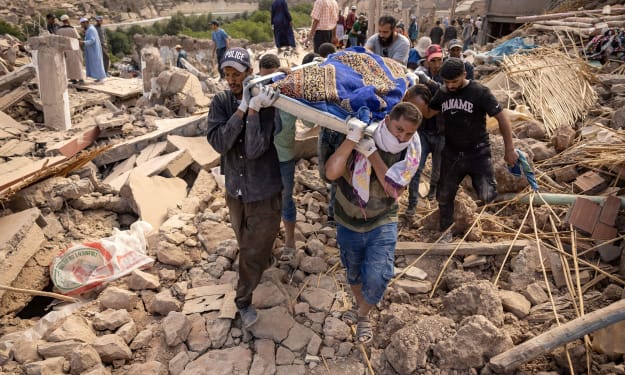
In a tragic turn of events, a powerful earthquake with a magnitude of 6.8 has rocked central Morocco, resulting in the loss of more than 2,000 lives and widespread destruction across the affected regions. The earthquake struck at 23:11 local time on Friday, sending shockwaves that were felt from Casablanca to Marrakesh, leaving many buildings reduced to rubble and causing extensive damage.
By Majid khan2 years ago in Humans
The History of Valentine’s Day for Students Made Easy and Fun
Introduction to the History of Valentine’s Day for Students Valentine's Day is frequently associated with hearts, cards, sweets, and words of love. For students, it can feel like a contemporary celebration centered on gifts and social media. However, the history of Valentine's Day is far older and more interesting than most people realize. When we go back, we find stories of ancient rituals, daring choices, secret weddings, and customs that helped define the holiday that students know today.
By Relationship Guidea day ago in Humans



Comments
There are no comments for this story
Be the first to respond and start the conversation.