
The Price of Power: How Monica Lewinsky Was Betrayed by Bill Clinton, the Media, and a Culture That Failed Her

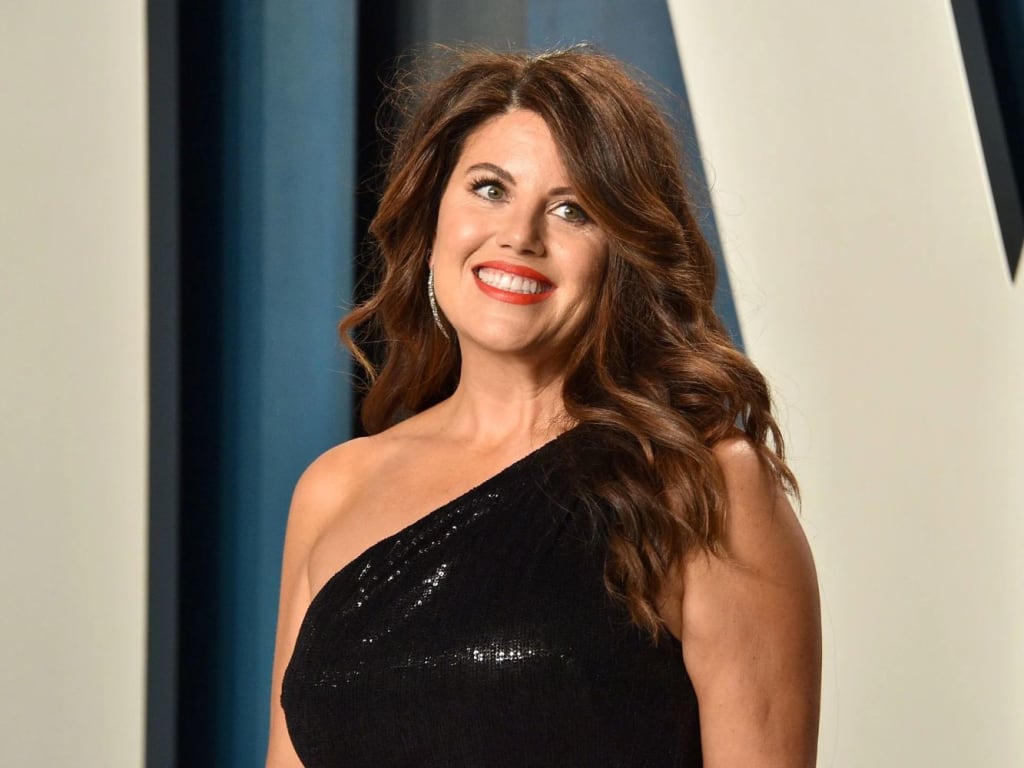
I’ve carried a quiet horror for years over how Monica Lewinsky was treated—not just by the media, not just by Bill Clinton, but by so many so-called “feminists” and people in power who should have known better. She was 22. A girl. Still forming her sense of self, still learning how the world works. And when the most powerful man in the world turned his attention on her, she didn’t stand a chance. He knew that. That was part of the appeal.
What’s worse is how quickly the world turned on her. The jokes, the headlines, the betrayals. She was mocked, shamed, and discarded—while Clinton, decades older and infinitely more powerful, walked away with his legacy largely intact. And let’s not forget: this wasn’t an isolated incident. Clinton has a long history of allegations involving sexual harassment and abuse. It’s also been widely reported that he was a frequent flyer on Jeffrey Epstein’s private jet, with rumors swirling about visits to Epstein’s island—an epicenter of exploitation.
This isn’t about left or right. It’s not about political parties. It’s about power. It’s about men who believe their wealth, status, or charisma entitle them to women’s bodies—and a society that lets them get away with it. Again and again. Monica Lewinsky’s story is a mirror. And what it reflects is a culture that punishes the vulnerable and protects the powerful.
In the winter of 1998, the name Monica Lewinsky became synonymous with scandal. At just 24 years old, she was thrust into the global spotlight—not as a whistleblower, not as a political operative, but as a young woman who had been involved in a sexual relationship with the President of the United States. What followed was a public shaming of historic proportions, a media frenzy that weaponized her youth and gender, and a political machine that sacrificed her dignity to preserve its own power.
More than two decades later, Lewinsky has emerged as a voice for dignity, digital ethics, and survivor advocacy. But the scars of that betrayal—by Bill Clinton, by the press, and by other women in power—have shaped her life in profound ways. This is the story of how a young woman became a scapegoat for a nation’s discomfort with sex, power, and accountability—and how she has reclaimed her voice in a world that once tried to silence her.
I. A Dangerous Imbalance: Youth, Power, and Consent
In 1995, Monica Lewinsky was a 22-year-old recent college graduate working as an unpaid intern at the White House. She was bright, ambitious, and eager to make her mark in Washington. President Bill Clinton, then 49, was at the height of his political power. Their relationship, which began with flirtation and evolved into sexual encounters, was not one of equals.
Clinton was not just her boss—he was the most powerful man in the world. The age gap, the power differential, and the institutional setting made it impossible for Lewinsky to give meaningful consent in the way we understand it today. As she later reflected, “It was a consensual relationship, but... any abuse came in the aftermath, when I was made a scapegoat in order to protect his powerful position.”
Clinton, for his part, knew exactly what he was doing. The appeal of a young, impressionable woman was not incidental—it was part of the dynamic. In hindsight, it’s clear that he exploited her admiration and naivety, confident that he could control the narrative and escape accountability.
II. The Media’s Relentless Humiliation
When the affair became public in 1998—thanks to secret recordings made by Lewinsky’s confidante Linda Tripp—the media descended like vultures. Lewinsky was not treated as a young woman caught in a complex and compromising situation. She was cast as a seductress, a joke, a national embarrassment.
Late-night comedians mocked her relentlessly. News outlets dissected her appearance, her weight, her lipstick, her beret. Time magazine’s cover featured her face with the headline “The Stain.” The New York Times and The Washington Post ran op-eds questioning her character. She was called a “bimbo,” a “homewrecker,” and worse.
Meanwhile, Clinton’s approval ratings soared. He was portrayed as a victim of a political witch hunt, a flawed but forgivable man. The double standard was glaring: the older, married man with all the power was shielded, while the young woman was destroyed.
III. Betrayed by Women in Power
Perhaps most painful was the betrayal Lewinsky experienced from other women—especially Hillary Clinton. Rather than acknowledging the power imbalance or her husband’s predatory behavior, Hillary reportedly referred to Lewinsky as a “narcissistic loony toon.” She framed the scandal as a “vast right-wing conspiracy,” deflecting blame from her husband and placing it squarely on Lewinsky.
This response was strategic, but it was also cruel. It reflected a political calculus that prioritized image over empathy. Feminist leaders who might have defended Lewinsky instead remained silent or sided with Clinton, fearing that his downfall would derail progressive causes.
Linda Tripp, who secretly recorded Lewinsky’s confessions, claimed she was trying to protect her. But her actions—covert, manipulative, and self-serving—betrayed a young woman’s trust and handed her over to federal investigators and the press.
IV. The Aftermath: A Life Derailed
The consequences for Lewinsky were devastating. She became unemployable in Washington. Her name was synonymous with scandal. She moved to London to escape the media glare and earned a master’s degree in social psychology from the London School of Economics.
Despite her intelligence and education, Lewinsky struggled to find stable work. She tried launching a handbag line, worked briefly as a spokesperson for Jenny Craig, and wrote a memoir. But the stigma followed her everywhere. “I was the most humiliated person in the world,” she later said.
Lewinsky never married. She has no children. While she has never publicly attributed this to the scandal, it’s not hard to imagine how the trauma, the betrayal, and the global scrutiny shaped her personal life. In interviews, she has spoken about the loneliness, the depression, and the years of therapy it took to reclaim her sense of self.
V. Reclaiming Her Voice
In the 2010s, Lewinsky began to reemerge—not as a punchline, but as a powerful advocate. Her 2015 TED Talk, “The Price of Shame,” was a watershed moment. She spoke candidly about cyberbullying, public humiliation, and the need for compassion in the digital age. “Public shaming as a blood sport has to stop,” she said. “The Internet has a long memory. It can take a long time to outrun your past.”
She became a contributing editor at Vanity Fair, writing essays on trauma, feminism, and redemption. She produced the FX series Impeachment: American Crime Story, which told the story of the scandal from her perspective. She has worked with anti-bullying organizations and spoken at universities around the world.
Lewinsky’s transformation from victim to advocate is a testament to her resilience. But it’s also an indictment of the culture that forced her to fight so hard for her humanity.
VI. A Pattern of Abuse
The Clinton–Lewinsky scandal was not an isolated incident. Bill Clinton has been accused of sexual misconduct by multiple women, including Juanita Broaddrick, Kathleen Willey, and Paula Jones. He was impeached for perjury and obstruction of justice, though acquitted by the Senate. His law license was suspended, and he paid a $90,000 fine for misleading testimony.
Yet Clinton remained a celebrated figure in Democratic politics for years. He spoke at national conventions, published best-selling books, and was praised for his intellect and charisma. The women he allegedly harmed were largely forgotten—or dismissed.
Lewinsky’s story forces us to confront the cost of that collective amnesia. It challenges us to ask: Who gets to recover from scandal? Who gets to be forgiven? And who is left behind?
VII. Conclusion: A Call for Accountability and Empathy
Monica Lewinsky was not a villain. She was a young woman caught in the crosshairs of power, politics, and patriarchy. She was betrayed by a president who should have known better, by a media that reveled in her humiliation, and by a society that punished her for surviving.
Today, she stands as a symbol of resilience—but she should never have had to be. Her story is a reminder that power without accountability is dangerous, that media without ethics is cruel, and that empathy is not weakness but justice.
As we continue to reckon with the legacies of powerful men and the systems that protect them, we owe it to Monica Lewinsky—and to every young woman who has been silenced—to listen, to learn, and to do better.
About the Creator
Julie O'Hara - Author, Poet and Spiritual Warrior
Thank you for reading my work. Feel free to contact me with your thoughts or if you want to chat. [email protected]
Keep reading
More stories from Julie O'Hara - Author, Poet and Spiritual Warrior and writers in Humans and other communities.
Lost and Alone in the French Alps
Looking back, I can trace some of my life’s biggest adventures to a simple action from my sister. She’d introduced me to Tommy (a very long time ago), a colleague of hers, who had overshared his penchant for Italian-looking women, and I ticked that box.
By Chantal Christie Weiss20 days ago in Humans
I am not alone.
Billu Bhai’s Realization Category: Human Interest / Life Lessons His real name was Bilal, but everyone in the village called him Billu Bhai. He was the eldest child in a large family, with parents, siblings, and relatives all living together. Growing up, Bilal had been quite weak, both physically and mentally. His childhood was marked by illness, which affected his ability to concentrate in school. Learning was a constant struggle, and he barely managed to complete his education up to the tenth grade. Now, at twenty-five, Bilal was hardworking, reliable, and always willing to help others. His father had given him a rickshaw, which became his source of daily income.
By Sudais Zakwan6 days ago in Humans
Ludacris and Nelly draw backlash over bookings at MAGA-coded music festival
Ludacris and Nelly headlining a mostly right-wing event is good for them. It’s also great for the genre of hip hop. The two rap veterans have showcased their talents on other stages. Why can’t they perform for mostly MAGA folks and grab that bag?
By Skyler Saunders5 days ago in Beat



Comments
There are no comments for this story
Be the first to respond and start the conversation.