
The Power of the Mpox Jab: Saving Lives in Kinshasa
Vaccinating for Hope: Frontline Healthcare Workers Combat Mpox in Kinshasa

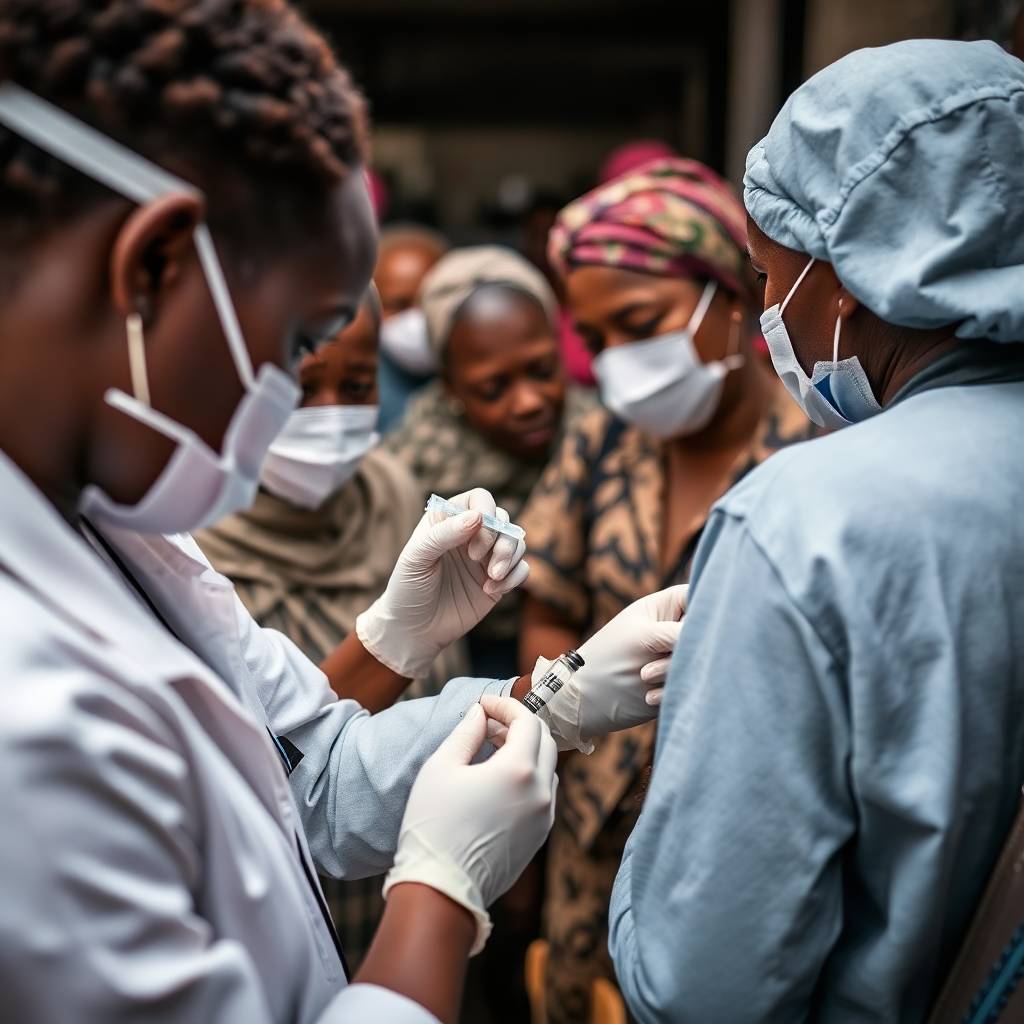
The Power of the Mpox Jab: Saving Lives in Kinshasa
In the heart of Africa, the city of Kinshasa in the Democratic Republic of the Congo (DRC) has become a focal point in the battle against an emerging health threat: Mpox, formerly known as monkeypox. This disease, though relatively rare in the past, has seen a significant uptick in cases across several countries, and Kinshasa, with its dense population and urban environment, has felt the full impact of the outbreak. However, there is a glimmer of hope. The administration of Mpox vaccinations in Kinshasa has become a vital weapon in stopping the spread of the virus and saving lives.
Understanding Mpox and Its Spread in Kinshasa
Mpox is a viral disease that is similar to smallpox but generally milder. It is primarily transmitted from animal to human but can also spread through close contact between infected humans. Symptoms include fever, rash, and swollen lymph nodes, with the rash often appearing in a distinctive pattern that includes pustules. In most cases, the disease resolves within a few weeks, but severe infections can lead to complications, including death.
The first cases of Mpox in Kinshasa were reported in early 2024, with the virus quickly spreading throughout the city. Kinshasa, home to over 17 million people, is a sprawling urban environment where dense neighborhoods, limited healthcare infrastructure, and high rates of mobility contribute to the rapid transmission of infectious diseases. Public health officials feared that, without intervention, the outbreak could spiral out of control, overwhelming hospitals and threatening lives.
A Swift Response: Launching the Vaccination Campaign
In response to the growing crisis, the DRC government, in collaboration with international organizations, launched an ambitious vaccination campaign in Kinshasa. The goal was clear: to curb the spread of Mpox and protect the most vulnerable populations, including healthcare workers, people who had been in contact with confirmed cases, and high-risk groups such as children and the elderly.
The vaccine used to combat Mpox is the MVA-BN vaccine, which is a modified form of the smallpox vaccine. This vaccine has proven to be effective in preventing both smallpox and Mpox, and it was a crucial part of the DRC's strategy to halt the outbreak. The World Health Organization (WHO), UNICEF, and the European Commission, along with Gavi, the Vaccine Alliance, provided the necessary funding and resources to ensure the swift distribution of the vaccine.
By mid-2024, the DRC had secured over 265,000 doses of the MVA-BN vaccine. These doses were distributed across Kinshasa, with vaccination teams visiting high-risk neighborhoods and setting up vaccination points in health centers. Mobile vaccination units also ensured that people in harder-to-reach areas could receive the jab.
Challenges in Vaccine Distribution and Global Inequities
Despite the rapid deployment of vaccines in Kinshasa, the campaign was not without its challenges. One of the most pressing issues was the limited supply of Mpox vaccines. While the global community rallied to provide support, the vaccine distribution system faced significant hurdles. By September 2024, Africa had only received about 150,000 doses of the Mpox vaccine, far below the 10 million doses needed to effectively combat the outbreak across the continent. This disparity in vaccine availability highlighted a troubling trend: global health inequities.
During the COVID-19 pandemic, similar challenges arose as lower-income countries struggled to secure adequate vaccine supplies. The Mpox crisis has underscored the ongoing need for global solidarity and equitable distribution of vaccines to ensure that all countries, regardless of economic status, have access to life-saving medicines. The situation in the DRC serves as a reminder of the importance of addressing these disparities to prevent the spread of infectious diseases and protect public health.
Public Education and Community Engagement
In addition to the vaccination efforts, public education has been a cornerstone of the response to the Mpox outbreak in Kinshasa. Health authorities, in partnership with community leaders and NGOs, worked tirelessly to raise awareness about the virus, its transmission, and the importance of vaccination.
Kinshasa’s residents were encouraged to seek medical attention if they showed symptoms of Mpox and to participate in the vaccination campaign. Public health messages were disseminated through a variety of channels, including radio, television, social media, and community outreach programs. These efforts helped to combat misinformation and build trust in the vaccine, which is critical to achieving high vaccination coverage.
Community engagement has been particularly important in Kinshasa, where local attitudes toward vaccines can vary. Many people had concerns about the safety and efficacy of the vaccine, fueled by rumors and misinformation. To address these concerns, healthcare workers went door-to-door, providing information, answering questions, and offering reassurance. The involvement of trusted community leaders and influencers also played a pivotal role in encouraging people to get vaccinated.
A Focus on Protecting Healthcare Workers
Healthcare workers in Kinshasa were among the first to receive the Mpox vaccine. These individuals are on the front lines of the response to the outbreak and are at a heightened risk of exposure to the virus. By vaccinating healthcare workers, the DRC aimed to ensure that the healthcare system could continue to function without being overwhelmed by cases of Mpox.
The role of healthcare workers in this crisis cannot be overstated. They are not only responsible for treating infected individuals but also for educating the public and coordinating the vaccination efforts. Vaccinating healthcare workers is an essential part of breaking the transmission chains and ensuring that the virus does not spread further within the community.
The Power of the Mpox Jab: Saving Lives
As the Mpox vaccination campaign continues to roll out across Kinshasa, early indicators suggest that the effort is having a positive impact. The number of new Mpox cases has begun to decline, and the vaccination coverage in high-risk neighborhoods is steadily increasing. These efforts are saving lives by reducing the spread of the virus and providing a protective barrier for those most at risk.
While the vaccination campaign in Kinshasa is a critical step forward in the fight against Mpox, it is also a reminder of the power of vaccines in preventing infectious diseases. Vaccines are among the most effective tools we have to protect public health and save lives. In the case of Kinshasa, the Mpox jab has become a symbol of hope in a city grappling with a deadly virus. By continuing to prioritize vaccination, education, and international collaboration, Kinshasa can overcome this outbreak and build a more resilient healthcare system for the future.
Conclusion
The Mpox vaccination campaign in Kinshasa has demonstrated the power of collective action in the face of a public health crisis. While challenges remain, the efforts to vaccinate, educate, and engage the community are having a significant impact on the fight against Mpox. The DRC’s response to the outbreak serves as a model for other countries facing similar challenges and highlights the critical role of vaccination in saving lives and preventing the spread of infectious diseases. As the world continues to confront new health threats, the lessons learned from Kinshasa’s experience will undoubtedly shape future responses to global health emergencies.
About the Creator
Mercy Muthui
mercy muthui – Writer | Researcher
Welcome to my Vocal Media space! I’m a passionate writer focused on global health, human rights, and social issues. Let’s learn, share, and make an impact together!
📩 Open to collaborations—let’s connect!
Keep reading
More stories from Mercy Muthui and writers in Humans and other communities.
WHO Invites Ebola Immunization Preliminary in Uganda: A Stage Toward Worldwide Wellbeing Security
Presentation: The World Wellbeing Association (WHO) has as of late invited the commencement of an Ebola immunization preliminary in Uganda, a basic achievement in the continuous fight against one of the world's most deadly infections. The preliminary, sent off in light of a new flare-up, offers an encouraging sign for the eventual fate of Ebola regulation and counteraction, in Uganda as well as in other impacted districts of the world. This denotes one more critical stage toward accomplishing worldwide wellbeing security and building strength against future irresistible infections.
By Mercy Muthui12 months ago in Education
How Astrology Affects Twin Flame Attraction and Separation Cycles.
Twin flame attraction feels instant and consuming. Separation feels confusing and painful. Astrology explains why these cycles repeat. Planetary movements influence timing, emotional intensity, and personal growth. You experience pull and distance through energetic patterns reflected in birth charts and transits.
By Wilson Igbasi2 days ago in Humans
Wild Card Weekend Recap: What Happens Now?
I think I figured out why I love Wild Card Weekend so much. It's because it's the first playoff anything of the calendar year. The NFL season starts in the fall, and once upon a time, the champion was crowned either on or slightly before New Year's. The evolution of the NFL schedule has resulted in the playoffs starting just into the New Year, and currently, the final week of the season falls on the first weekend of the New Year, with Wild Card Weekend coming a week after that. So yes, chronologically, the NFL's Wild Card Weekend serves as the first playoff anything of the calendar year.
By Clyde E. Dawkins6 days ago in Unbalanced



Comments
There are no comments for this story
Be the first to respond and start the conversation.