
The Power of Self-Care: Simple Yet Effective Ways to Nurture Yourself
The Importance of Taking a Walk
Introduction
In today's fast-paced world, self-care has become more important than ever. It is the act of valuing, accepting, and loving ourselves. It's about feeling abundant, worthy of our own time, and showing compassion to ourselves. Self-care doesn't have to be expensive, but it does require conscious effort and a decision to invest in our well-being. In this article, we will explore simple yet effective self-care ideas that can help you rejuvenate, de-stress, and reconnect with yourself.
Table of Contents
1. The Importance of Taking a Walk
2. Finding Meaning in Life
3. Stay Hydrated: Drink More Water
4. Prioritize Your Day: Put Yourself First
5. The Impact of Good Posture
6. Nurture Relationships with Loved Ones
7. Taking Breaks: Recharge Your Batteries
8. The Power of Meditation
9. A Good Night's Sleep: Preparing for Rest
The Importance of Taking a Walk
Walking is not only a great way to stay physically active but also has immense benefits for our mental health. Going for a walk, whether rain or shine, allows us to breathe in fresh air and soak up the sunshine. It provides an opportunity to de-stress and connect with ourselves as we observe the world passing by. Consider adding a daily walk to your routine and use this time to listen to your favorite podcasts or audiobooks, like Viktor Frankl's "Man's Search for Meaning," which delves into finding purpose in our lives.
Stay Hydrated: Drink More Water
One of the simplest yet most effective self-care practices is staying hydrated. Drinking enough water is essential for our overall well-being. Keeping a cup full of water or a water bottle by your side makes it effortless to stay attuned to your body's needs and ensures you are adequately hydrated throughout the day.
Prioritize Your Day: Put Yourself First
Start each day by reviewing your tasks and arranging them in order of importance to you. This approach ensures you prioritize your needs and essential tasks. By planning your day with yourself in mind, you create space for self-care without feeling overwhelmed by unexpected events that may arise.
The Impact of Good Posture
Correcting your posture might feel awkward initially, but it can have significant benefits for your physical and mental well-being. Proper posture not only reduces back pain and tension but also boosts self-confidence and self-image. Be mindful of your posture throughout the day, and make an effort to stand up taller and sit up straight, noticing the positive effects it can have on your overall well-being.
Nurture Relationships with Loved Ones
Taking care of ourselves also involves nurturing the relationships we have with our loved ones. Even if they live far away, make an effort to keep in touch with them daily, even for just five minutes. A short phone call to ask about their day or share a mealtime conversation can leave you feeling more fulfilled and connected.
Taking Breaks: Recharge Your Batteries
In our busy lives, it's crucial to give ourselves permission to take breaks and recharge. Whether it's a mini vacation, a relaxing weekend, or a short coffee break during your workday, these moments of pause help prevent burnout and overwhelm. Surprisingly, taking sufficient breaks between tasks can improve focus and productivity.
The Power of Meditation
Meditation is a powerful habit that can bring immense benefits to your well-being. Find a few minutes each day to connect with yourself in silence. Whether it's through mindful breathing or simply calming your mind, meditation helps you live in the present moment and gain perspective on life's challenges.
A Good Night's Sleep: Preparing for Rest
Quality sleep is essential for our mental and physical health. To improve your sleep, turn off all technology an hour before bedtime to allow your mind and body to unwind naturally. Prioritize getting a good night's sleep to start your day meaningfully and with renewed energy.
Conclusion
Self-care is a conscious decision to invest in ourselves, and it doesn't have to be complicated or expensive. By incorporating simple yet effective practices like daily walks, staying hydrated, prioritizing our needs, nurturing relationships, taking breaks, and practicing meditation, we can cultivate a greater sense of well-being and contentment. Remember, taking care of ourselves is essential for living a fulfilling life and embracing all the challenges that come our way.
FAQs
1. What are some other self-care practices I can try? There are many self-care practices you can explore, such as journaling, engaging in hobbies, spending time in nature, or practicing yoga.
2. How can I manage stress effectively? Managing stress involves identifying its sources and implementing stress-relief techniques like deep breathing exercises, meditation, or spending time with loved ones.
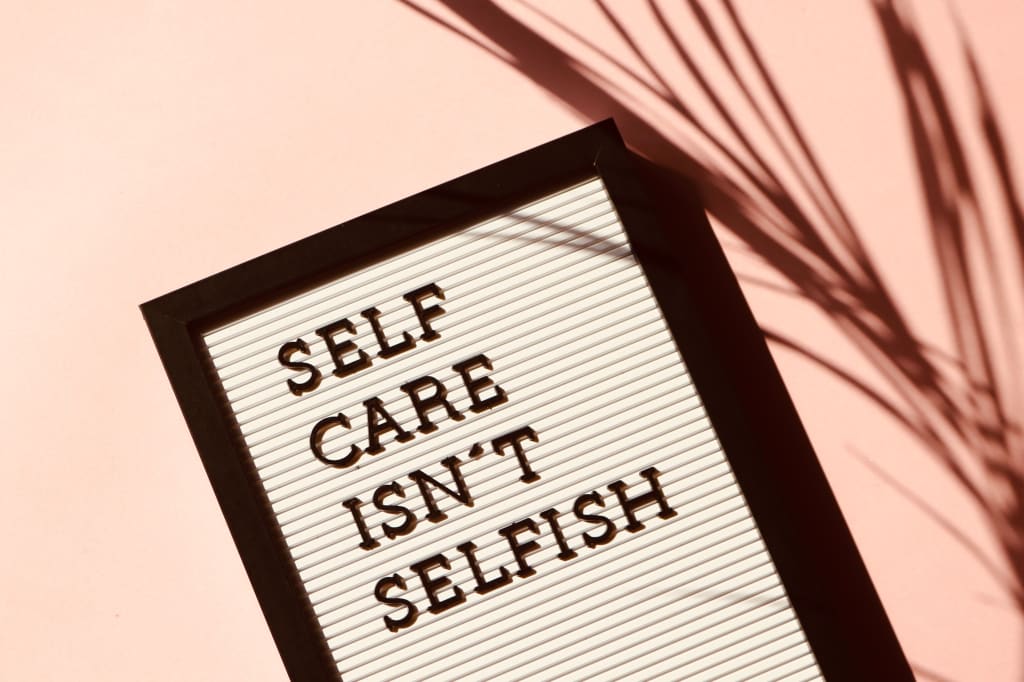
3. Is it selfish to prioritize myself sometimes? Prioritizing yourself is not selfish; it is necessary for maintaining a healthy balance in life and being there for others.
4. How can I improve my mindfulness during daily activities? Mindfulness can be practiced by staying present and fully engaging in each task you perform, whether it's eating, walking, or even doing household chores.
5. Are there any self-care activities I can do at work? Yes, you can practice self-care at work by taking short breaks, stretching, or engaging in relaxation techniques during your breaks to refresh your mind and energy.
About the Creator
The CEO of Everything
They say "jack of all trades, master of none," but they forgot to mention the part where the jack of all trades is also the camera woman, the makeup artist, and the person currently yelling at a tangled Wii microphone cable in a her own bathroom while recording herself singing and trying to make it look realistic and professional. (As professional as you can make it with nothing but a cell phone camera and a mic that doesn't work)
By Sara Wilson4 days ago in Humans
Rachel Reviews: The Spiral Archive by Pieter Hendrik
It's difficult for me to know where to start with a review of this book as it was, for me, an entirely unique experience and one that I'll probably never have again. I don't want that to be interpreted as unenjoyable but it has left me scratching my head a little and ruminating on its content, its themes and its characters.
By Rachel Deeming4 days ago in BookClub


Comments
There are no comments for this story
Be the first to respond and start the conversation.