
The Power of Poets
How poets shape revolutions, heal hearts, and awaken the world — one verse at a time
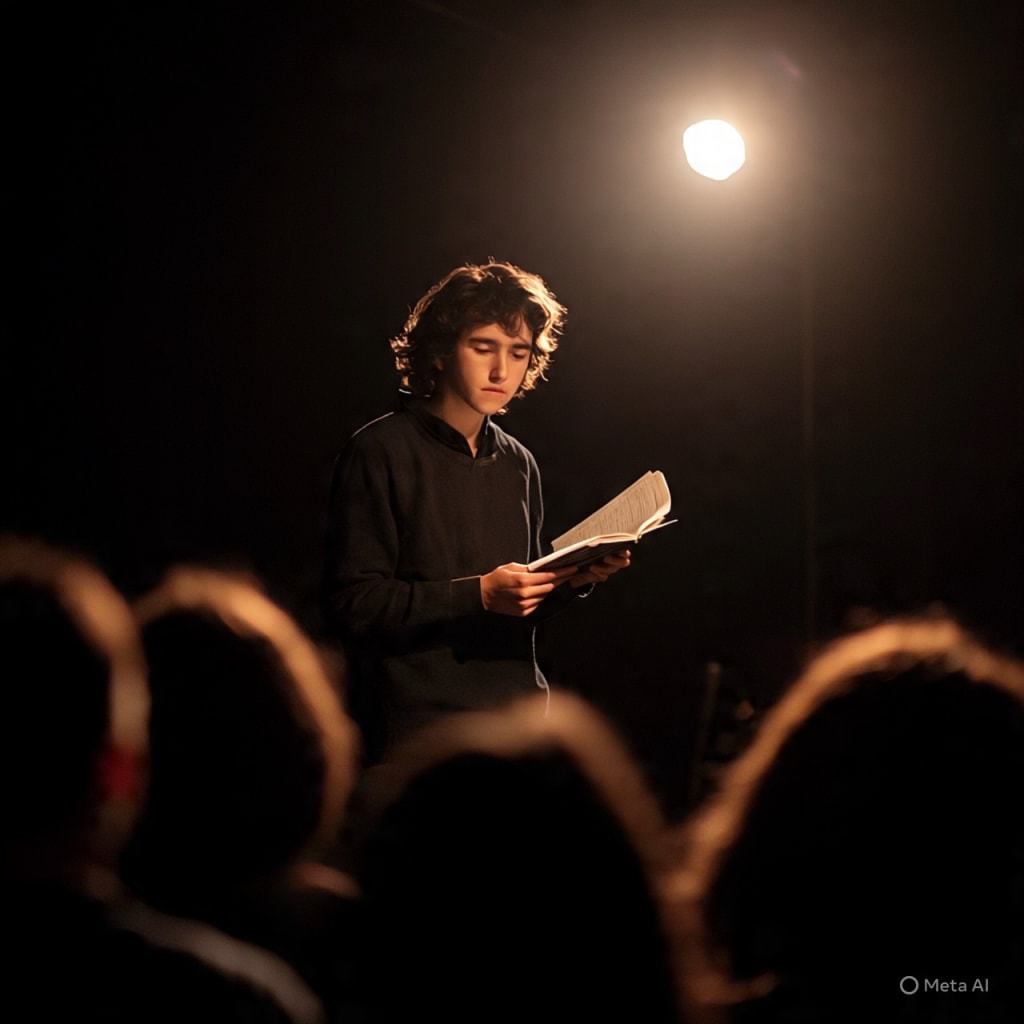
In a quiet village nestled between two rivers, a boy was born with silence braided into his voice. While the other children ran wild under the sky, their laughter trailing behind them like kites in the wind, this boy would sit at the edge of the fields with a small notebook in his lap and a pencil worn down to the nub.
He wrote while the rice stalks bowed and the wind whispered. He wrote during thunder, during festival drums, and even during funerals when the adults thought children should stay silent. His words weren’t grand. They weren’t even good. But they were *true*.
He wrote because the world didn’t make sense unless he could shape it with lines. Words were his way of reaching out — not to be heard, but to be *understood*.
No one noticed until the river flooded.
It came in the night, swollen by weeks of rain, and dragged away homes, animals, memories. In the aftermath, the villagers gathered in a makeshift shelter. There was no power, no water, only fear and grief and wet blankets that smelled like rot.
The boy stood up — trembling, barefoot, with the same old notebook clutched in his hands. He read.
No one had ever heard him speak for so long. His voice cracked, but his words didn’t.
He spoke of water with teeth, of mothers clutching babies like lifelines, of fathers who couldn’t look their sons in the eye. He spoke of fear like it was a character — with a face, a voice, and a hunger.
When he finished, no one clapped. But they didn’t need to. The silence was enough. Something had shifted.
That boy never became a politician or a preacher. He became a poet.
---
## **Poetry as Witness**
The power of poets is not in their fame or fortune — few have either. Their power lies in their ability to **see** what others look past and to say what others swallow.
Poets are witnesses. Archivists of emotion. Translators of pain.
They stand at the margins and write what the world forgets: the cry in a refugee camp, the sigh of an old woman left behind, the split-second spark of joy in a war zone.
Think of Wilfred Owen, who wrote about World War I not as a patriot, but as a soldier drowning in mud and trauma. His poems didn’t glorify battle — they exposed it. Or Sylvia Plath, who laid bare the mental war within herself. Or Langston Hughes, who carved truth into jazz rhythms and refused to let America forget its racial sins.
Poets don't just write for applause. They write for *remembrance*.
---
## A Language the Soul Understands
In a world saturated with sound, poetry dares to be quiet.
It doesn’t bombard — it breathes. It doesn’t explain — it *invites*.
Poetry slows time. It demands presence. It cuts through the noise not with volume, but with vulnerability.
A single stanza can do what a thousand headlines cannot. It can make you *feel*.
You’ve seen it happen. A simple line in a stranger’s poem that arrests you. A metaphor that suddenly names your ache. A verse that rises in your chest days after you read it.
That’s the magic of poetry. It knows where you hide and knocks anyway.
---
## **Poetry and Power**
Poetry is not soft. It is not safe. It is not simply pretty.
It is a weapon, a shield, a song of survival.
Tyrants have feared poets more than armies. Why? Because poetry can outlive regimes. It moves through prisons. It is copied on napkins, whispered in cell blocks, broadcast in songs, shared through generations.
Poetry is dangerous to systems built on silence.
During apartheid in South Africa, poems were smuggled in toothpaste tubes. In Palestine, verses are written on walls. In Iran, women recite poetry as protest. In every revolution, you will find a poet — not always on the podium, but in the crowd, scribbling history in real time.
A poem can start as a whisper and end as a riot.
---
## **The Poets of Today**
Poetry isn’t dying — it’s evolving.
Social media, for all its chaos, has birthed a new generation of poets. They don’t wait for permission or publication. They post their pain, their joy, their truth — raw and unfiltered — and it finds people who need it.
Rupi Kaur’s minimalist verse has reached millions. Andrea Gibson's spoken word shakes rooms into tears. Ocean Vuong, Yrsa Daley-Ward, Warsan Shire — these poets don’t ask to be heard. They declare it.
And still, in open mics and online forums, thousands of unnamed poets write in the dark because something inside them insists, *"Speak."*
---
*Because Someone Needs It*
You may not consider yourself a poet. But have you ever written something and felt lighter afterward? Have you ever read a line that made you whisper, *"Yes, that's it. That’s how I feel."*?
Then poetry has touched you. It doesn’t need rhyme to be real. It doesn’t need structure to be sacred. It only needs *honesty*.
A mother writing in a journal while her child sleeps. A teenager scribbling in the back of a science notebook. A man texting lyrics to no one at midnight. These are poets.
And their words matter.
---
## **What We Learn from Poets**
From poets, we learn to listen deeper. To pay attention to the unnoticed — a cracked cup, a heavy sigh, a bird singing at the wrong hour.
We learn that truth doesn’t have to shout to be heard.
We learn that vulnerability is not weakness, but an invitation — a bridge between two solitudes.
We learn that even in suffering, there is beauty. And even in beauty, there is sorrow. And to hold both at once is what makes us *human*.
---
*The Poet Is You*
There is a poem inside you.
It may not be finished. It may not be polished. But it’s *yours*.
And the world — so fast, so loud, so often cruel — needs your voice.
Not just for you, but for someone out there who is holding their breath, waiting for a poem to remind them they’re not alone.
So write.
Write what hurts. Write what heals. Write even when you’re scared, especially when you’re scared.
Because the power of poets is not in being fearless. It’s in writing *anyway*.
And maybe, just maybe, your words will become the spark someone else was waiting for.
About the Creator
Keep reading
More stories from noor ul amin and writers in Humans and other communities.
We Were Almost Forever
We were supposed to go to Florence that summer. We’d bookmarked cafés near the Duomo, imagined getting lost in back alleys with gelato in hand, and promised to kiss on the Ponte Vecchio at sunset. We even joked that Italy would be our “trial run” for the rest of our lives.
By noor ul amin6 months ago in Humans
Ratul Puri: Driving India's Clean Energy Future Through Innovation and Strategic Leadership
India's journey toward becoming a global renewable energy powerhouse demands exceptional leadership that can bridge the gap between ambitious national targets and ground-level implementation. Ratul Puri represents exactly this caliber of transformative leadership, steering Hindustan Power through complex market dynamics while consistently delivering projects that advance India's clean energy agenda. His recent landmark collaboration with the Assam government exemplifies the strategic thinking and execution capabilities essential for accelerating India's renewable energy transition.
By Chinmaya Singh5 days ago in Humans
So You Decided To Become a Nurse Practitioner:
So you decided to become an "Advanced Practice" nurse. Congratulations!... is what I would say if this was a good idea. Grad school? In this economy? What were you thinking? Likely it was something along the lines of either 1) “I've seen these other chucklefucks do it— Why can't I?” or even 2) “I've got a nice career, I should shake it up. I miss feeling like I have no clue what I'm doing.”
By Sandor Szaboabout 20 hours ago in Fiction


Comments
There are no comments for this story
Be the first to respond and start the conversation.