
The Power of Knowing Your Love Language
Do you say it with flowers or do you do the dishes?

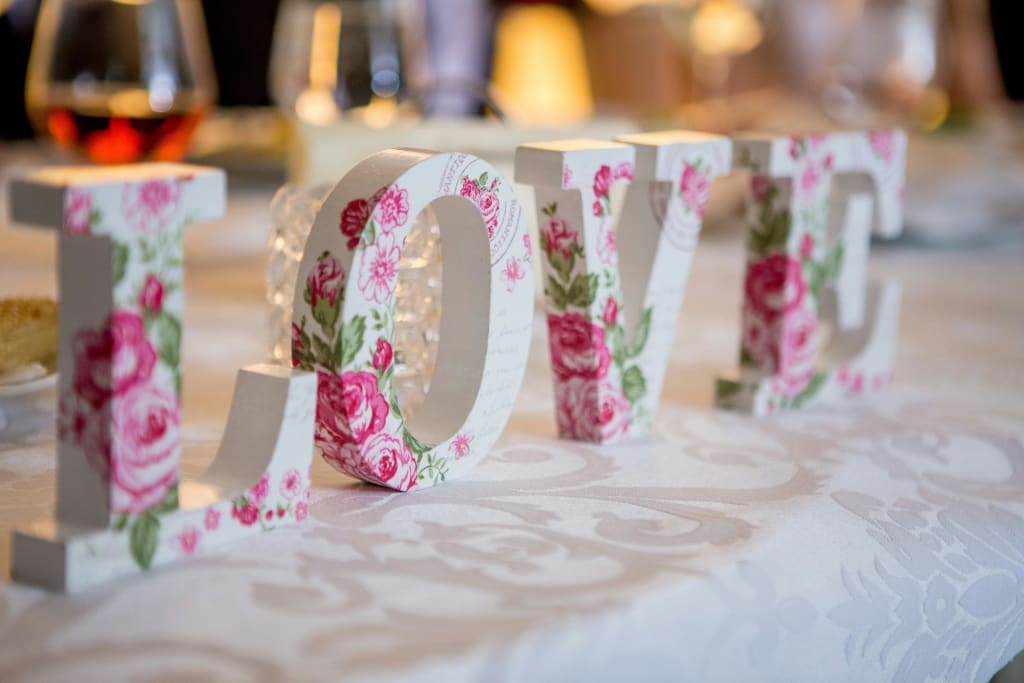
“Something in our nature cries out to be loved by another. Isolation is devastating to the human psyche. That is why solitary confinement is considered the cruelest of punishments” — Gary Chapman
My partner’s mother isn’t comfortably tactile, so hugs weren’t a natural part of his growing up. When he was sixteen, he joined the military and served a total of twenty-three years.
When I met him ten years ago, I was bowled over by how he would whisk me off to fine restaurants, give generous gifts and expensive flowers, and always want to hold my hand. Still, when we were in private, he appeared aloof and wouldn’t easily cuddle up to me or have any desire to hug or lovingly touch me outside of intimacy.
I felt like there was something wrong with me and with us. My ex-boyfriend I had dated before my partner, enjoyed snuggling up and was always touchy-feely with me. And so, I couldn’t help but compare how different and awkward my new relationship felt and my partner’s two extremes of showing love.
Reflecting on my past, I felt self-worth and validation when a partner was openly adoring me, and my partner showed his love in practical ways, not being familiar with diving in too deep. I was insecure from my dysfunctional upbringing and needed reassurance, and my partner’s self-sufficiency from military life was triggered by my neediness and depth of questioning.
In wanting to love each other with more ease, we came to realize we both needed to understand our conflicts and so two years ago — with the support of a couple therapist — we worked together on why we clashed and why we were emotionally shutting down on one another for big chunks of time.
I came to see that even though I had a painful and troubled past, I had been given hugs and experienced deeper questions and curiosity about life, and how I got to be here. My partner, having experienced trauma, loss, and grief growing up, experienced a different set of family dynamic coping skills.
I’m also spiritual, and an intuitive massage therapist — so I am naturally inquisitive and touchy-feely. My partner loves me with a different set of skills. He is more practical, generous, and kind. He often treats me and provides for me — as well as offering a listening ear and a great encourager — as I stumble through my new writing career.
Now that I have more clarity about our roots and influences, I can see his love language for what it is, and not for what it isn’t because it’s not shown in a tactile sense. And since therapy, he has grown to be open to the fact my love language is affectionate, and not all about being needy. He is even more open to my hugs now, whereas before — they felt foreign and extremely odd to him.
Adults have been brought up with different and, at most times, conflicting ways of being shown love by their parents — to their partners. The differences are as frustrating as attempting to have a conversation with someone who speaks a foreign language to you. You are both unable to communicate — even though you are both having the same conversation.
And so, identifying our partner’s love language can help us discern the relationship’s frictions, connect deeper, and possess perception and acceptance of how the people in our life show their style of love.
***
Baptist minister, Gary Chapman Ph.D., authored The Five Love Languages in 1992 “The secrets to love that last”. In 2019, it landed as a top seller in its category of Love and Relationships. The five love languages he derived are:
- Words of affirmation
- Receiving gifts
- Quality time
- Physical touch
- Acts of service
***
Words of affirmation
You show your love through meaningful words of appreciation, compliments, and I love yous. Words of encouragement and being kind naturally flow from you. You adore receiving sweet, loving notes from them or sending thoughtful texts, and if unkind and rude words are exchanged, it affects you deeply. It may be that this is your partner’s love language and that they show their love in this manner.
Receiving gifts
This love language is for a person who shows their appreciation and love by offering tokens of gifts. It is not about a material issue but more about the thought and intention behind the gift. It could be simply a bar of chocolate that comes from a place of love. If this is your love language, you will find you are more hurt and affected by forgotten special anniversaries or birthdays.
Quality time
This is the love language for people who feel it is paramount to prioritize quality time with their loved ones or partners by providing a healthy amount of undivided and dedicated attention — minus distractions. This also means listening attentively and making eye contact. And so, if you find you are drawn to this style of communication of love, it may explain why you feel upset over dates that are postponed or cancelled.
Physical touch
I adore this language and not to be confused with intimacy, although it is part and part, overall — it involves tender gestures. For example, cuddling up together on the sofa, hand holding, warm hugs, and perhaps even giving a massage or a back scratch. Neglect and abuse in a relationship for a person with this love language would be damaging.
Acts of service
This is love in action. You or your partner may show love by cooking breakfast, washing the dishes, or filling up the car with fuel. There are many ways we can show love with action — nonetheless, it is a love that wants to ease and share the responsibilities. A person who loves in this style of love language would struggle if their loved one were lazy or inattentive.
***
Although we may love from all of the five love languages, we will resonate strongly with one in particular. Examine your childhood and see how your parents loved you or perhaps even what relationship hurt you the most. What can you learn from that? What is your first instinct with how you love a partner or even a friend? Chat with your partner or even carry out the free love language test here.
Chapman wrote that every person has a love tank, and every couple’s love tanks are filled with regular emotional connections and therefore drained by our disconnections. Understanding and accepting our partner’s style will deepen these connections. After all, love isn’t just about a feeling — it’s about commitment, acceptance, and compromise.
“Psychologist William James said that possibly the deepest human need is the need to feel appreciated.” ― Gary Chapman
© Chantal Weiss 2025. All Rights Reserved
About the Creator
Chantal Christie Weiss
I serve memories and give myself up as a conduit for creativity.
My self-published poetry book: In Search of My Soul. Available via Amazon
Tip link: https://www.paypal.me/drweissy
Chantal, Spiritual Bad/Ass
England, UK
Keep reading
More stories from Chantal Christie Weiss and writers in Humans and other communities.
Why You Should Write Love Letters to Yourself
“Love is that condition in which the happiness of another person is essential to your own.” — Robert A. Heinlein The term of endearment hyperbole: I Love You to The Moon and Back, which I often say to my daughter, with the additional elongated: and back again, beyond infinity, is believed to have originated from Sam McBratney’s 1994 children’s book: ‘Guess How Much I Love You’.
By Chantal Christie Weissabout a year ago in Humans
Why Didn't Anyone Tell Us
Men, move along. This is not for you. This is for the women. I was forty-five when I began menopause. It is pretty young for that to be going on in a woman’s life, but I had undiagnosed PCOS, my entire life. Thank you to all the gynecologists I had seen my entire life. That in itself should encourage women to keep seeking second opinions, especially when you are not getting correct answers or any at all.
By Alexandra Grant3 days ago in Humans
Ancient Minds, Modern Life: Lessons That Still Control You
What if most of what drives your thoughts, emotions, and behaviors today was already mapped centuries ago—not with fMRI scans or brain imaging, but through ruthless self-observation, disciplined reflection, and honesty modern psychology still struggles to achieve? Ancient philosophers and thinkers didn’t have labs, statistics, or apps tracking attention spans. Yet, they understood the mechanics of the mind with a precision that remains relevant today.
By The Curious Writer2 days ago in Humans
Becca
"Everything is so... flat." Denille said stupidly as she looked around her new neighborhood. She looked around at the muted desert where even the smallest sign of life seemed to have given up. The plant life was shrubs that were half cooked by the heat and where there should have been a lawn, a mess of white rocks laid glistening in the sun. Even the sky looked stretched thin, like the sun had ironed it smooth. She’d moved from Riverside, where at least there were hills, but here in Barstow, everything felt baked and brittle.
By Sara Wilson8 days ago in Fiction


Comments (2)
This is a beautiful reminder that love speaks many languages—and understanding them brings us closer to true connection.
nice to read