
The Potential Catastrophe
A Hypothetical Scenario of Vesuvius Volcano's Eruption in 2023

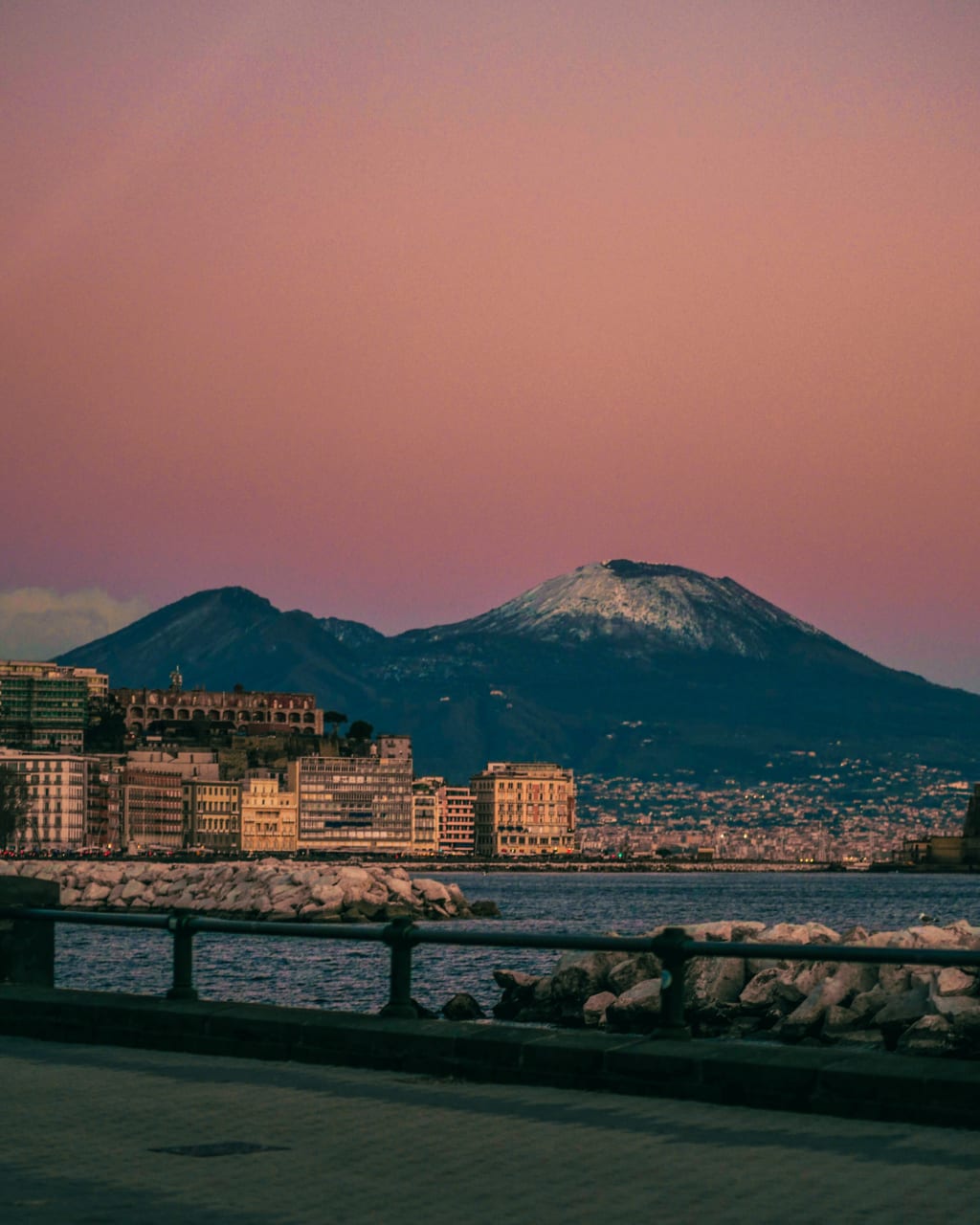
Imagine turning on the news and being shocked to hear that numerous tourist cities have been completely destroyed, with many fatalities, millions left homeless, and a massive cloud of ash and smoke turning the sky black. This hypothetical scenario could occur if Vesuvius, the world-renowned and only active volcano in continental Europe, were to erupt again. With approximately 3 million people living near the volcano, including 800,000 residing in the 200 square kilometer "red zone," the potential for catastrophic damage is immense.
Vesuvius has been forming for over 25,000 years, and its dangerous nature is compounded by the massive reservoir of magma beneath it. As time passes, the concentration of gasses in the reservoir increases, making the volcano more perilous. A powerful explosion followed by a pyroclastic flow, consisting of hot volcanic gasses, ash, and rock fragments, could cause devastation that is difficult to comprehend. During the Pompeii disaster, six separate pyroclastic emissions occurred, indicating the possible massive area that could be immediately affected.
Additionally, a large column of smoke and ashes rising up to 32 kilometers or 20 miles could lead to severe thermal energy release, killing many in the surrounding areas in just seconds. The ash and smoke could even spread beyond Italy, disrupting air traffic throughout the continent for several weeks. Pompeii and Naples would suffer tremendous damage, with smaller settlements completely flattened. It is essential to consider the potential impact of Vesuvius's eruption and to take measures to prevent such a catastrophic event.
No modern building techniques can prevent homes from being quickly buried under a thick layer of pumice and volcanic ash, which in some places can reach up to 20 meters or 66 feet. Most likely, roofs of homes will not be able to withstand such weight and will collapse on anyone who seeks refuge inside. People cannot defend themselves against such natural power, and everything will happen very quickly, possibly within just 15 minutes. The only option is to flee, but the affected area will not be suitable for living in the aftermath, as all settlements will be destroyed. Even if archaeologists uncover the destroyed cities many years later, it will still not be possible to return to the area, as it will have turned into a lifeless desert. The Italian economy will suffer greatly, with losses estimated at around $24 billion US dollars, excluding the cost of housing for displaced residents.
According to the Italian National Institute of Statistics, over three million tourists visit the region each year, and if an eruption occurs, it will turn into a tragedy for the entire planet. The survivors will lose access to water, electricity, and transportation, and the entire zone of destruction will turn into a lifeless desert. The Italian government has a plan in place for an urgent evacuation, which includes using buses, cars, trains, and ships to clear the "red zone" within 72 hours. However, it is a challenging task, as many people live in the area, and they are not military personnel who are constantly prepared for such situations.
Although scientists monitor the activity of Vesuvius 24/7 to predict a disaster, the most dangerous area near the volcano is still the "red zone," where it will be nearly impossible to survive. Therefore, the Italian authorities are actively trying to reduce the population near Vesuvius by demolishing illegal buildings and creating a national park around the volcano. Despite this, it would be easier if people stayed away from the volcano altogether.
Since 2004, the government has implemented a program that offers a payment of $46,000 to local residents who agree to relocate from the red zone, but not many have taken up the offer. However, there is something even more dreadful than the eruption of Vesuvius, and that is the possibility of the Flagrayan fields waking up. The last time these fields erupted was in the 16th century, and earlier eruptions led to the extinction of the Neanderthals.
If the Flagrant fields were to erupt today, with the current high population density, it would cause much more destruction than Vesuvius. During its last eruption, Vesuvius released an incredible amount of thermal energy, equivalent to 100,000 times the energy released by the bombings of Hiroshima and Nagasaki. The temperature near Vesuvius reached 500 degrees Celsius, enough to kill people instantly by evaporating their bodily fluids and tissues. If similar eruptions occur in modern times, it could be catastrophic, and we must take measures to prevent such disasters. If you want to know more about the consequences of eruptions of other volcanoes in our time, please write about it in the comments.
About the Creator
Bob Oliver
Bob is a versatile writer & communicator passionate about exploring diverse topics & perspectives. I have written for various media outlets. And I believes in using words to inspire positive change. #writing #communication #passion
Keep reading
More stories from Bob Oliver and writers in Humans and other communities.
Discovering the Extreme Challenges Faced by Brave Inhabitants in Some of the World's Most Hostile Environments
From some of the planet's hottest regions to the coldest ones, lies a breathtaking lake located within a volcanic crater. Here are the top 10 most dangerous and unlivable places on Earth where people actually reside. Our list starts at number 10 with Alert. Alert is a small settlement situated on the northern tip of Ellesmere Island in Nunavut, Canada. It is considered one of the world's northernmost settlements and has an inhospitable environment with extremely low temperatures, harsh winds, and long periods of darkness during winter. Despite these challenges, people still live in Alert. Initially established in 1950 as a weather station and military outpost during the Cold War, Alert remains an important monitoring station for climate change and military activities in the Arctic region. The population fluctuates depending on the season, but there are typically around 50 people living and working there, mostly military personnel, scientists, and support staff. They face numerous challenges such as limited supplies, extreme isolation, and the constant threat of polar bear encounters. However, the residents of Alert take pride in their unique community and the essential work they do. They have developed a strong sense of camaraderie and resilience necessary for survival in such a harsh environment.
By Bob Oliver3 years ago in Humans
Thief In The Night
To the thief in the night that took and replicated what once was mine: Honestly, I feel kind of bad for you. It’s funny, because we hardly know each other. I only know of you through the magazines you’ve written and the broadcasts you have televised in the past — as well as through the public mentions of you from your show business connections there.
By Snarky Lisa6 days ago in Humans
From Intern to CEO
The office was quiet that evening, the kind of silence that presses against your ears and makes every tick of the clock feel louder than usual. I sat at my desk, staring at the dim glow of my laptop, thinking back to the very first day I walked through these doors as an intern.
By LUNA EDITH6 days ago in Humans




Comments
There are no comments for this story
Be the first to respond and start the conversation.