
The Most Peculiar Customs and Traditions across the Globe
Weird Traditions
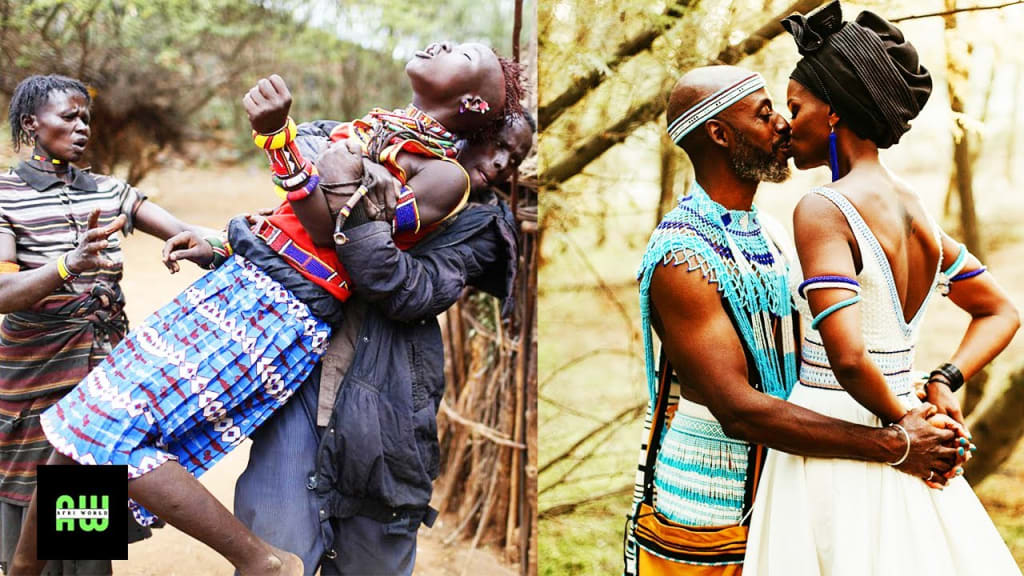
Weddings are a splendid celebration of love. However, certain cultures possess unique rituals and traditions that may appear peculiar to outsiders.
Cambodia, a country located in Southeast Asia, where we uncover one of the quirkiest and weirdest wedding rituals practiced by the Krung tribe. The Krung tribe is just one of the many tribes in Cambodia that possess unique wedding traditions, but theirs is slightly different from anything one may have heard of.'
When a young woman from the tribe reaches the age of marriage, her father must construct a special cabin in the middle of the jungle. However, this cabin is not just any ordinary cabin built with logs. It is a cabin of love where the young woman can have as many suitors as she wishes until she finds the one who makes her heart sing. In the Krung tribe, multiple dating is allowed and encouraged. The cabin is built to provide the young woman with a private space to explore her romantic options and then make her choice.
Once the young woman chooses her preferred suitor, he has to accept her proposal and become her husband. However, according to tradition, the husband can spend the night with his new wife once he has paid her father a certain number of cows.
The greater the number of cows a man can produce, the more nights he can spend with his wife. However, if the husband cannot afford the bride price for cows, according to tradition, the couple can only cohabit once the price has been paid in full. While this tradition may appear peculiar to some, it is a beautiful and integral aspect of the tribe's culture and tradition. It is fascinating to observe how this practice has endured for centuries and remains relevant to the tribe today. Moving on to South China, we encounter a tradition that may not be suitable for the faint of heart. Before commencing wedding preparations, the couple must seek natural approval. This involves a chicken sacrifice ceremony, where the bride and groom hold a chicken in one hand and perform a ritual to sacrifice the bird and remove its liver. If the liver is in good condition, it is considered a good omen, and the couple can proceed with their wedding plans. However, if not, they must try again at another time. While this tradition may seem strange and barbaric to some, it is deeply rooted in Chinese culture and is believed to bring good luck and prosperity to the couple's marriage. It is also a way of showing respect to nature and seeking its blessing on the couple's union. In some regions of South China, the sacrificed chicken is then cooked and served as part of the wedding feast. This tradition has existed for centuries and serves as a testament to the unique and diverse wedding customs around the world.
We will now shift our focus from exploring the intriguing customs of Asia to Mauritania, a small yet formidable country in Africa. The locals of Mauritania possess a distinctive perspective on what constitutes a beautiful bride. While many parts of the world uphold the belief that a slender and athletic physique epitomizes female beauty, in certain regions of Mauritania, the opposite holds. The people of Mauritania believe that women who possess a fuller figure symbolize fertility and abundance and are, therefore, more desirable as brides. Consequently, if a Mauritanian bride is deemed too thin by her groom or family, she is expected to gain weight before the wedding day. It is customary for a bride to consume copious amounts of food and drink in the weeks leading up to the wedding to ensure that she is sufficiently plump and curvy. How did this tradition originate? Some speculate that it dates back centuries to when food was scarce in Mauritania, and being overweight was a sign of wealth and status. Others believe it is rooted in the notion that a fuller figure represents good health and vitality, making a heavier bride more likely to bear healthy children. However, it is worth noting that this tradition has faced criticism recently, with some activists condemning it for promoting unhealthy eating habits and body shaming.
It is crucial to acknowledge that every culture has its customs and beliefs, but that does not preclude us from questioning them and striving for improvement.
About the Creator
Keep reading
More stories from Chemain Naomi and writers in Humans and other communities.
Out of Body Experience
What is an out-of-body experience (OBE)? The phenomenon is characterized by detachment from one's physical body, often occurring during sleep. Individuals may feel like they are floating above their bed and can walk around or observe their bodies from an external perspective. In rare instances, individuals feel far removed from their bodies in other countries or planets. The concept of OBEs is ancient and has been documented across various religions and belief systems. The causes of OBEs vary, with some being induced through hallucinogenic drugs, such as LSD, while others can be influenced through meditative or mechanical means. There is a wide range of beliefs surrounding OBEs, with some individuals attributing the phenomenon to paranormal activity.
By Chemain Naomi2 years ago in Humans
The Angry Man in Your House
"If you grow up with an angry man in your house, there will always be an angry man in your house" This statement has caused plenty of controversy online, people say its a statement that blames victims while also undermining those who break traumatic cycles to form health relationships... but if I'm honest now that I'm in my 30s it makes more sense to me than ever, and I'd argue that its not just about fathers and uncles.
By S. A. Crawforda day ago in Humans
Top 10 Legit Christian Dating Sites and Apps for Christian Singles in 2026
Finding a partner who shares your deeply held religious convictions can feel like searching for a needle in a haystack, but using legit Christian dating sites and apps for Christian singles has revolutionized how believers connect in the modern age. As we navigate through 2026, the digital landscape for faith-based romance has become more sophisticated than ever, offering specialized environments where your relationship with God is the primary filter rather than an afterthought. These platforms prioritize spiritual compatibility and shared biblical values, ensuring that the people you meet are already aligned with your foundational worldview and long-term goals for a Christ-centered household.
By Grace Smith5 days ago in Humans




Comments
There are no comments for this story
Be the first to respond and start the conversation.