
Out of Body Experience
What is an out-of-body experience (OBE)?
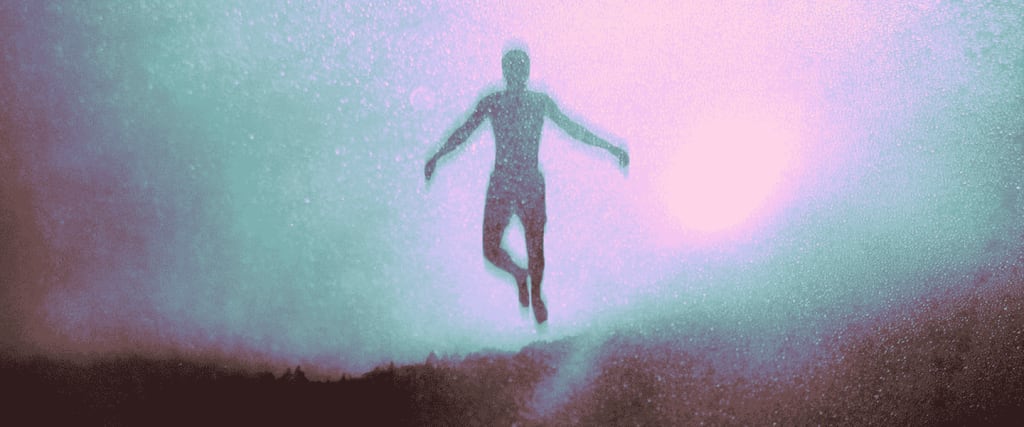
What is an out-of-body experience (OBE)? The phenomenon is characterized by detachment from one's physical body, often occurring during sleep. Individuals may feel like they are floating above their bed and can walk around or observe their bodies from an external perspective. In rare instances, individuals feel far removed from their bodies in other countries or planets. The concept of OBEs is ancient and has been documented across various religions and belief systems. The causes of OBEs vary, with some being induced through hallucinogenic drugs, such as LSD, while others can be influenced through meditative or mechanical means. There is a wide range of beliefs surrounding OBEs, with some individuals attributing the phenomenon to paranormal activity.
In contrast, others view it as a product of the imagination or a defense mechanism. There have been studies conducted on the phenomenon of out-of-body experiences. These studies have shown that during an out-of-body experience, the brain activity of the individual is different from when they are in a normal waking state or even during a dream state. This suggests that the experience is not just a product of the imagination but a natural phenomenon outside the physical body. Recent research has focused on the neurological processes underlying OBEs, with studies indicating a mismatch of brain processing, leading to a sense of detachment from the physical body. Specific studies have been conducted to investigate the validity of OBEs, with some proving controversial due to a lack of controls or verifiable evidence. While personal anecdotes and books have been written about OBEs, the phenomenon remains difficult to replicate and verify through scientific means. The concept of astral projection, which involves a cord connecting the soul to the physical body, has also been associated with OBEs. Some individuals believe that pushing the soul too far can result in the severing of this cord and a slip into a coma. In contrast, others speculate that ghosts and paranormal beings may be severed souls without a physical body.
Out-of-body experiences are widely accepted in neurological circles as it is a common occurrence, with approximately one in twenty individuals experiencing such an event in their lifetime. These experiences are often reported during syncope, a harmless fainting episode, with about 15% of individuals who faint experiencing an out-of-body sensation. Additionally, many out-of-body incidents occur during the blending of waking and REM consciousness, characterized by profound visual activation and activation of the limbic system. During this state, an area of the brain called the temporal parietal region, which synthesizes our experiences, is turned off, leading to the sensation of being outside one's body. It is important to note that out-of-body experiences can be induced through electrical stimulation of the temporal parietal region, as demonstrated by neurologist Olaf Blanke. However, certain out-of-body experiences require further examination, such as the sensation of hovering above one's body.
While there is little controversy surrounding out-of-body experiences, certain aspects require further investigation. For instance, there are reports of individuals experiencing veridical or accurate information about their environment while in a state of cardiac arrest, which raises questions about the relationship between mind and brain. Additionally, there are reports of individuals hearing conversations from other rooms while in a state of unconsciousness, which may be attributed to the brain's memory system and suggestibility. Therefore, while out-of-body experiences are common, further research is necessary to understand their underlying mechanisms fully. In conclusion, the concept of out-of-body experiences may seem unconventional or even mystical to some. Still, it is a natural phenomenon that can be accessed by anyone with the willingness and desire to do so. By understanding the nature of reality and the construct in which we live, we can access a wealth of knowledge and understanding about ourselves and the world around us.
About the Creator
Keep reading
More stories from Chemain Naomi and writers in Humans and other communities.
The Angry Man in Your House
"If you grow up with an angry man in your house, there will always be an angry man in your house" This statement has caused plenty of controversy online, people say its a statement that blames victims while also undermining those who break traumatic cycles to form health relationships... but if I'm honest now that I'm in my 30s it makes more sense to me than ever, and I'd argue that its not just about fathers and uncles.
By S. A. Crawforda day ago in Humans
Melanie Ng: Husband, Age, Nationality, Career, Biography & More
Melanie Ng is a well-known Canadian television journalist, news anchor, and reporter, best recognized for her work on CityNews and Breakfast Television. With her calm on-screen presence, insightful reporting, and commitment to storytelling, Melanie has become one of the most respected faces in Canadian broadcasting.
By Enoch Sagini7 days ago in Humans
Public Announcement Challenge Winners
For the Public Announcement Challenge, writers were asked to work inside voices built for control. These were notices, warnings, and updates meant to inform rather than confess. The strongest entries committed to that form and didn't break from it. Corporate memos, formal government alerts, and internal policy language were held consistently, allowing emotion, fear, grief, or humor to surface indirectly through pressure rather than declaration. The following poems recognize the voice of authority, and let human feeling slip through despite all its rules and restraint.
By Vocal Curation Team2 days ago in Resources




Comments
There are no comments for this story
Be the first to respond and start the conversation.